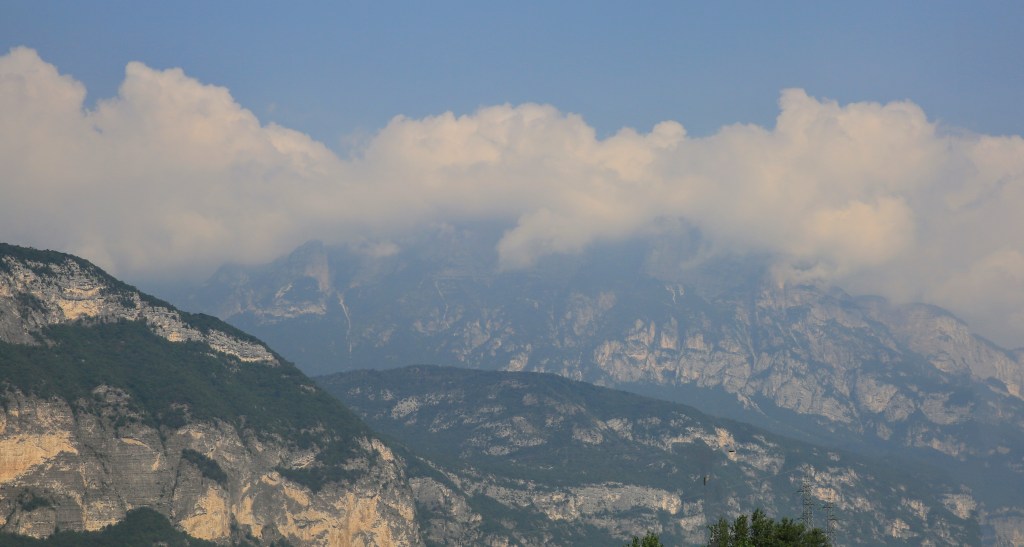
Into the Alps. (Well, The Dolomites, to be Exact.)

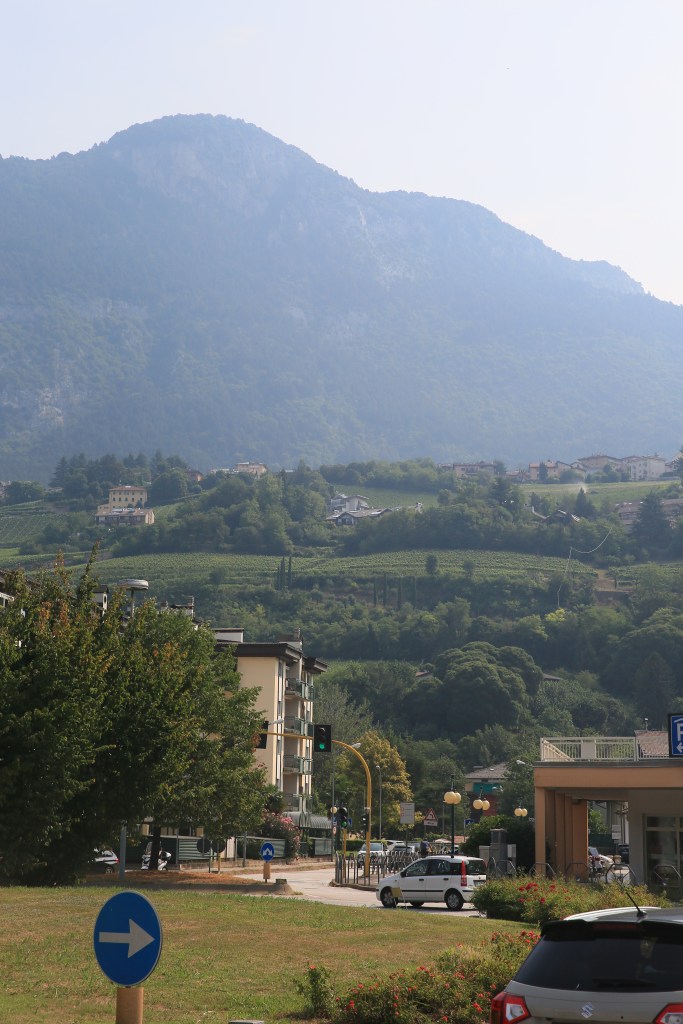
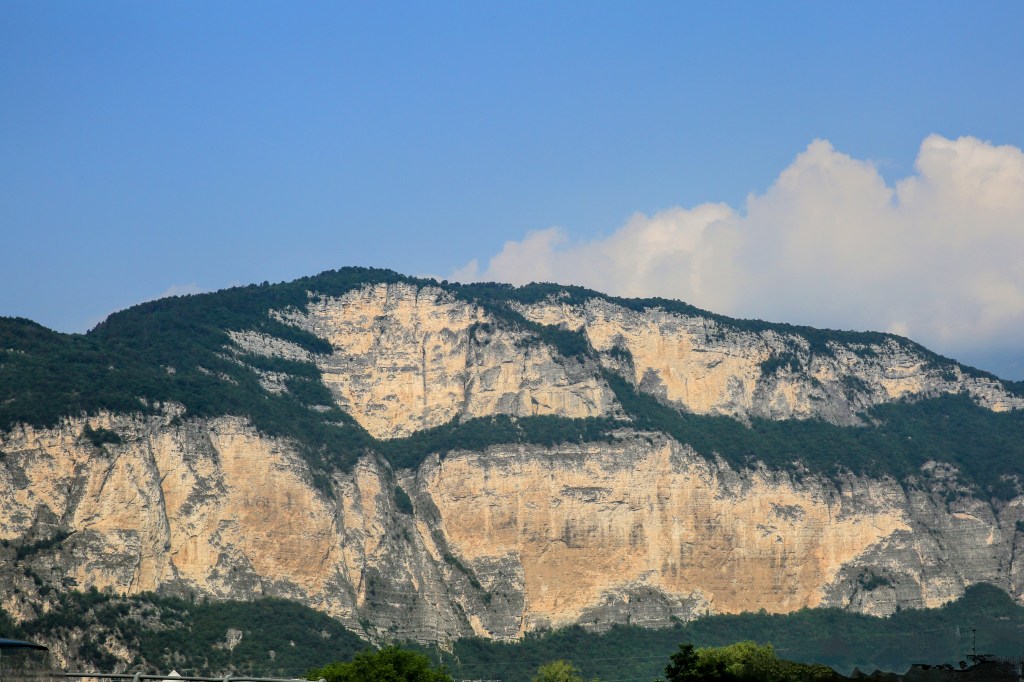
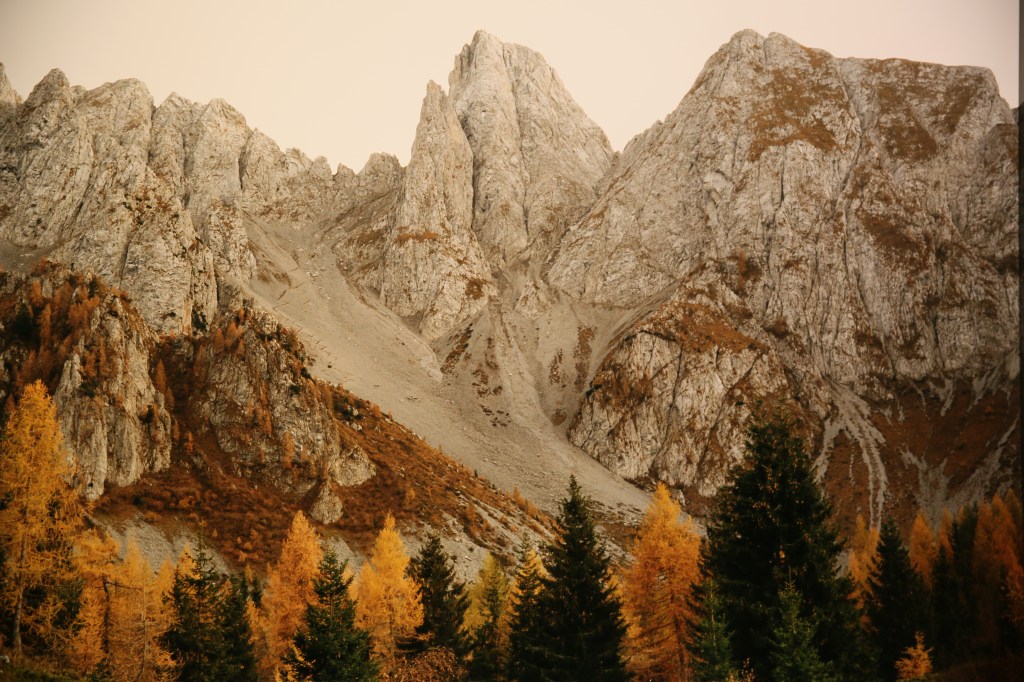
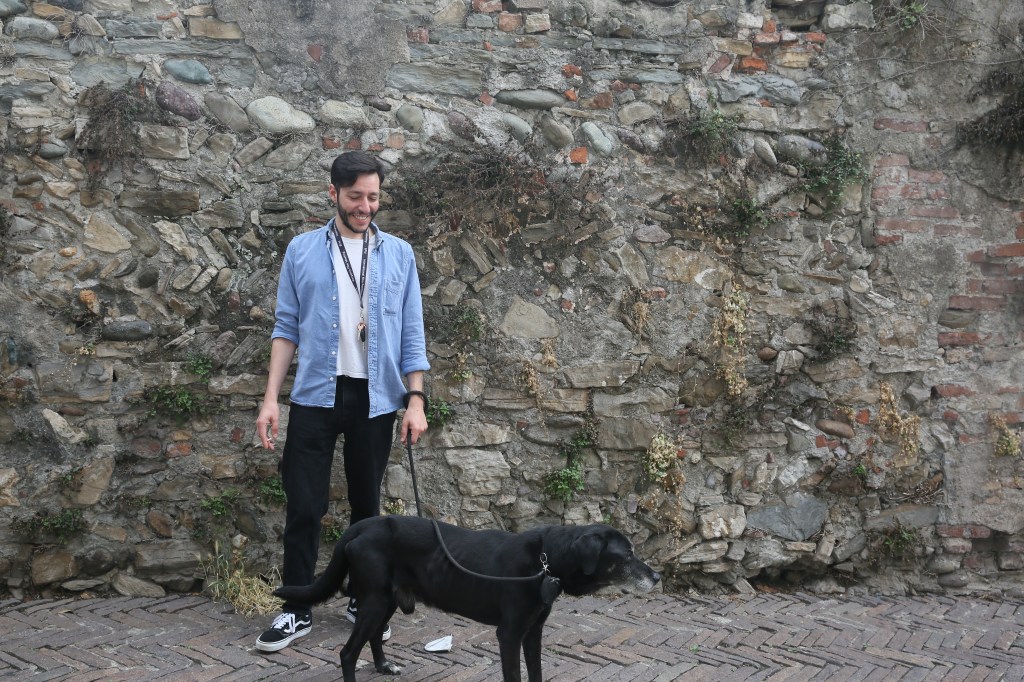
Trento is a small city in a valley that runs through the Dolomites – there is only one last Italian train stop, Bolzano, before crossing into Austria on our trip to Mannheim and the Webers tomorrow.  We have spent three nights here attempting to escape the heat of the Lombardy plains. That plan didn’t work – the last few days have been in the high 30s, and it barely cools at night – for these locals, global warming is a particularly frightening threat.

Trento townsfolk depend heavily on tourism for their income: in winter, a range of snow sports bring in tourists, in summer, hiking and mountaineering figure highly. The changing climate and covid have caused some ski fields to close throughout the last few seasons, quite possibly for good, and hiking in the mountains is no fun when the temperature in summer is close to forty degrees. In addition, in recent years, many of the alpine Italian cities and towns have had quite devastating and deadly floods in spring because of the early melt.  Perhaps the Austrians don’t feel so bad about having to give away a huge chunk of land on this side of the Alps to Italy after WWI.

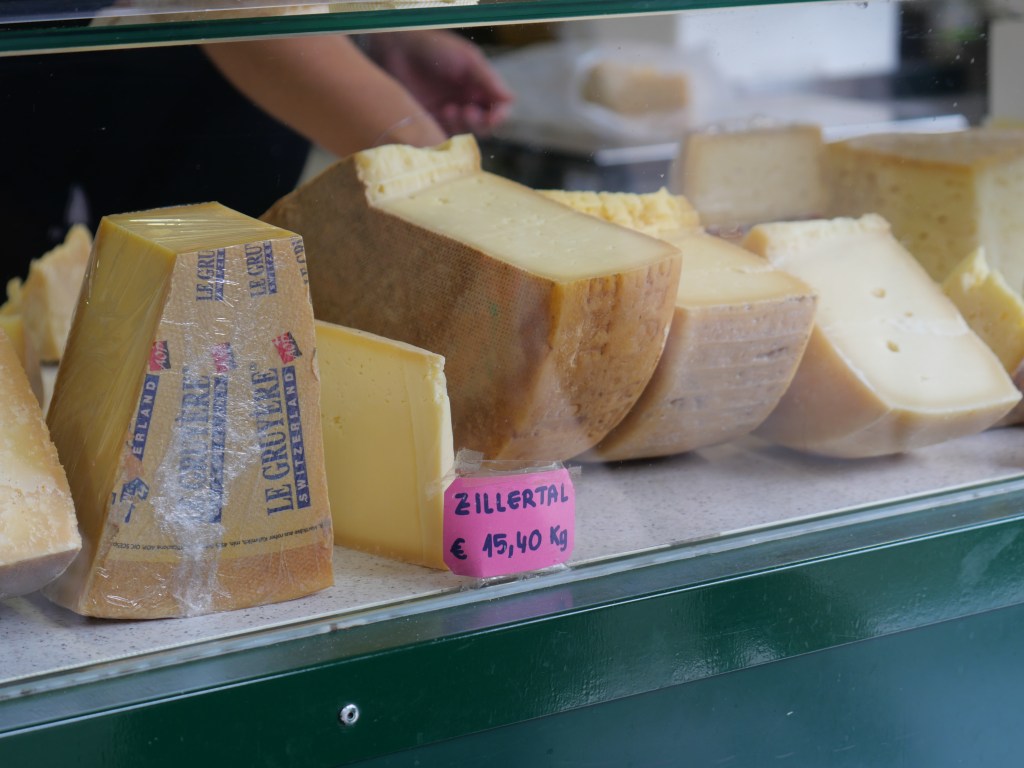
There is still an obvious, very strong, Germainic influence in this province – for example, in the architecture, the language, and the food. Approximately half a million people speak German as their first language in the Bolzano province. The churches tend to be less ornate than those further south, and there are far more protestant churches than we’ve encountered elswhere on this trip. Polenta and pasta are mixed in with German noodles and a variety of Swiss dishes at many restaurants,

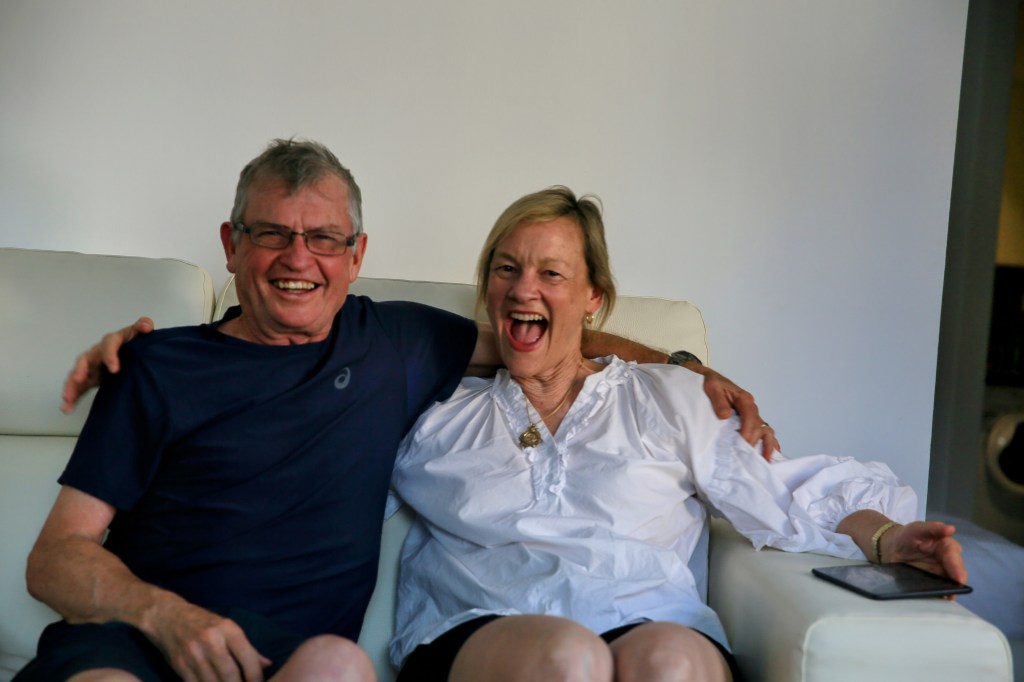
Tomorrow, we will be in Viernheim, Germany, to spend some time with our friends, the Webers, before heading back to OZ. Stephan is a wonderful cook, and the family are generous hosts – always. I am already worried that exhaustion will set in well before we catch our plane to Singapore from Frankfurt. I know that the days will be planned with Germanic precision and activity-filled – from eight in the morning until lights-out after midnight each night. I am concerned that I will eat too much, laugh too much, and have too many visits from their family and friends in the couple days we have with them – and I can hardly wait!!

Farley
Bella (and not so bella), Bergamo!

We travelled by train to Brescia on Friday, the sister city of Bergamo. Like most of the small cities in this part of Italy in the 17th century, it was essentially forced to be ruled by either Venice or Milan – most chose Venice, hence the abundace of lion statues around town. Both Brescia and Bergamo have a high town surrounded by Venetian-built walls with the Dolomite Alps behind and views over the Lombardy Plains below. Both are beautiful, and both were hit particularly hard by Covid. The title ‘Italian Cultural Capital, 2023’ is being shared by these twin towns. – I suspect as an attempt to aid their recovery.  There are a number of music events planned for the summer season as part of this festival.

On my travels, I have been fortunate to listen to the London Symphony Orchestra with the Leniningrad Men’s Voices in Florence, watch the Bulgarian National Ballet in Sofia, to hear the Slovenian Philharmonic Orchestra in Ljubljana. I have heard a Puccini opera in Lucca and Vivaldi in Vienna. Until Friday, the least enjoyable piece of music I have heard played in public was Kenny Kendricks playing a couple of Elvis pieces on an electric guitar without an amplifier for our Yr 6 class in Rosewood. At least when Kenny started singing ‘All Shook Up’ we were allowed to laugh, as even our teacher got the giggles. The skill of the musicians we heard on Friday is beyond doubt – the genre I don’t understand. I wonder what the concert would have been like had the improvised jazz group ‘Take Off’  had music lessons in Rosewood? Miss Moneypenny would have given it her best shot, there is no doubt.

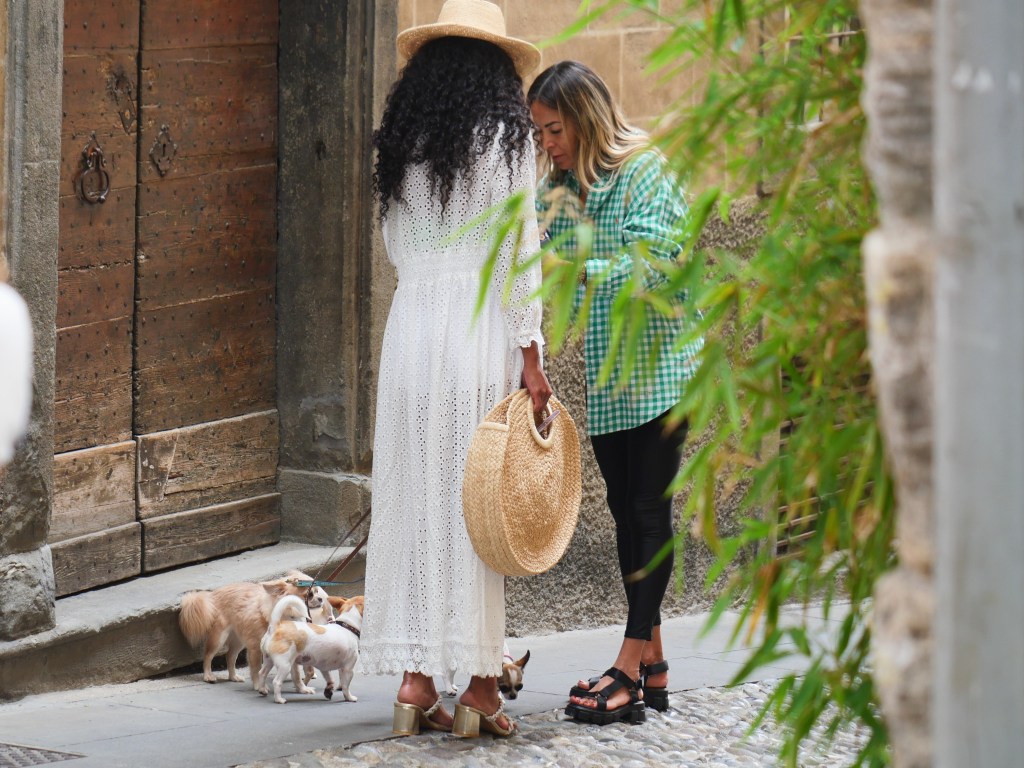
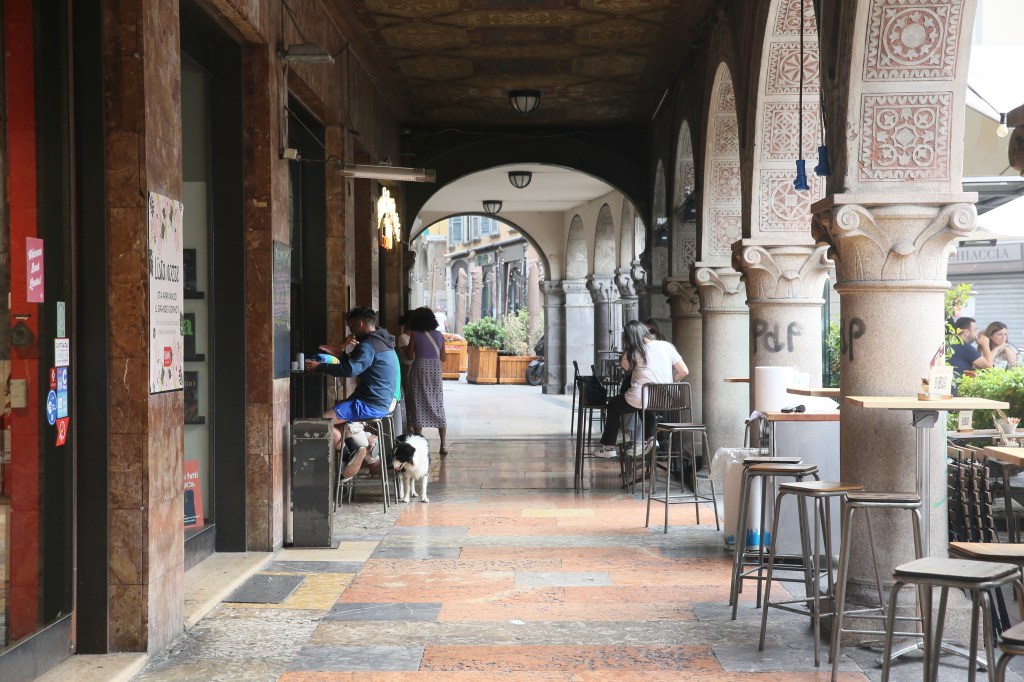
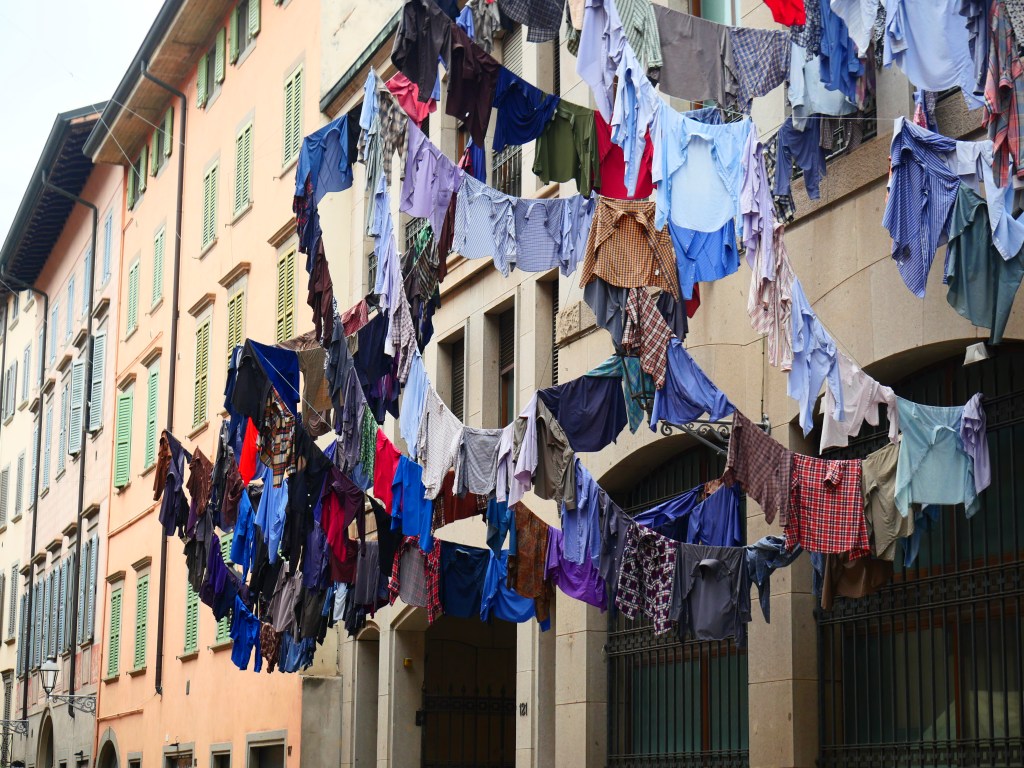
Both these Italian cities take dogs and siestas seriously.  Most of the shops close between one and four pm – this seems to be the time to nip home, hang out the washing, and cook up some gnocchi for lunch. Well – it’s hard to know what really happens behind closed doors, but whatever it is – they are committed to it, and so few venture out onto the streets during that sacred time. Some intrepid dog owners perhaps – but most save the canine parade until at least 5pm. Therein, one sees a huge variety of hounds – from chihuahas to spinones to Italian greyhounds – but the winning breed is … the golden retriever: ubiquitous. Despite the Bergamo locals’ love of their pooches, these well-cared for dogs rarely make an appearance in shops or bars or cafes … save that indulgence for their German cousins.

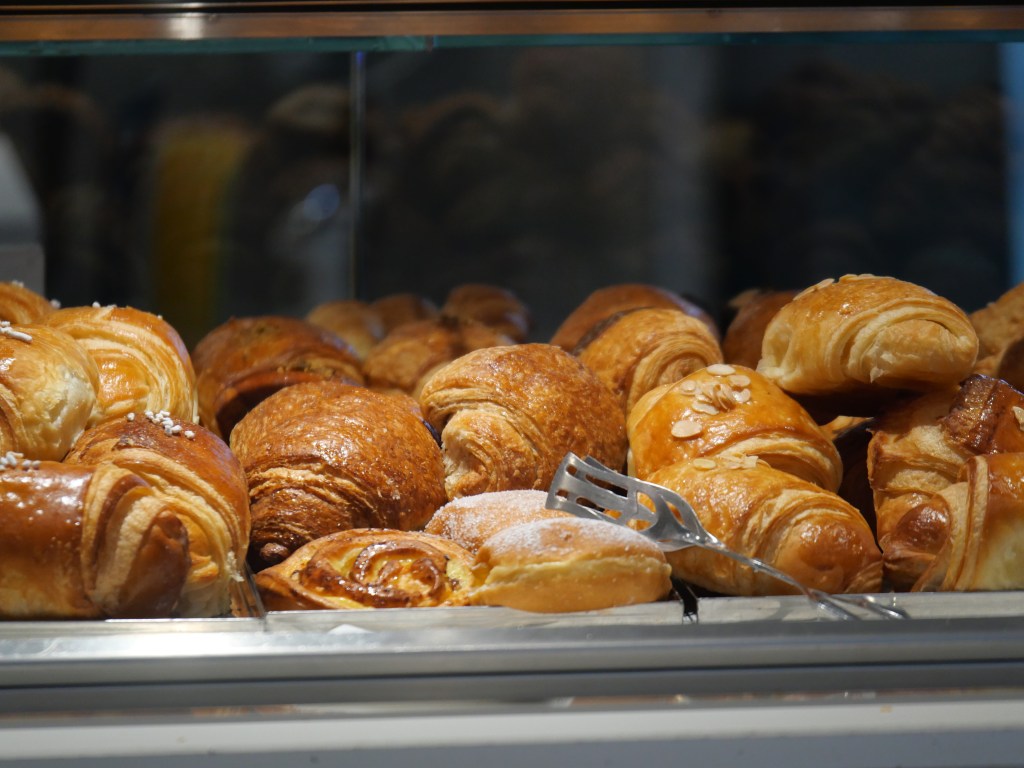
A flat white from our coffee shop run by Sonia has been a special way to start each day, along with fresh croissants, of course. And, a local wine with its compulsory platter of cheeses and salamis at a small bar run by David and his family has been a superb way to punctuate the close of each day – with exploring in between.  This Bergamo routine will be hard to match in Trento, our next destination.  We won’t have enough time there to ‘live the city’ – that wonderful phrase used by a Bugan regular with whom we engaged in conversations around travel.

Yes, there’s a grieving that goes with leaving a city you have ‘coalesced with’ over the period of a fortnight; a pattern of living has been cultivated and it takes time to replicate it elsewhere. But, we will do our best in Trento – with its view to the Dolomites and blend of Italian/Austrian/German/Switzerland influence … a little like Rosewood, really.

Ciao, all.

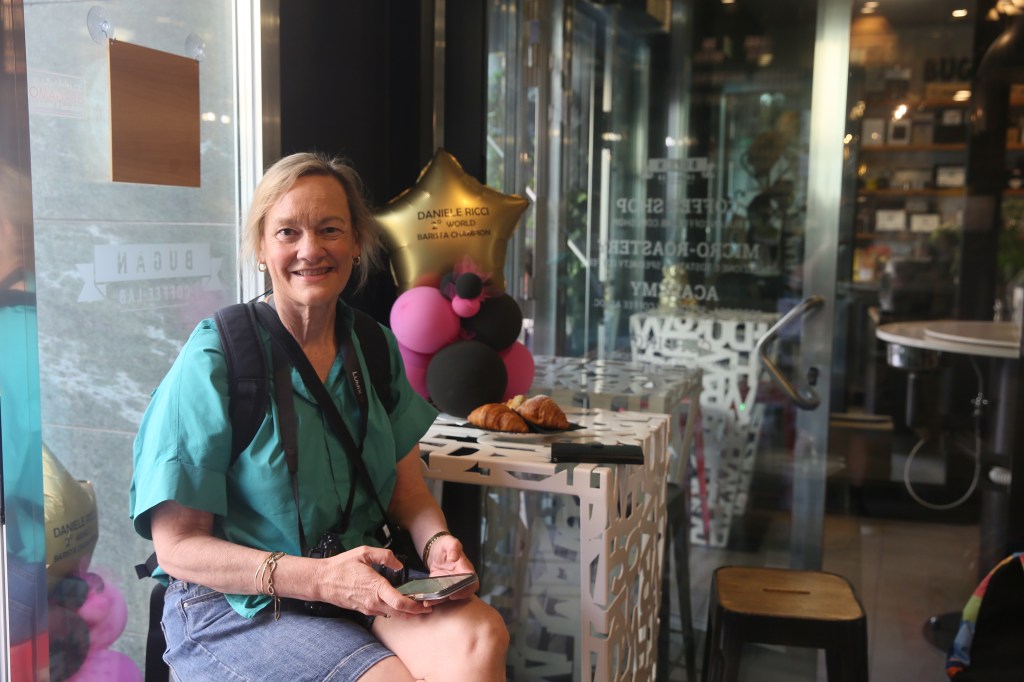
The wonderful Sonia – our barista and travel advisor for two weeks.

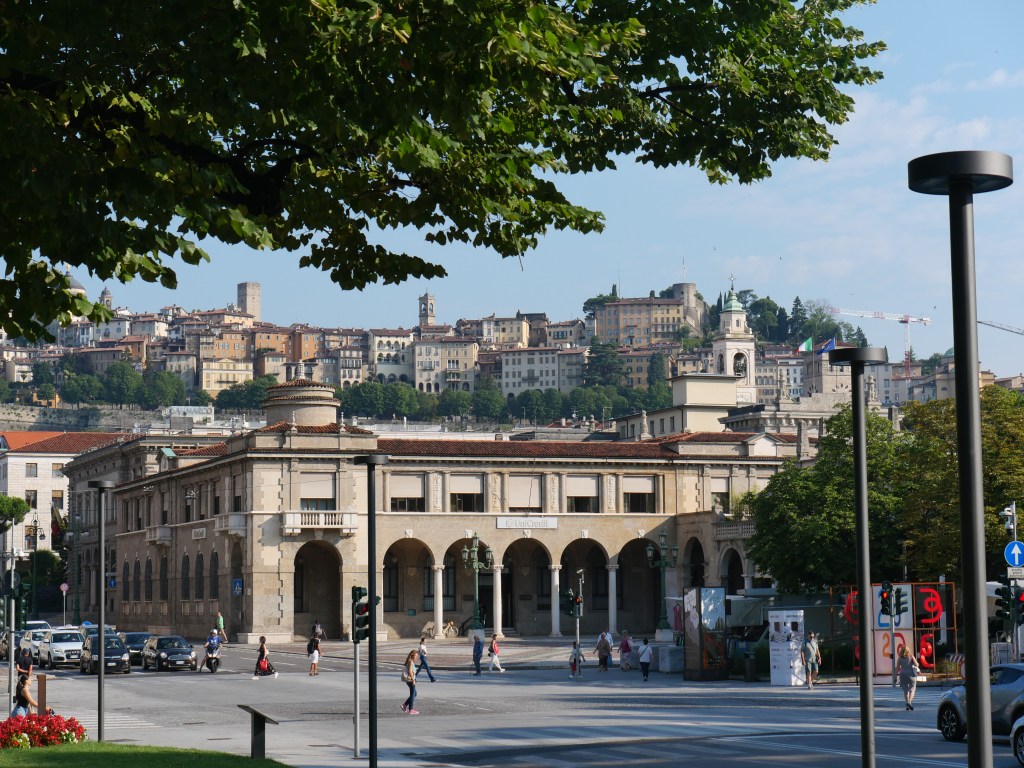
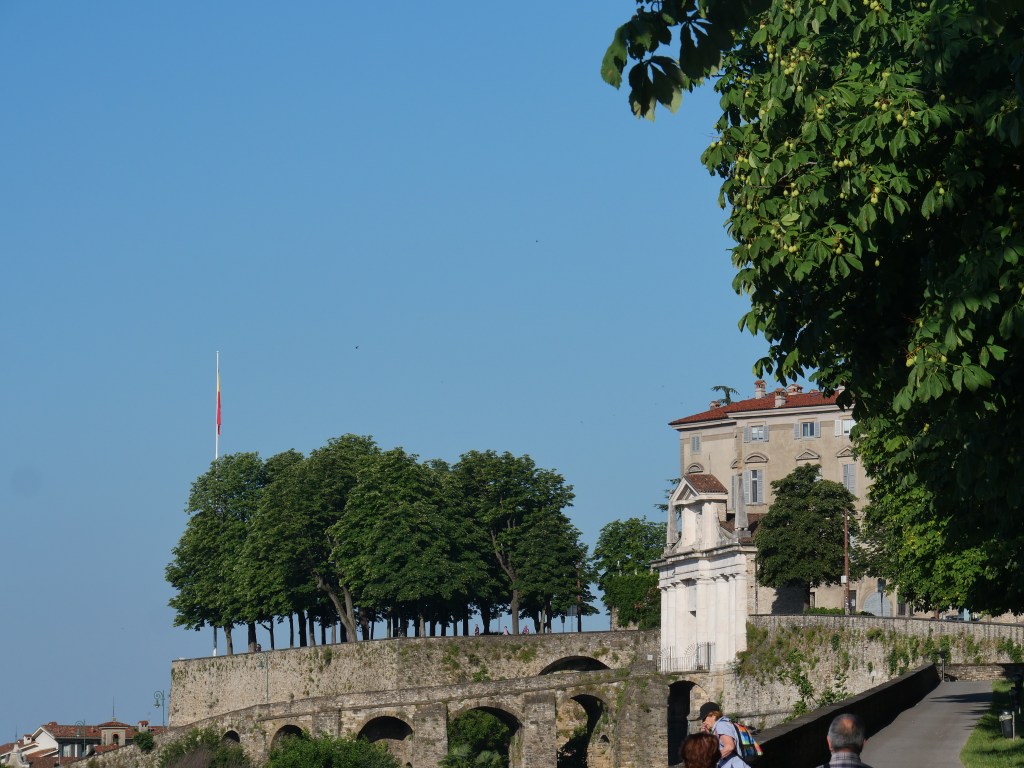
Beautiful Bergamo, with the old town on the hills to the north.

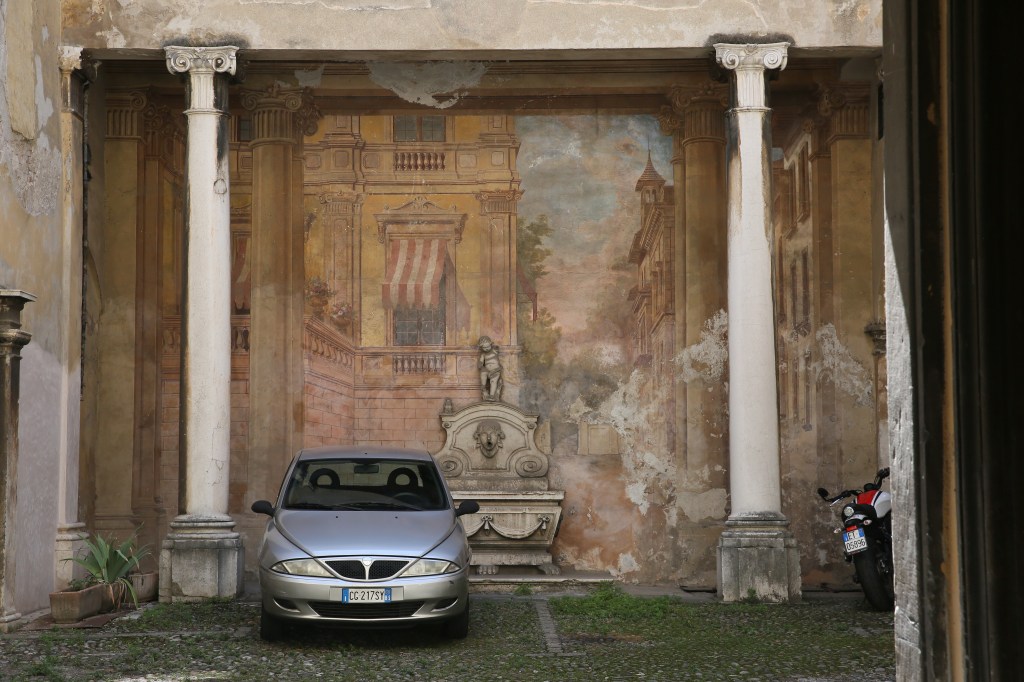
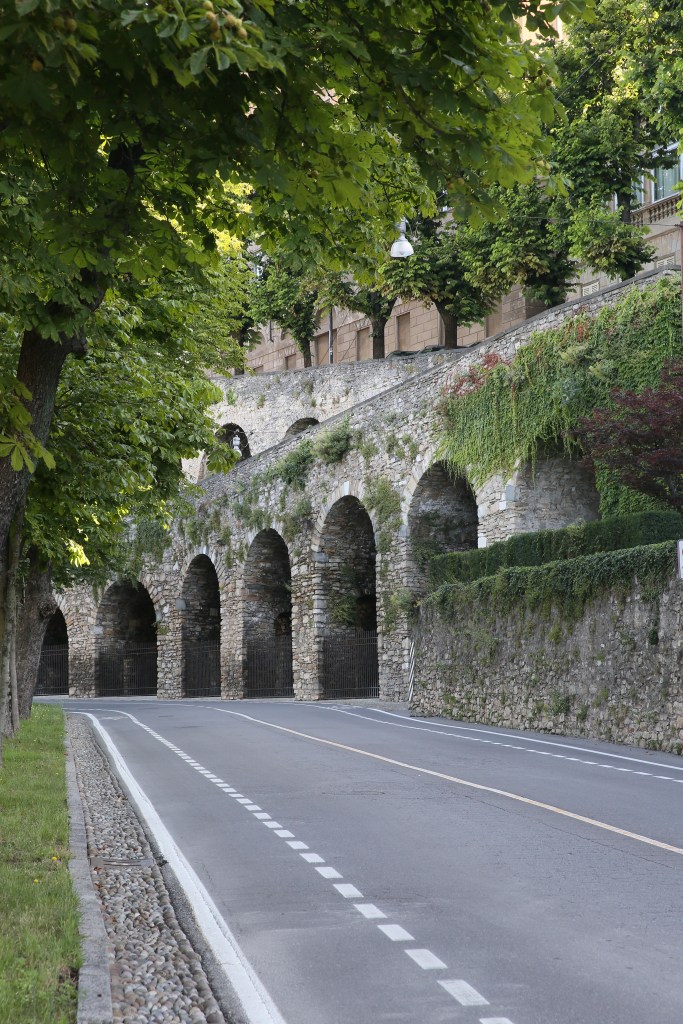
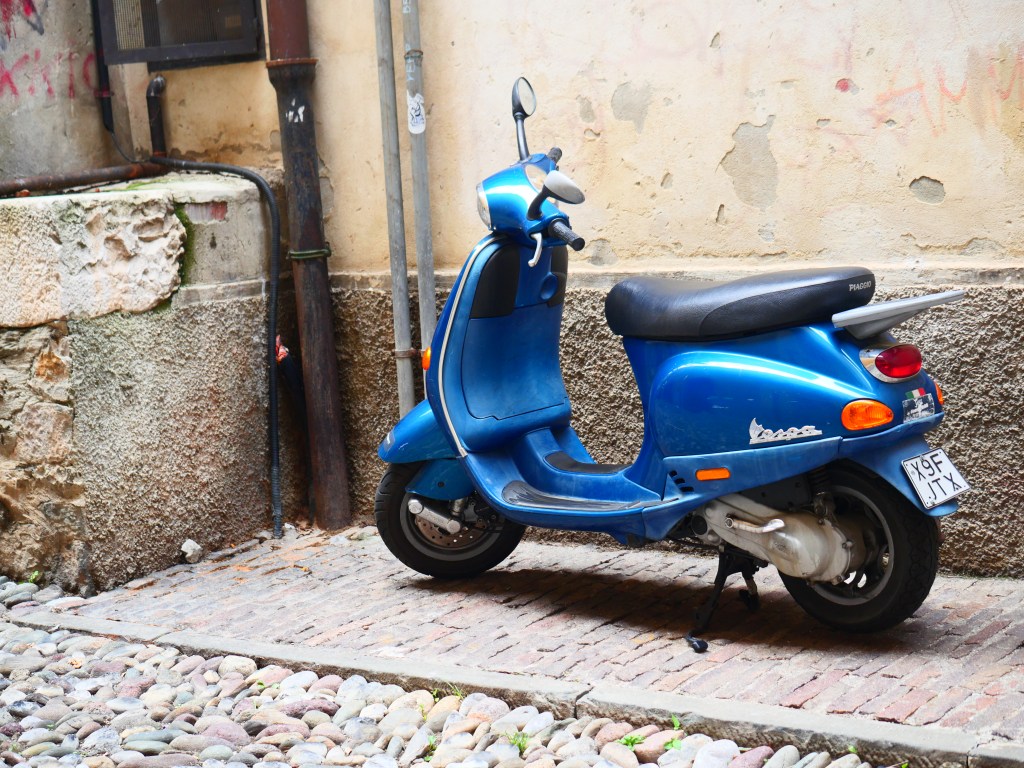
Even Venetian carports were pretty flash – we’re thinking about getting our builder to refurb ours on Tourist Road with an identical look…

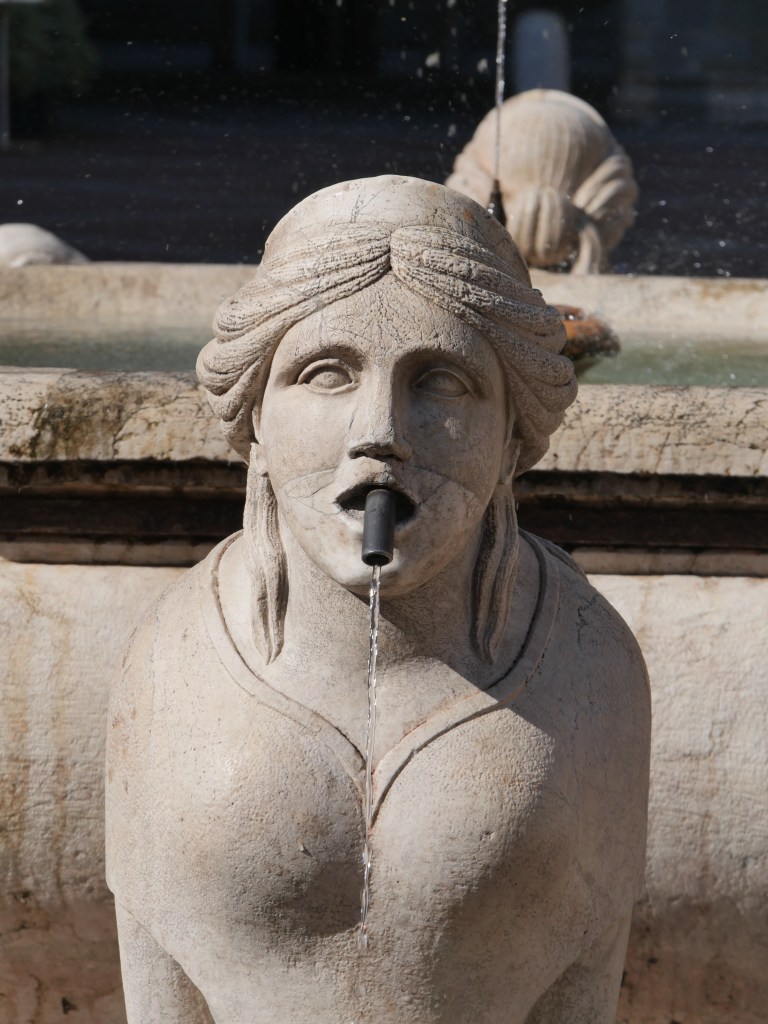
The Brescians invented the e-cigarette in 1645. The early models were powered by running water, and, as you can see by her eyes, the drugs used had a powerful narcotic effect. This statue commemorates their ingenuity.

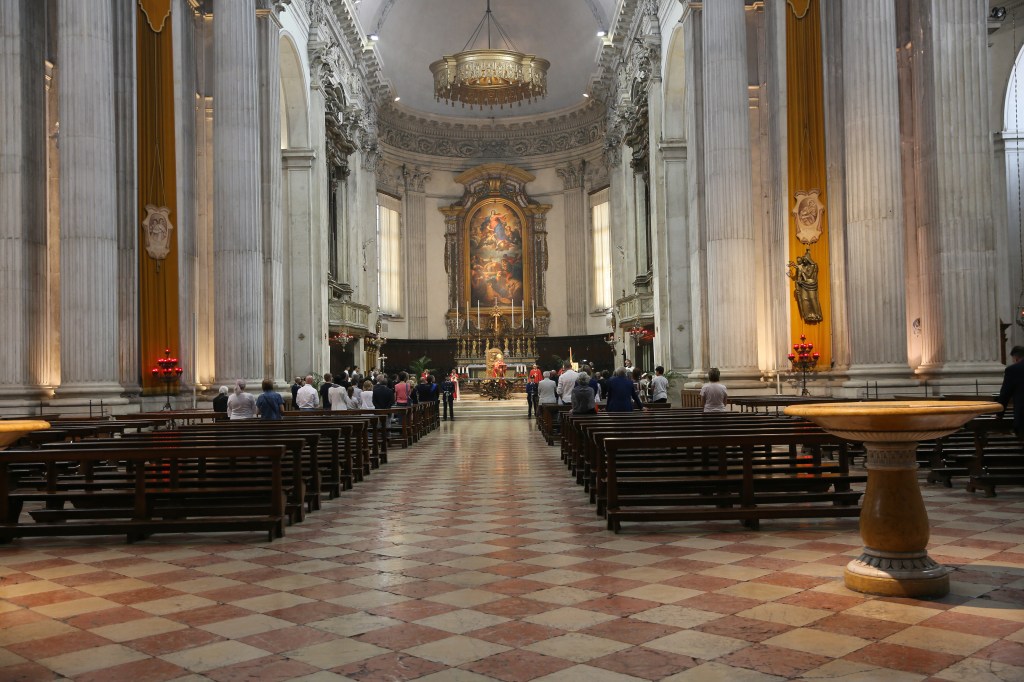
The cathedral in Bergamo is a bit like St Brigit’s, Rosewood, in that both churches are Roman Catholic…

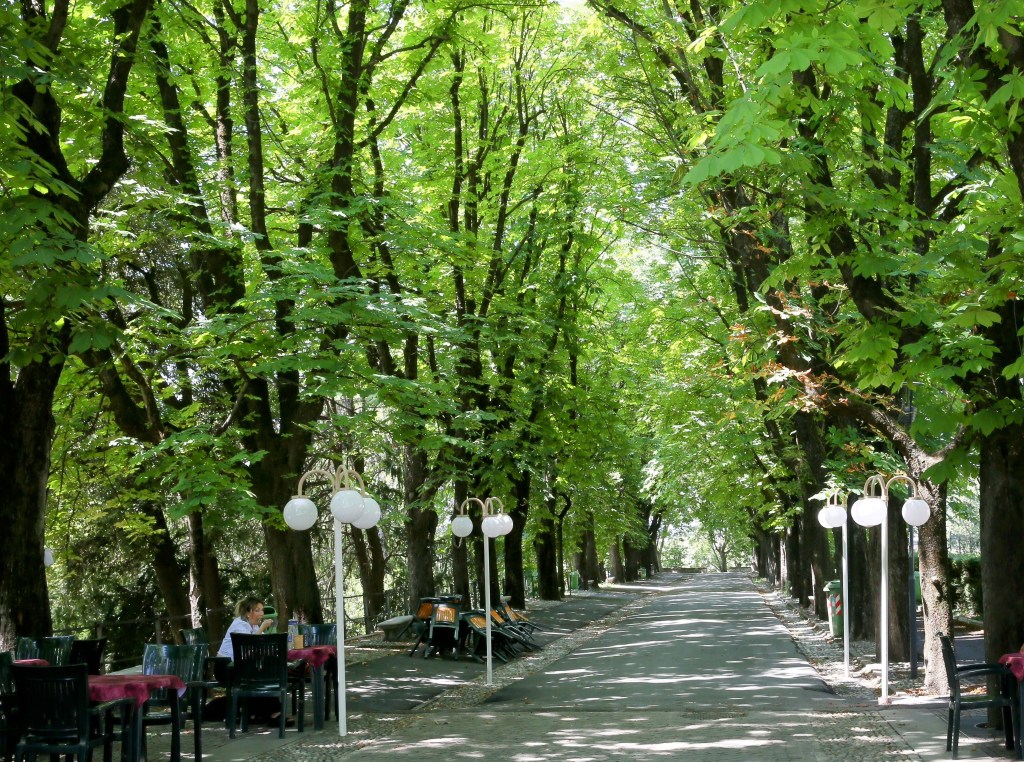
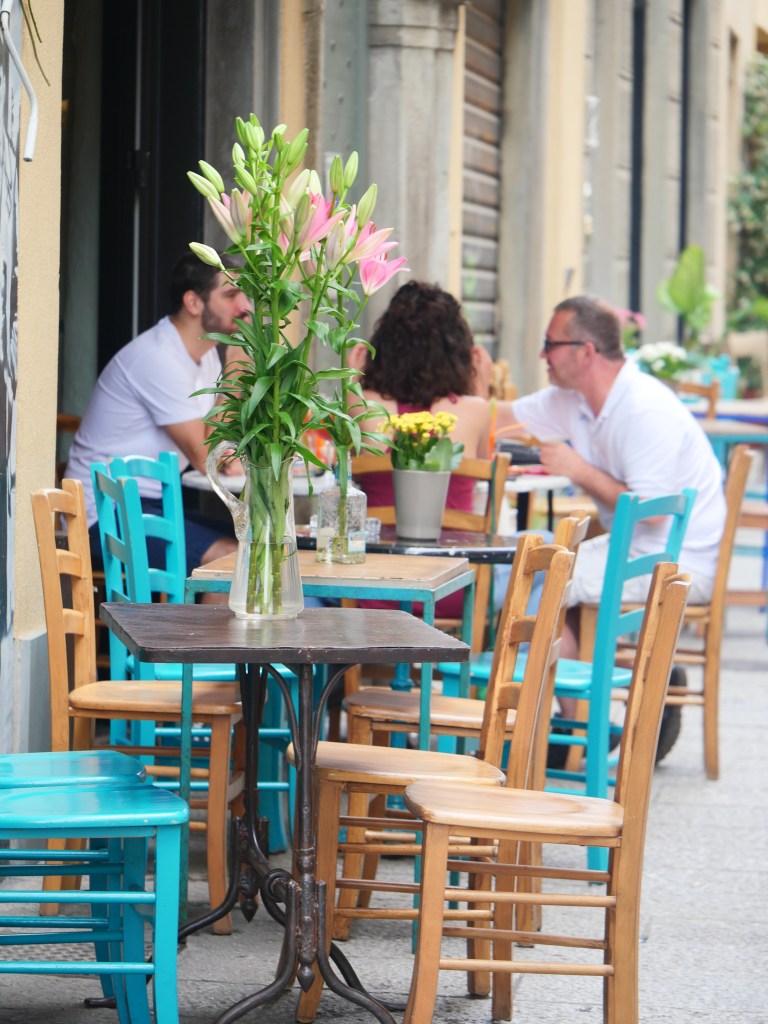
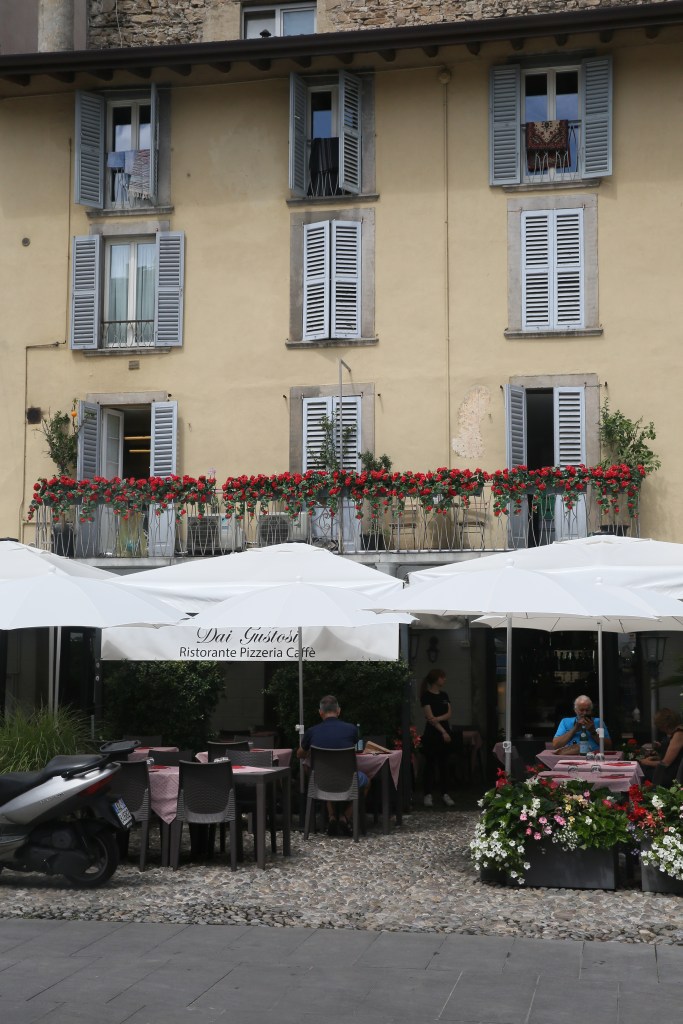
Only saw the man lurking behind the plants at the end of the tables after I uploaded the photo. I hope he hasn’t followed us to Trento…….

The improvised jazz ensemble ‘Take Off’. Quite a proportion of the audience had taken off themselves at this stage in the performance…..

Hari Krishna’s version of ‘Take Off’

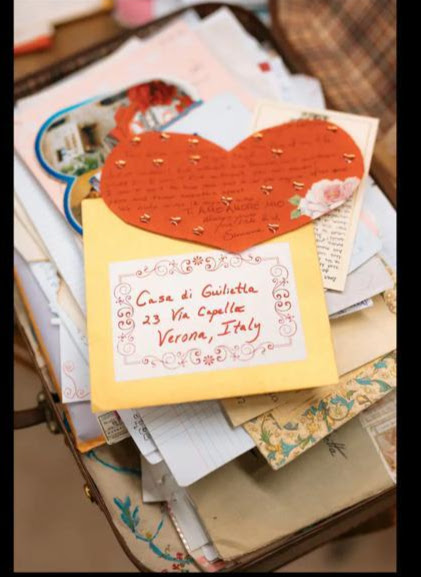
Where for Art Thou Romeo?

To spell Shakespeare or not … that is the question. To date, there have been six documents discovered that have been deemed by historians to have actually been signed by William Shakespeare: and therefore authentic. In each of these six documents, his name is spelt six different ways.  AND none of them are signed using our spelling of his surname – ‘Shakespeare’.  It is no wonder that some visitors become confused when they visit the beautiful city of Verona – our day trip yesterday.

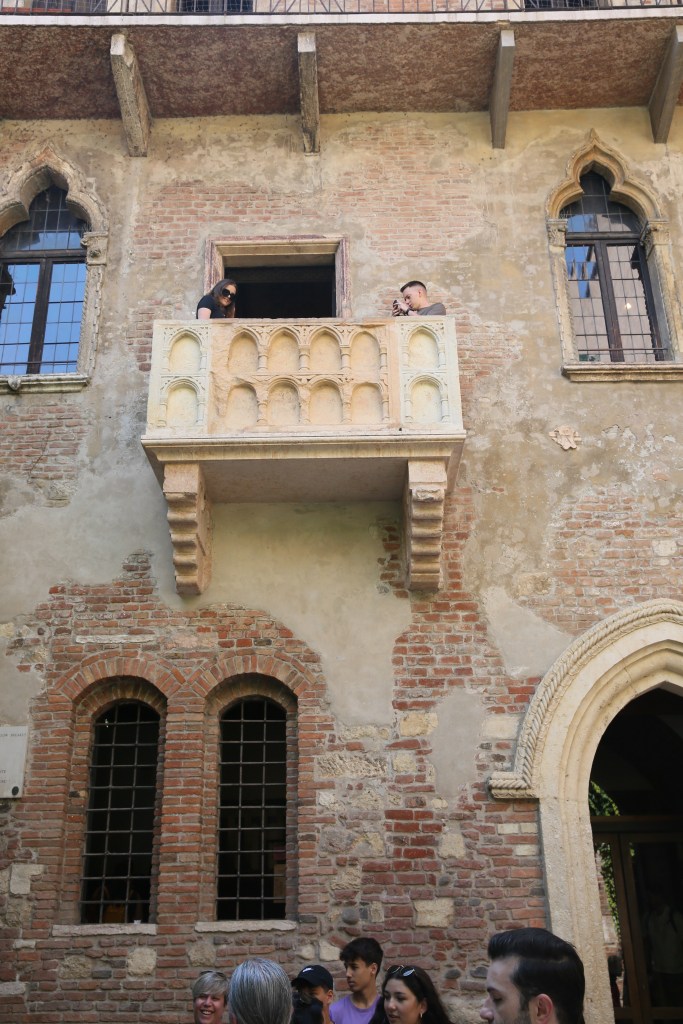
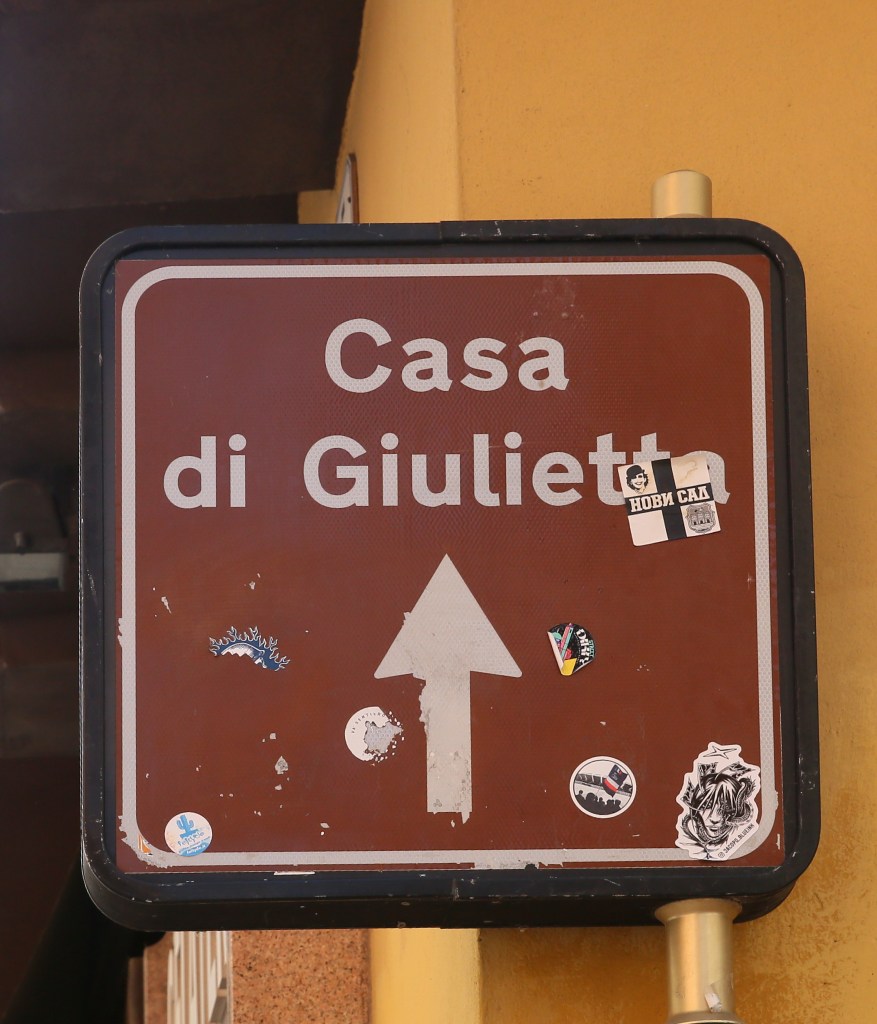
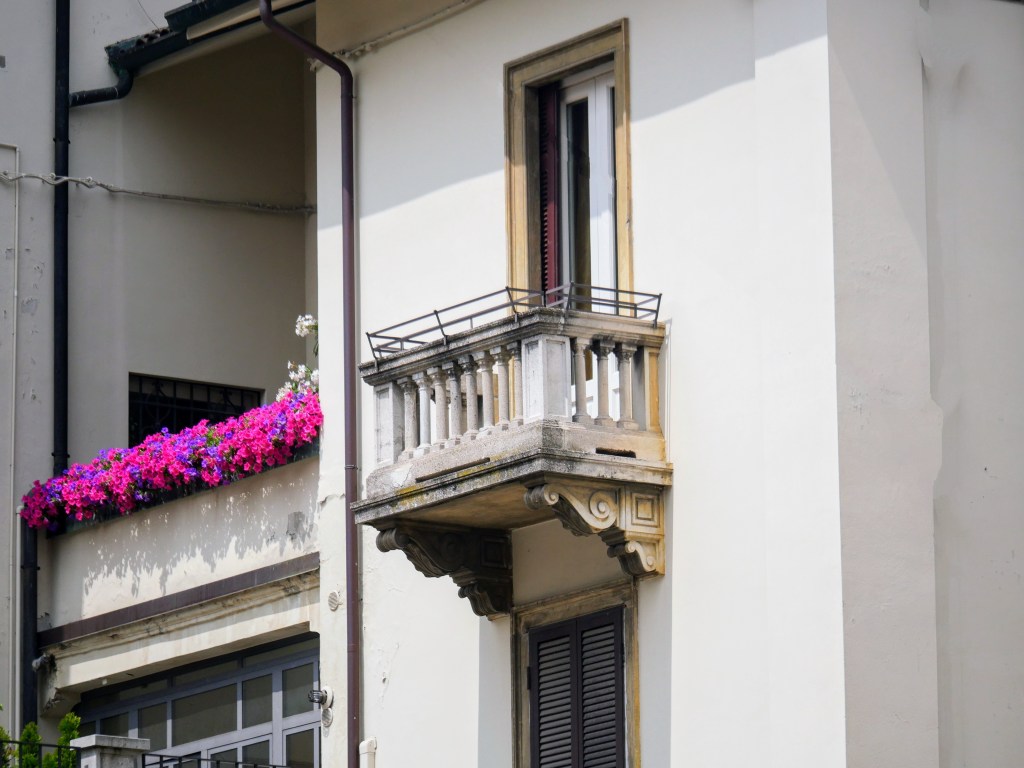
In the past, tourists were being ripped off regularly by taxi drivers. Many visitors would hop in a cab and ask to be taken to Juliet’s house to see the famous balcony – the drivers would gleefully rub their hands, and take their fare to any suitably-old balcony in the furtherest parts of Verona.  Photos were taken, sometimes rings exchanged, and often, sadly, lots of money paid for the ride.  However, at least as far as I am aware, none were driven by taxi to Stratford-on-Avon to see Juliet’s literary birthplace. To help prevent this scam, Verona City purchased a building with a suitable balcony and turned it into the Romeo e Giulietta museum. It is always crowded with visitors. Fortunately, there are many authentic sites in Verona that make a visit far more worthwhile.

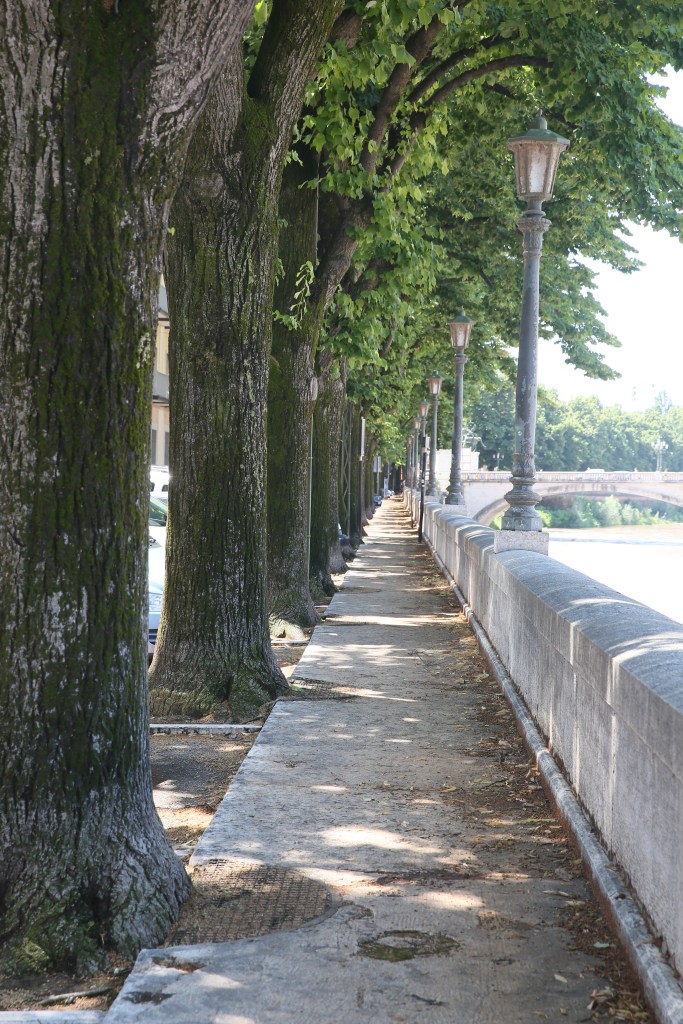
From Roman times, Verona was an important industrial city. The Adige River runs through the city and, as its souce is an alpine lake, it tends to flow quickly all year round.  Water wheels were used to power industries, particularly the manufacture of carts, cartwheels, and metallurgy.  VW, today, has a large plant in Verona, and there is still a large cutlery manufacturing industry – a continuation of manufacturing skills that started from Roman times.  Also, like so many towns in this part of the world, it has a long tradition of being conquered and changing hands.

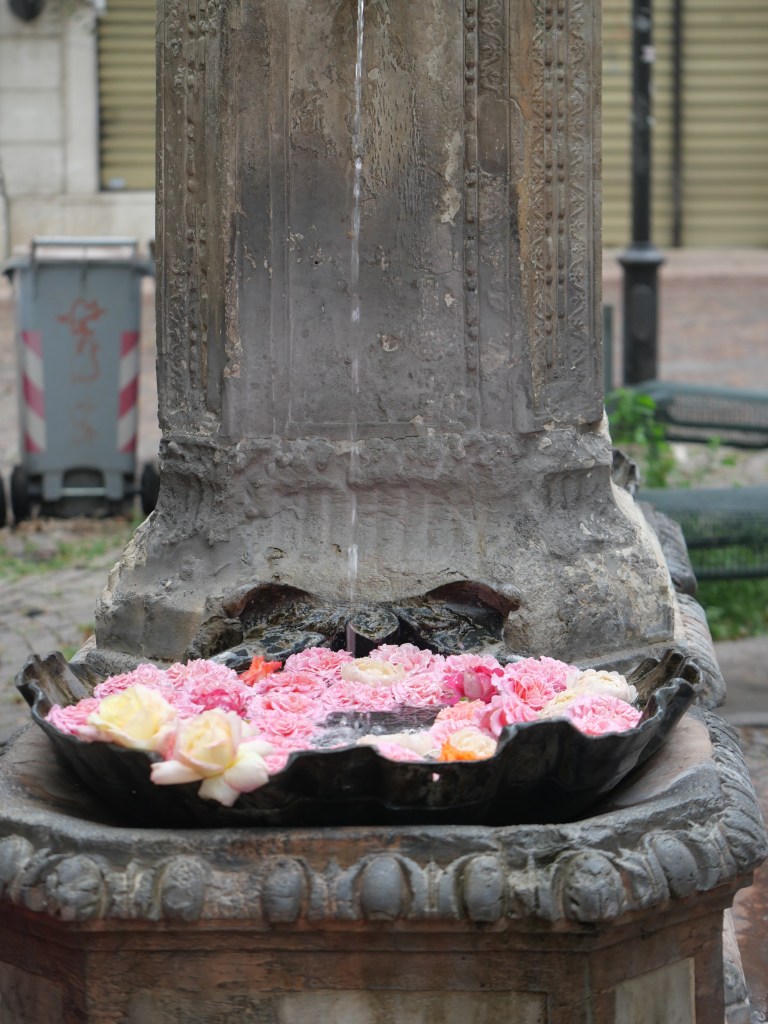
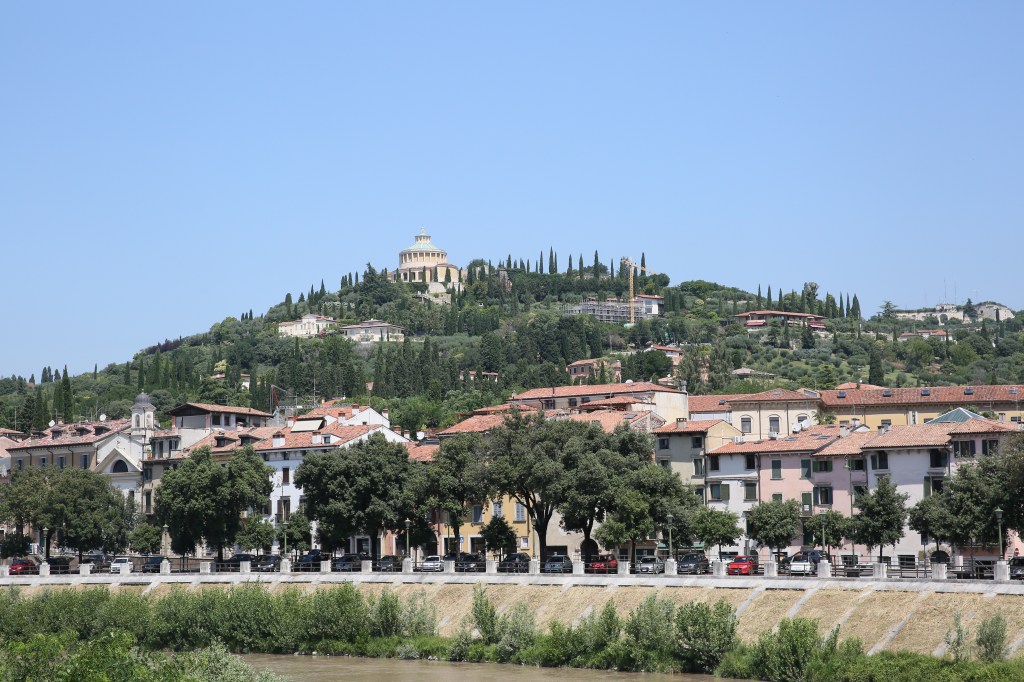
Verona has been ruled or sacked by the Romans, The Goths, the Huns, The Duchies of Lombardy, Milan, then Venice, followed by Napoleanic France, the Cisalpine Republic, the Kingdom of Italy, the Hapsburgs and the modern Italian republic; and most recently by tourists. Most have left a mark somewhere on the cityscape – a Roman aphitheatre, a Venetian palace, medieval churches, a Napoleonic road. Hapsburg era fountains etc etc etc.  The river and the hills beyond are stunning: they alone are worth the cost of a return ticket from Bergamo –  even if the fictional Romeo and Juliet now only have one balcony in the city! What’s in a name … that which we call, Verona!

Yours

Romeo e Giulietta (aka Farley and Lady Cunnington-Smythe)

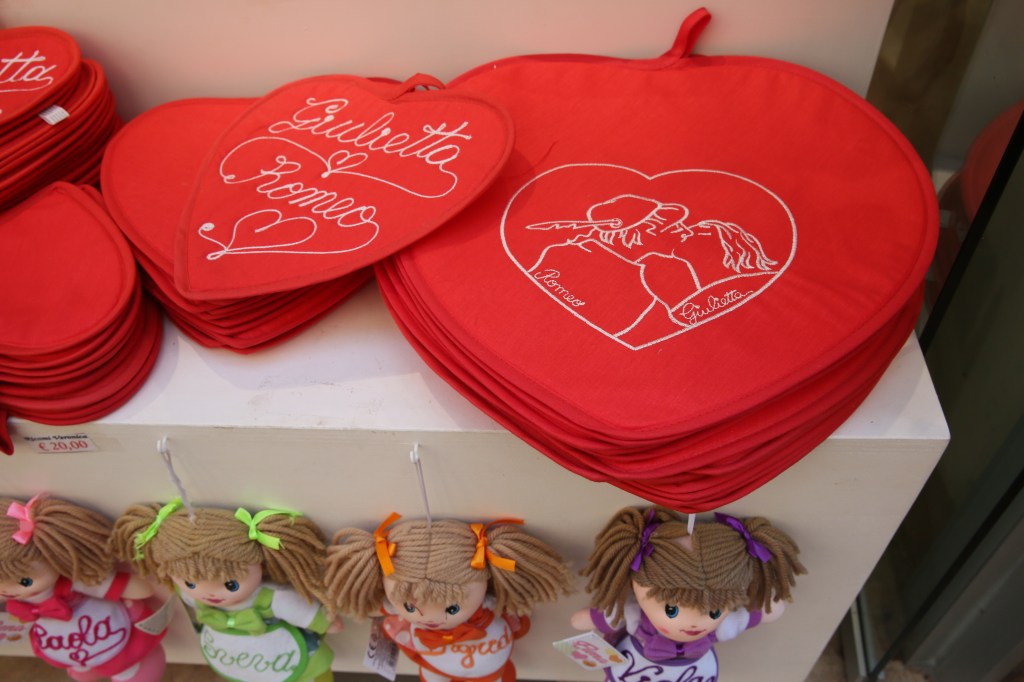
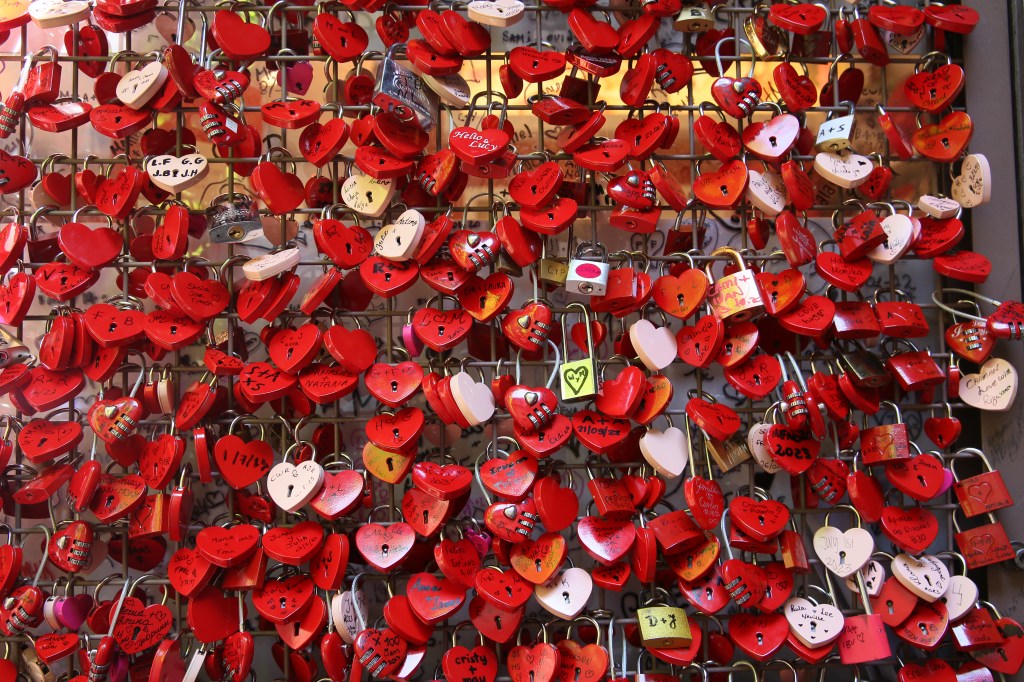
In the true spirit of cynical exploitation of The Bard, there is a Juliet Club.  For just €49 you can join the Giulietta Club in Verona for one day, read letters addressed to her and reply to one. You also get a free coffee.

People paid money for this as well!

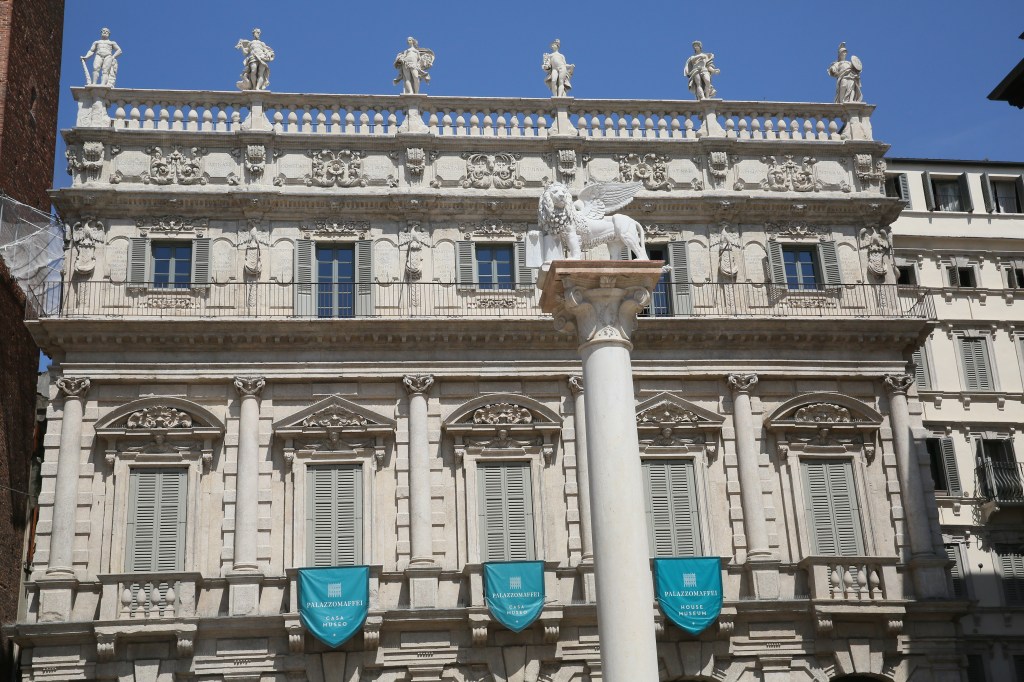
The Venetian Lion – always a giveaway

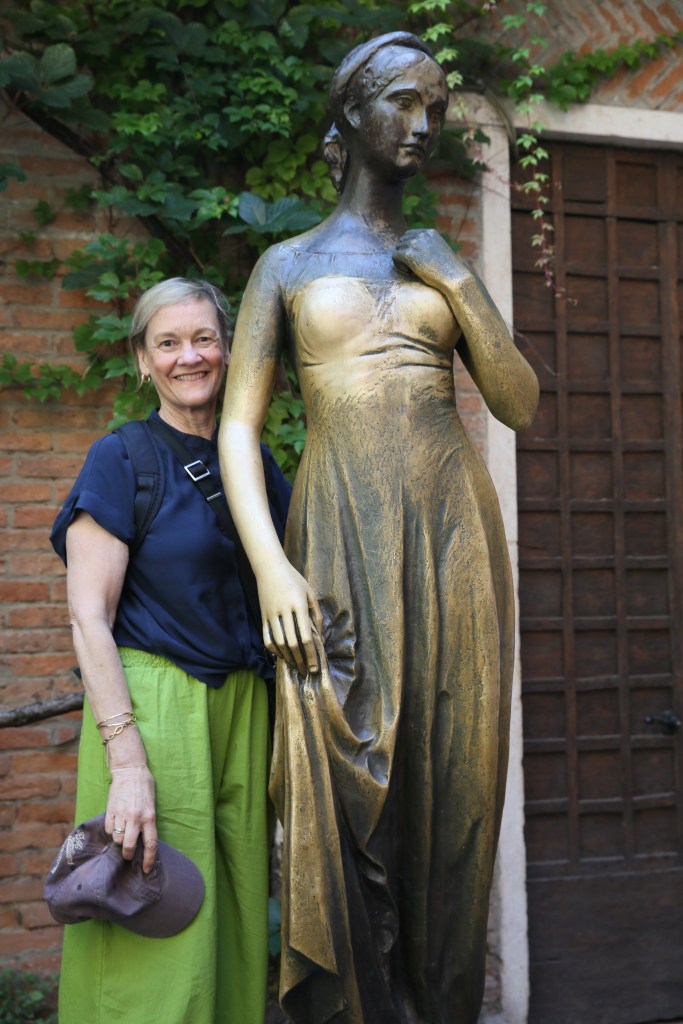
Juliet was very tall for a 13yr old.

Cafes and Caravaggios

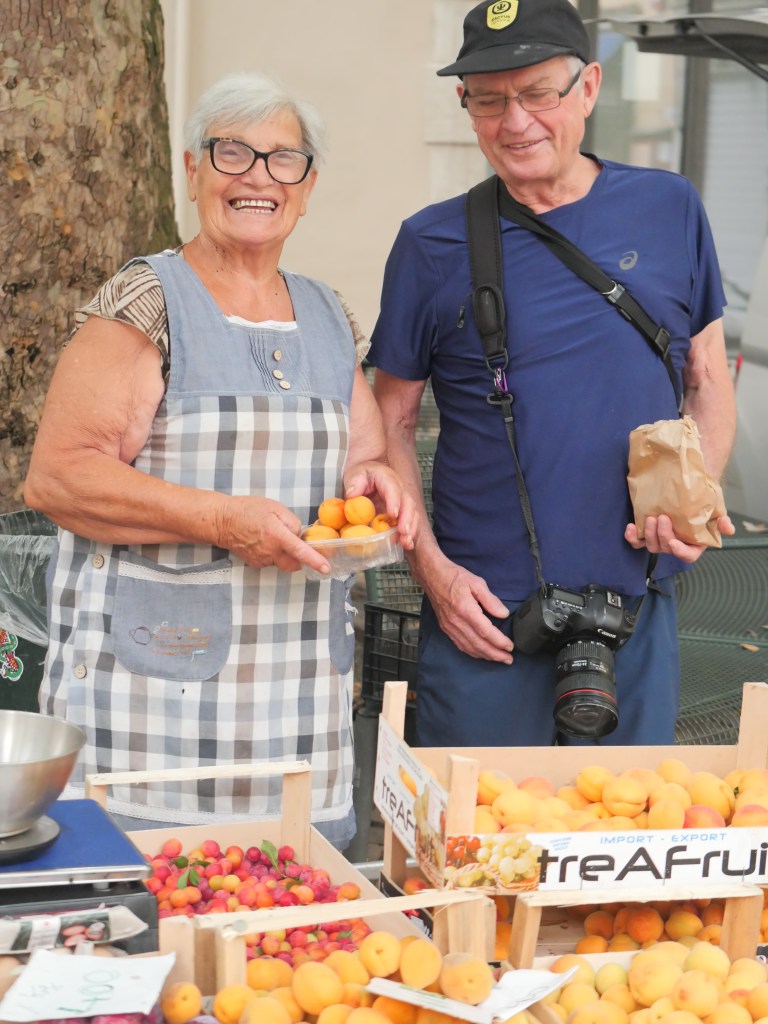
This morning, I went to our chosen coffee shop to ask for a recommendation for a local butcher, and managed to get into quite an in-depth conversation regarding Instagram tourism vs long stays with a Bugan regular by the name of Pietro. Pete is a Bergamo-born local who has studied abroad (Canada) and travelled widely. He is a fellow adherent to the Slow Travel movement: as an outsider, when you spend enough time in a town meeting locals, visiting landmarks, experiencing the culture and walking the streets, then these all begin to coalesce and assimilate into an understanding of ‘place’. I admit to being quite the go-to fellow for those of my readers who wish to visit Marburg or Tallegalla because of my intimate knowledge of these towns, however today’s wanderings certainly added to my understanding and appreciation for this Italian city.

The walk to the suggested butchery took me through Bergamo’s migrant-workers district. Last year, Italy took in (somewhat reluctantly, it must be said) 120,000 boat arrivals – migrants/refugees mainly from North Africa. It is estimated that at least that number again came to this country overland after entering Europe via another EU nation’s border. (Australia took in exactly zero boat people, and just 17,000 ‘approved’ refugees in the same period). This year, Ukrainians are being added to the mix. Whilst there are tensions, particularly in Italy’s south, it has generally been a peaceful process. As Pietro said with a shrug, Bergamo now has both polenta and couscous on the menu.

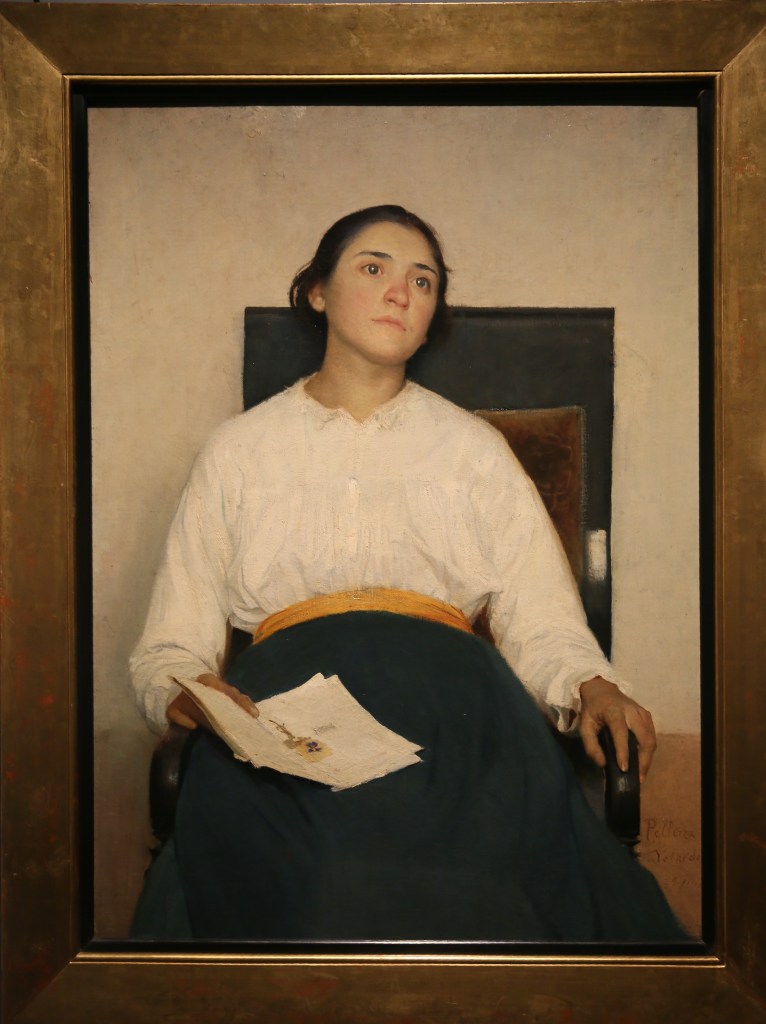
The Farley travel menu today was also varied – on my way back from purchasing supplies on the outskirts, I spent a couple of hours in the Accademia Carrara – Bergamo’s gallery of artworks ranging from the 14th to the 20th century. The institution was a highly respected art school from the early 1700s until the middle of the 20th century. Most of the gallery’s artworks were from entire collections that had been donated – initially by Lombardy’s nobility, later by its wealthy industrialists and private collectors. There were pieces from most of Italy’s best-known painters and sculpters from these periods – with the exception of da Vinci and Michaelangelo. To underscore Accademia’s history as a teaching institution, each work had a card in Italian and English explaining the history and significance of the art. I will admit the quality of the display possibly exceeded that of the pieces entered into this year’s Rosewood Show’s art competition, (although I couldn’t help but notice the complete absence of needlework and cake icing at the Accademia today…)

Bergamo, as a city, is becoming familiar: it is starting to coalesce. Our coffee shop in the morning, our wine bar in the evening – both have become vital parts of our Bergamo experience. In both places, we are provided with suggestions and assistance for further exploration; winery tours, music recitals, art exhibitions, etc, etc, etc… If only I could convince our Bergamo friends to come to Australia one day. I might even suggest they saw Laidley or Gatton – after they had stayed a week or so in that jewel of a town on the Bremer River, of course!

Farley
I think it might have been a drug deal, or perhaps she was selling chihuahuas.

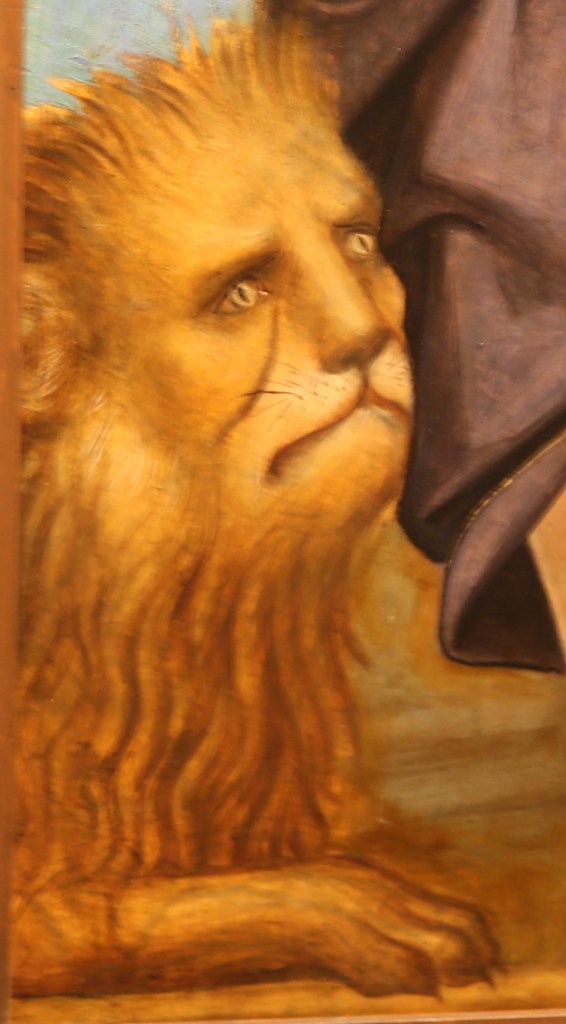
Dame Judy Dench got the inspiration for her costume in the London production of the musical ‘Cats’ from a work by the 14th-century Italian painter, Jacopo del Casentino (shown below). AND I actually saw the original piece today in Bergamo’s highly respected gallery, The Accademia Carrara!

Eating up Italy – with Vivaldi and Friends

When we alighted from our train at Bergamo after travelling to Italy from Lyon, it felt like we were coming home – Italy ‘home’ not Rosewood ‘home’. We have been to this country enough times to know how the train system works, to know how the restaurant and coffee system works – and to know there will be some things that don’t always work (like the airconditioning in our apartment).  And it doesn’t matter – the airconditioning never worked in Rosewood either.  In fact, there wasn’t any…..

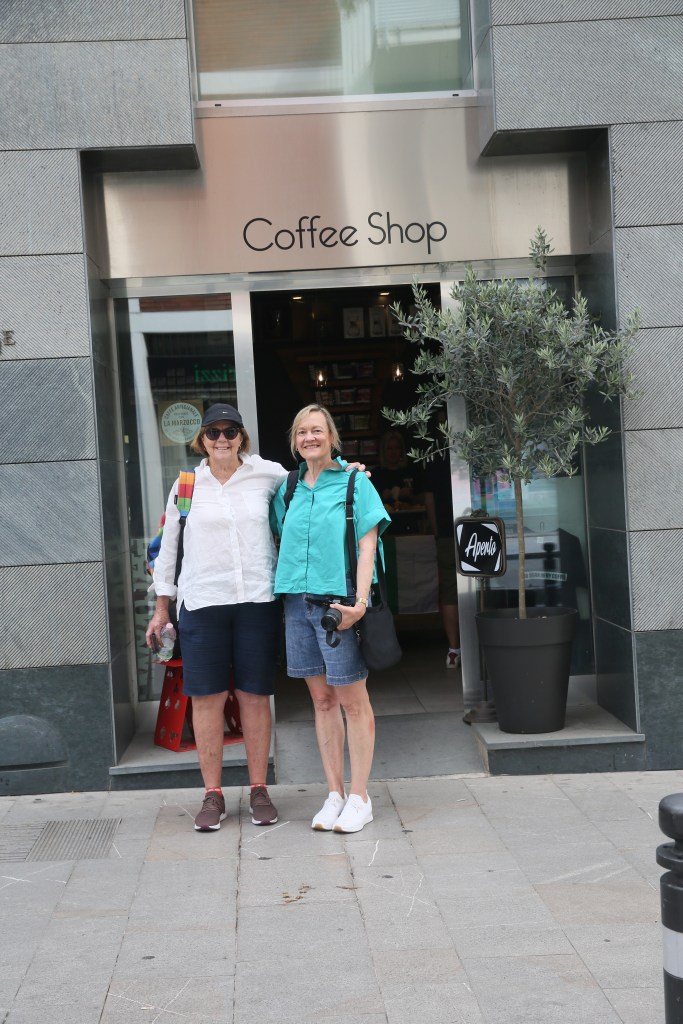
One of m’lady’s tasks whenever we travel is to find the best coffeeshop in town – there are a lot of choices in most Italian cities, but in this town a cafe called ‘Bugan’ has been exceptional.  The barista recently came second in the world barista championships held in Equador, and it is easy to understand why. He makes our flat whites each morning, and it is served by his sister, Sonia, who has become our tour guide. She has the most infectious laugh, is incredibly welcoming – and speaks almost no English.  This is not a problem. It has simply caused more laughter for everyone. Sonia has helped us understand Bergamo’s bus system, she has sent us to the best baker in all of Italy (her husband’s bakery), and she has sent us to the best coffee in the old part of town – her brother’s other cafe in the Citta Alta!

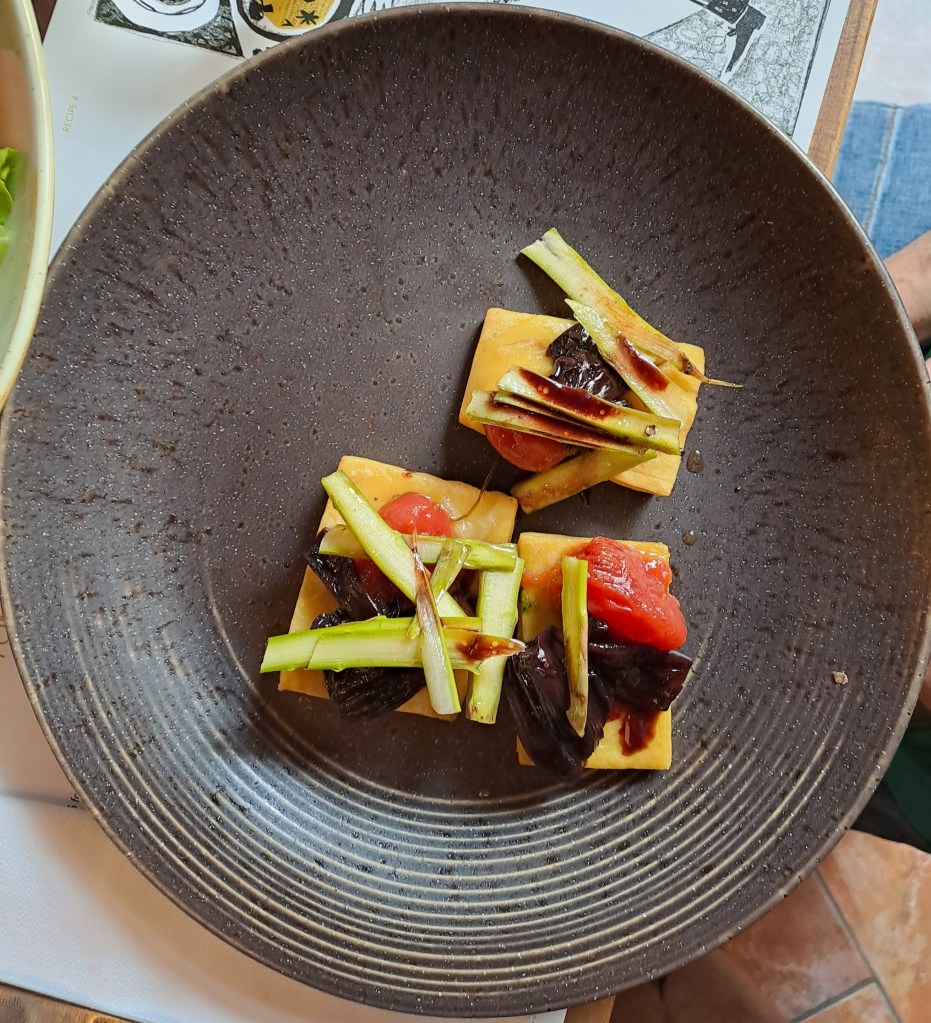
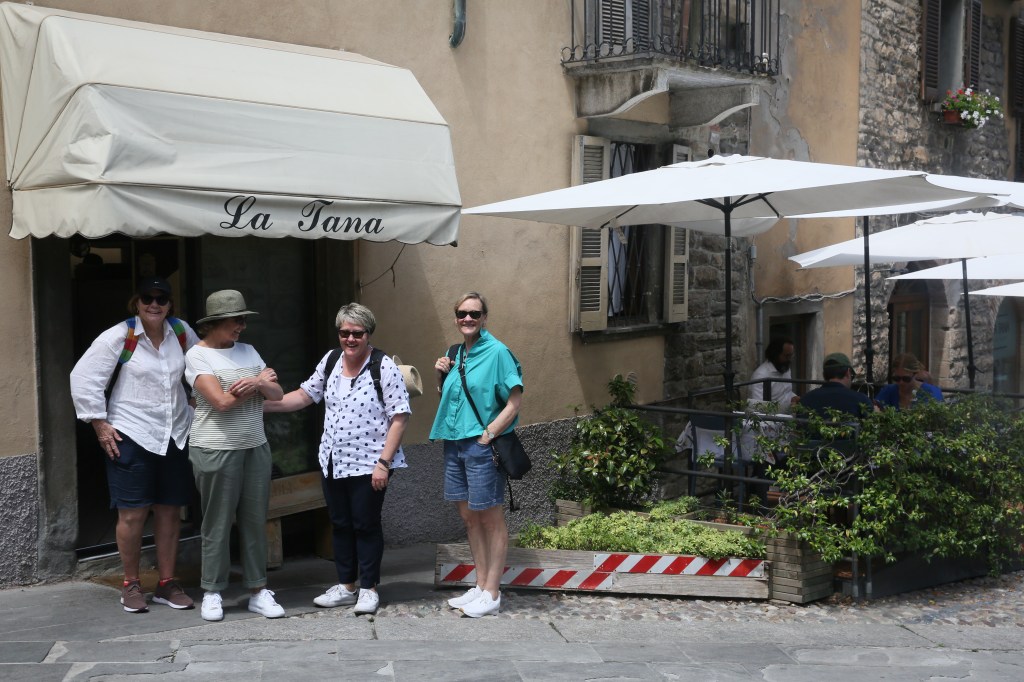
The Citta Alta sits atop a plateau that overlooks new Bergamo below, and the Lombardy plains beyond. We commuted up there by bus today with friends from Brisbane who were here for the day. Being a Saturday it was crowded but still a stunning place to explore. Lunch was at an eatery away from the main tourist streets, Restorante la Tana. The meals were outstanding, even though, surprisingly, it wasn’t owned by any relative of Sonia’s.  I suspect there will be many more visits to the ‘High City’ in the coming week.

The highlight of the day for me however was an afternoon concert of classical music given by Ensemble Locatelli – a chamber orchestra that plays baroque music with traditional instruments – including violins, a tenor lute, baroque organs and wooden flutes. Most of the performed pieces were Vivaldi concerti, but there were other pieces by Italian composers of the same era that were not familiar to me. Guess who translated the flyer advertising the concert for us – Sonia, of course!  However, she also paid for our tickets on her phone so that we didn’t have to negotiate the theatre’s payment system and refused to accept a tip when we reimbursed her.  This was an incredibly generous and kind act because, as far as we know, she had not a single relative in the orchestra!

Tomorrow, we will head back up to the Citta Alta as much of the new part of Bergamo is closed on Sunday.  We will buy a coffee or two at Bugan Cafe II, and we will continue to explore the side alleys of this beautiful destination.  We have already found flyers for more musical performances to attend, we have found more restaurants to try out, and we have Sonia, our laughing Bugan barista to guide us.  All pretty special, really for a Rosewood lad and his fellow companions ……

Farley C-S