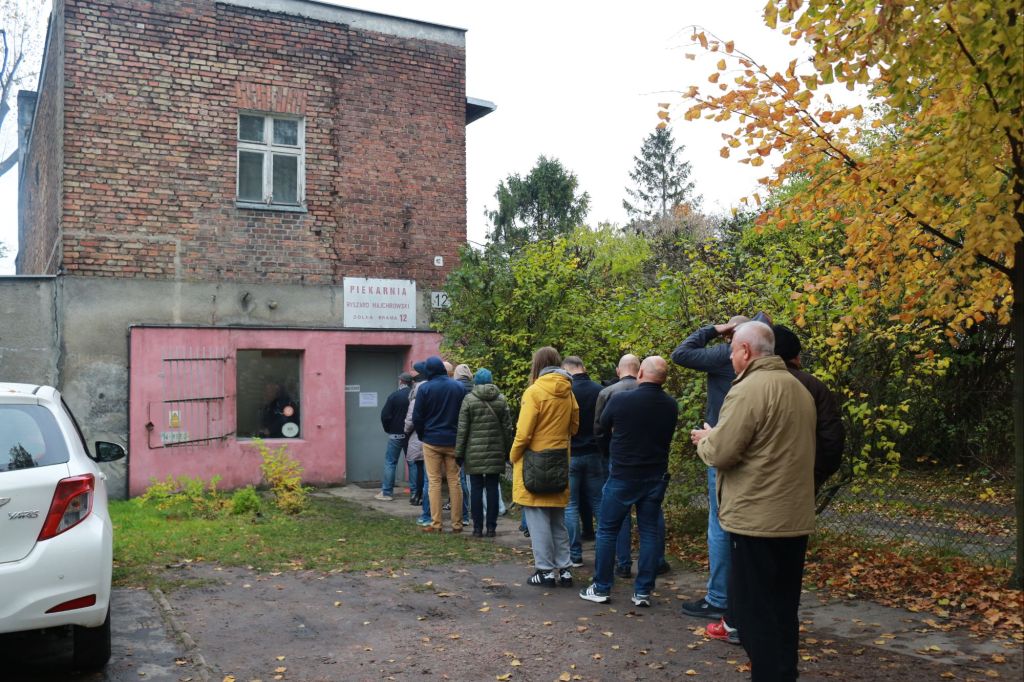
The Ryszard Majchrowski bakery has been in operation since 1945, and is one of the last remaining traditional bakeries with wood fired ovens in Northern Poland.
This morning, the locals (and two Australians) were willing to stand in a queue for more than an hour, waiting for their chance to buy some of Ryszard’s famous bread.
The excitement mounted as each customer emerged, bearing huge bags of loaves and rolls. Knowing nods rippled down the ever increasing line and our English interpreter – also patient in anticipation, told us, ‘this is the best bread you will ever taste.’ And still we waited, along with the local policewoman who joined us – time to spare? Keeping a watchful eye on the interloping Aussies, perhaps?
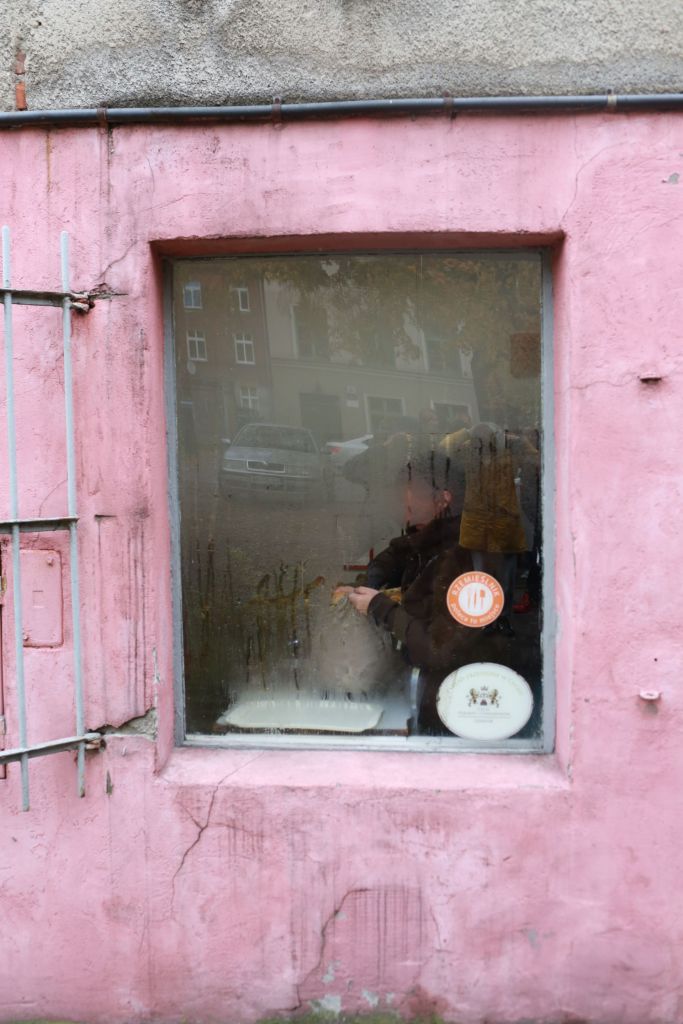
When our turn came we were served by an extremely busy shop assistant, (the only shop assistant and we suspect, original owner of said bakery). Using my best Polish I ordered Chleb Ziemniaczany and several Chleb Pszenny rolls. Excitement was high among our waiting friends.
Of course, bread such as this required a quick visit to Kat at the local Spar, to pick up jam and soft cheese. She could barely contain her excitement when she saw us at the checkout … but she did.
You are wondering, as we were, about the quality of this mystical loaf? It did bring back memories of the joy of cutting into a tank loaf or double high-top as a child. Only the bread today was particularly disappointing, and now we have heaps of it…..sigh. But still, there were small mercies: we did get out of the Spar gate without Kat’s assistance.
Yes, Mr Vidler – if only we remembered the Vegemite, it might have improved the taste of our daily bread – and help us eat our way though some of our recently purchased stockpile.
Such is travel. You can’t win ’em all Farquhar! And now – onto our next Polish adventure …
So many people in the last few months, when told that we intended to travel around Poland, responded with bewildered silence. Then, after an uncomfortably long pause, enquired politely; “Have you got family in Poland?” Nobody entirely believed me when I told them my surname is actually Evanowski and that I was born in Bilowicza. Perhaps they have become too familiar with stories of Rosewood? Needless to say, our fifty minute trip yesterday from Copenhagen back to my homeland was not without its challenges.
Full of anticipation and jet lag sleeplessness, we arrived at Copenhagen airport at 6:00 in the morning for the scheduled 8:30 flight to Gdansk. The plane was fully loaded ready for takeoff – then nothing happened. The pilot finally announced that engineers were on their way to inspect a part of the navigation equipment. Perhaps she too was dubious about visiting Poland? Was it a premonition – a sign to note? After some time, we were instructed to disembark. As is the way, in another country, we had no idea what was happening, the Danish system as mysterious as someone choosing to holiday in Poland it would seem.
The flight wasn’t rescheduled, it was cancelled around 11am. We were all offered the choice of a refund, or a lunch voucher (generous enough to buy a pre- prepared pre- packaged sandwich with dubious fillings) and a 2:00pm flight to Gdansk. Like a magnet, Linda spotted a fellow traveller in the coffee line and we spent the six hours of waiting to ‘take off with Michelle from Melbourne. The world is small.
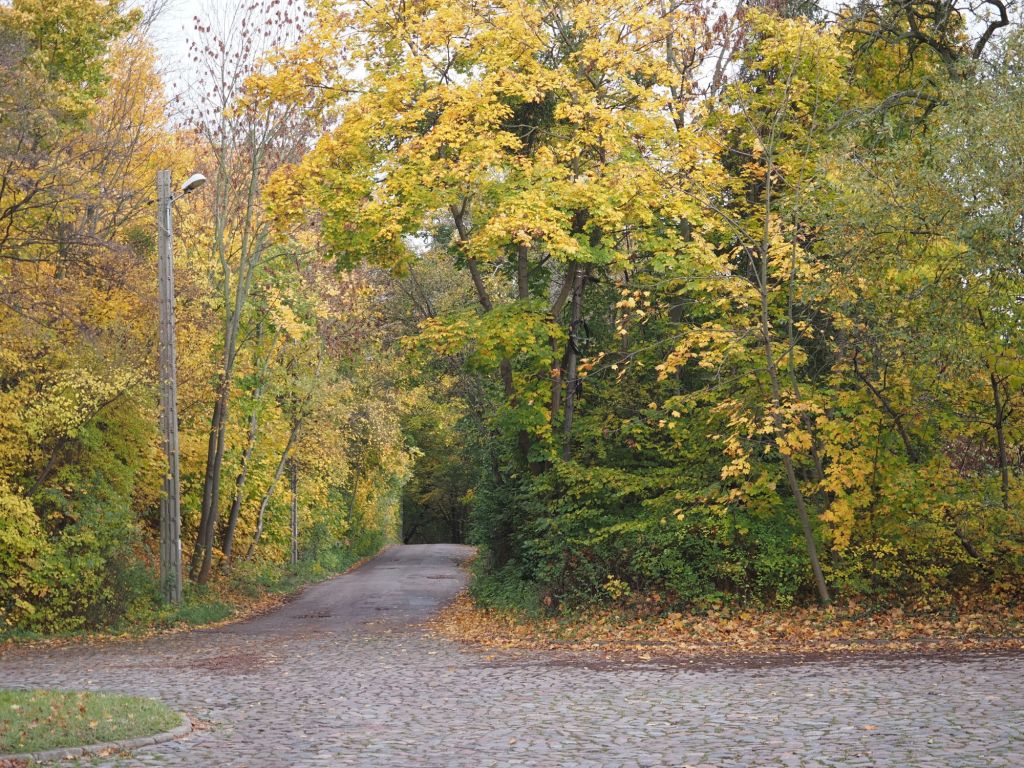
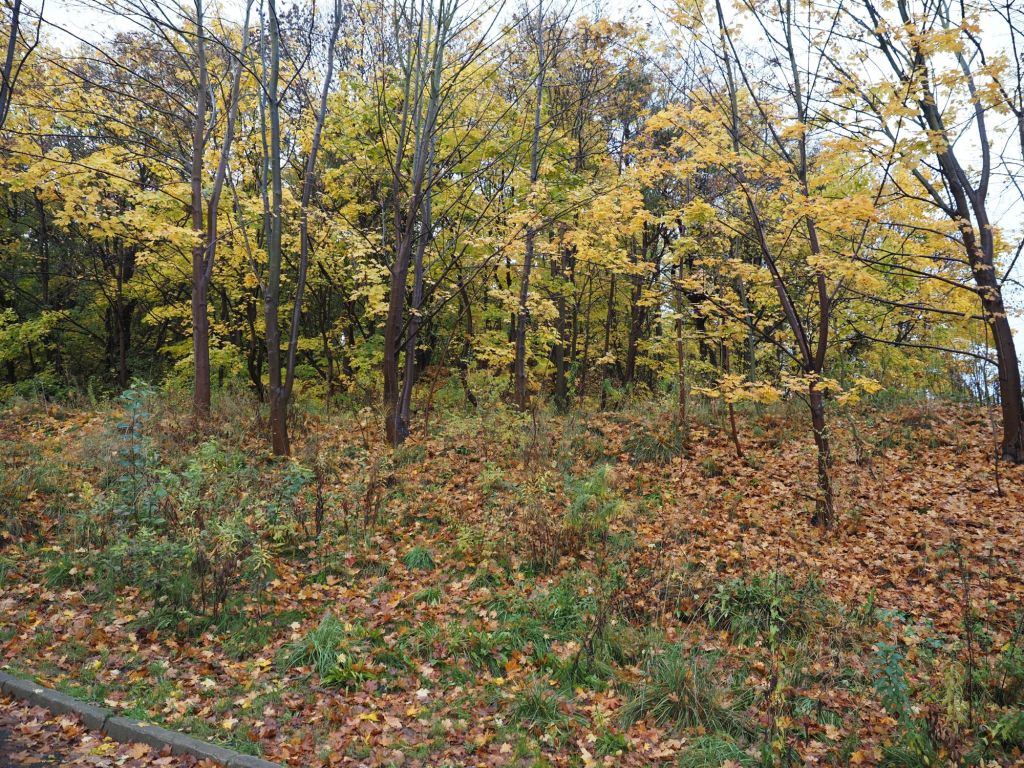
There’s always a sense of relief when you manage to negotiate the rail system in a country where stations all appear to have similar names – impossible to pronounce and therefore impossible to seek assistance from locals who look with scepticism as you ask for directions. After all, how does one pronounce – Gdansk Wrzeszcz? Two trains, a thousand steps and several coded gates and we arrived in our Airbnb – deceptively smaller than the photographs had led us to believe but clean, quiet and with a view to a forest of yellowing autumn trees.
Of course, food beckoned and we met Kat who works at the local Spar supermarket. She made it clear that holidays in Poland are ill-advised if you can’t negotiate the self -serve check out. Her eye rolls were spectacular as we attempted to locate items like plums, shallots and raspberries … on screen, in Polish. The pinnacle for Kat was when we became locked in – unable to escape the gate letting people out of the store. We discovered all too late that one needs to zap the docket’s bar code to gain release to the outside world. When we eventually discerned the system, we had a pile up of frustrated shoppers behind us and lost docket angst. Kat did release us but with the withering look that says, ‘Why are you on holidays in Poland?’ Its a question many have asked.
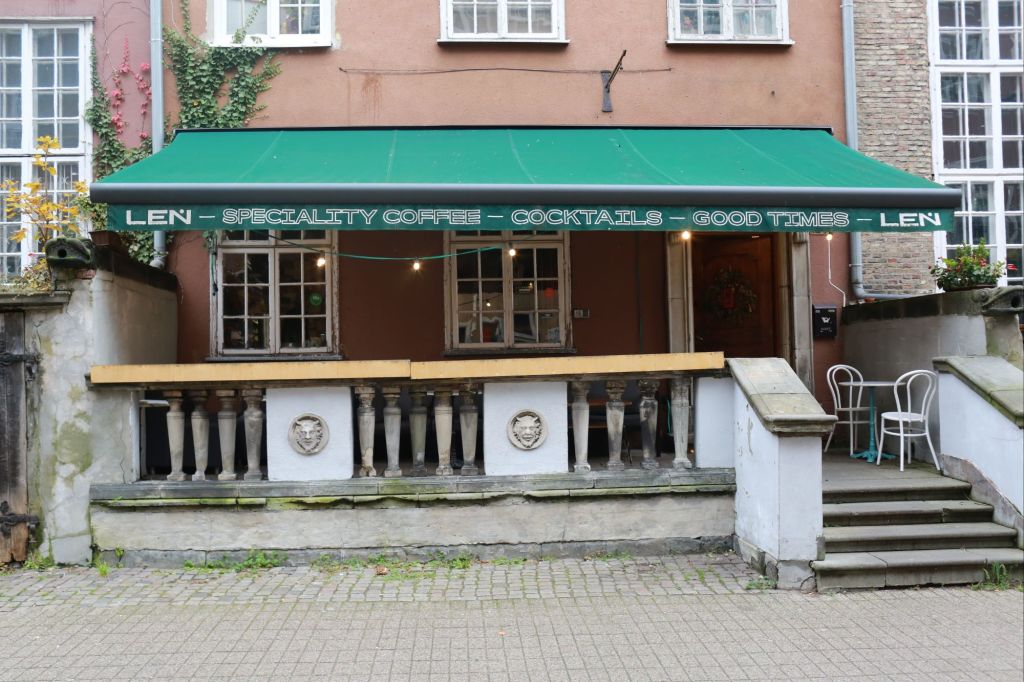
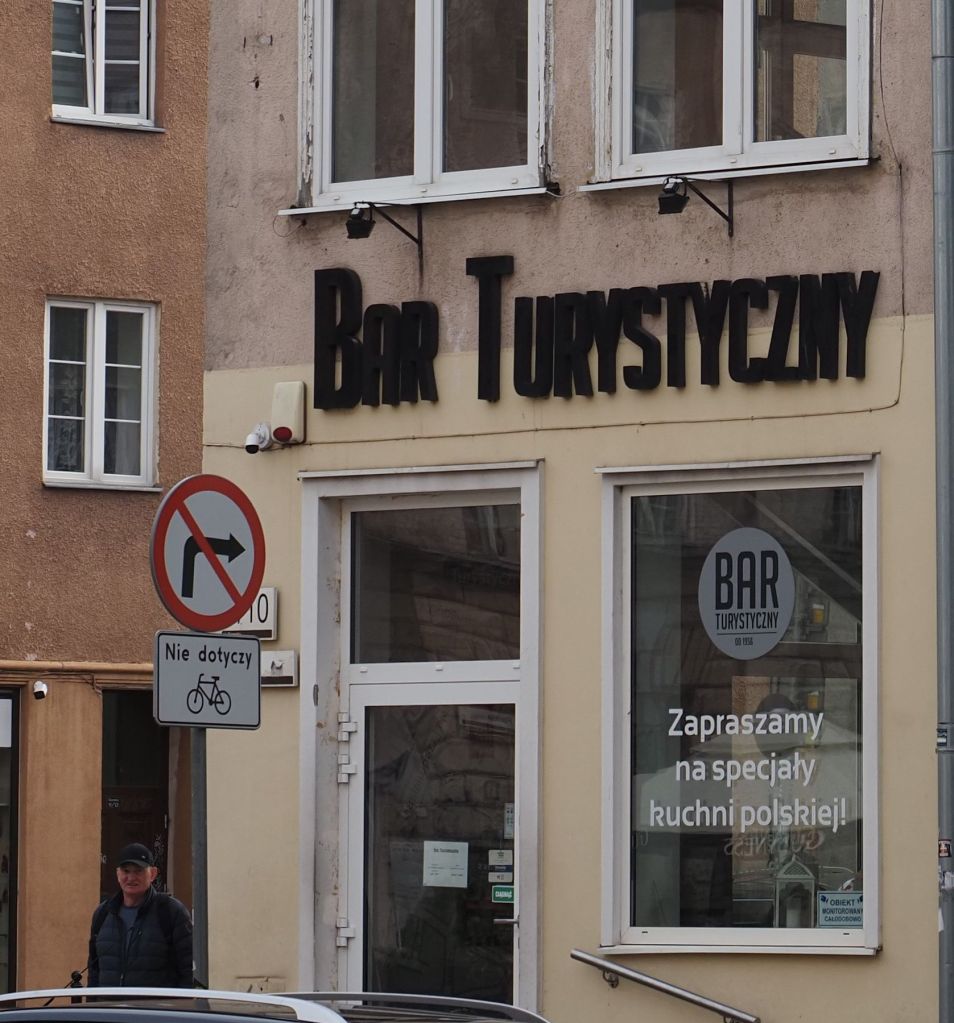
But, a day wandering the cobbled streets, entering one of the ubiquitous Catholic churches, finding a coffee spot – Len’s with a decent flat white on offer and sharing a traditional Polish lunch at Bar Turystyczny … established in 1956, and the woman tending the check out today may have been waitressing at the opening! Like her great niece, Kat from Spar, she is a woman of few words and very direct language. In answer to ‘Could we have a menu?’ she replied, ‘No.’
With my Baltic heritage I can speak at least three Polish words very fluently. However, perhaps because of subtle differences in dialects, some in Gdansk tend to struggle with my Polish pronunciation at times. Nevertheless the Poles here are clear in communique … we love their country, their ways… after all, we Evanowskis need to stick together. Oops, better let you go, Kat, there’s another Polish holiday maker who is locked at the gate to Spar.
As a young Rosewood lad, the flashest form of transport I ever experienced was the Wigan’s new Holden HR Premier. It was an automatic, and they had added seat covers and an aerial. I suspect Barry Wigan may still have the HR to drive around Rosewood. That said, for a trip to Europe and back, I do think that Singapore Airlines is perhaps a better choice.
We got into Copenhagen at 7:30 in the morning but couldn’t check in until 2pm. I suspect that Queen Mary had heard that Farley and Lady Cunnington-Smythe would be in town- the airport arrival was fast and efficient, the trip to our hotel to drop off bags was easy, and the metro into town was simple to navigate. Once we arrived in the city centre however, we soon realised that only the Danish Royal Family and international bankers can afford to live in Copenhagen. The price of everything is quite extraordinarily expensive.
The Levis I was wearing cost me $85 at Hannah’s, in Copenhagen the same jeans at a department store were almost A$500. A regular flat white is between A$20-$30 – our caffeine addiction is on hold until Gdansk. If we had have sold our children into slavery before travelling, we may have just been able to afford a restaurant meal. Fortunately jetlag dulls appetites and wandering around taking photos is a very cheap past time. And, of course there was that promise of Mary’s invitation pending.
Like all good tourists in need of good food and somewhere to sit we found our way to the National (Royal) Library and took in a tour of its national treasures (including an original Guttenberg bible and a display of Kepler’s notes and calculations) – along with lunch that surprisingly provided us with a few coins change from A$100. We swam off the meal in the hotel’s faintly heated pool and collapsed into the frenzied sleep of the jet lagged. But, Gdansk beckons – with its Polish food at Polish prices.
I am really looking forward to seeing how much Poland has changed since we were last there in 2015. I’m looking to taking our cameras wandering Gdansk – a city we haven’t seen before. And I’m looking forward to buying a meal that costs less than the purchase price of a small car, even if Queen Mary did prefer that we stayed longer in Copenhagen…
Better let you go Mary, we have a plane to catch. Of course we will be back, later in November – so keep those Tasmanian home fires burning in anticipation …
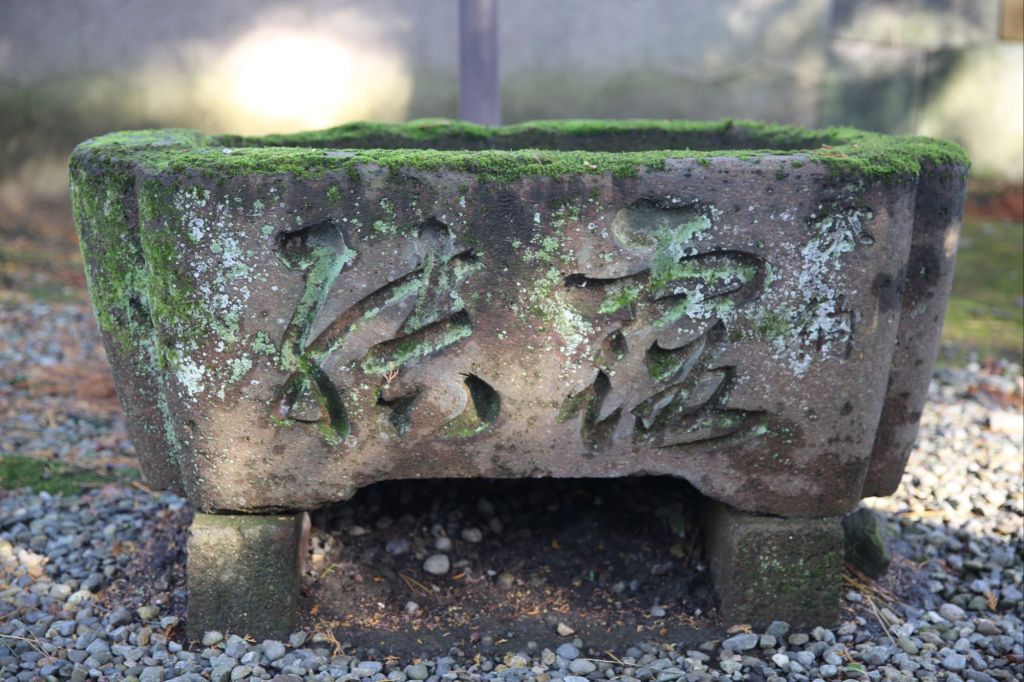
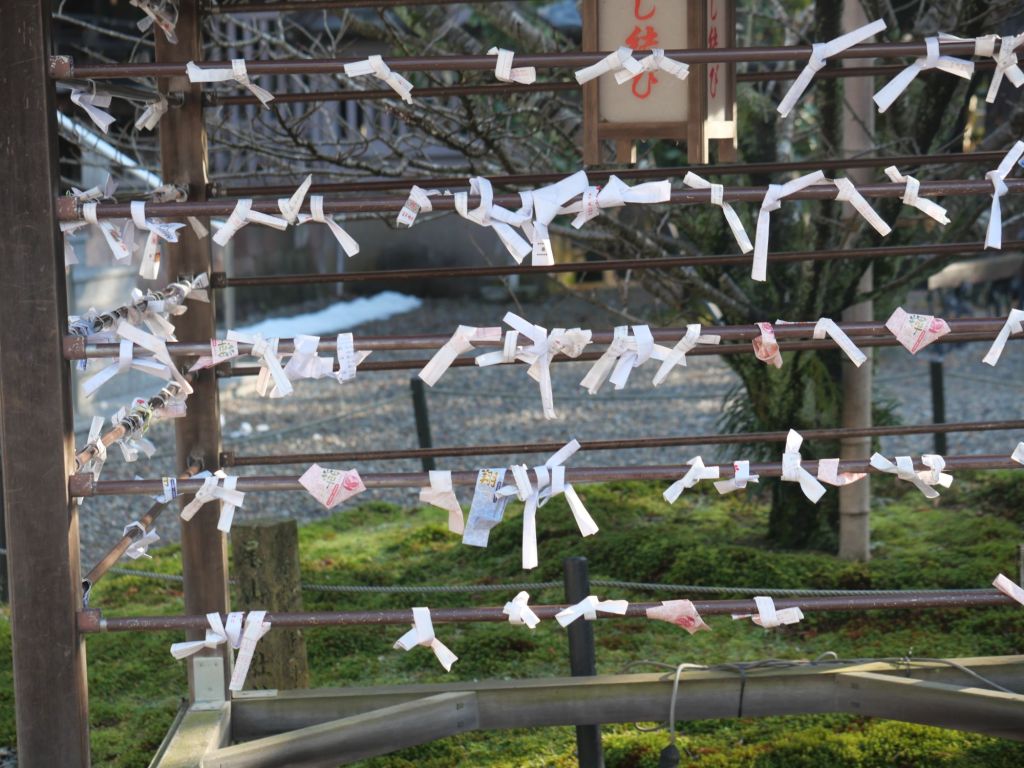
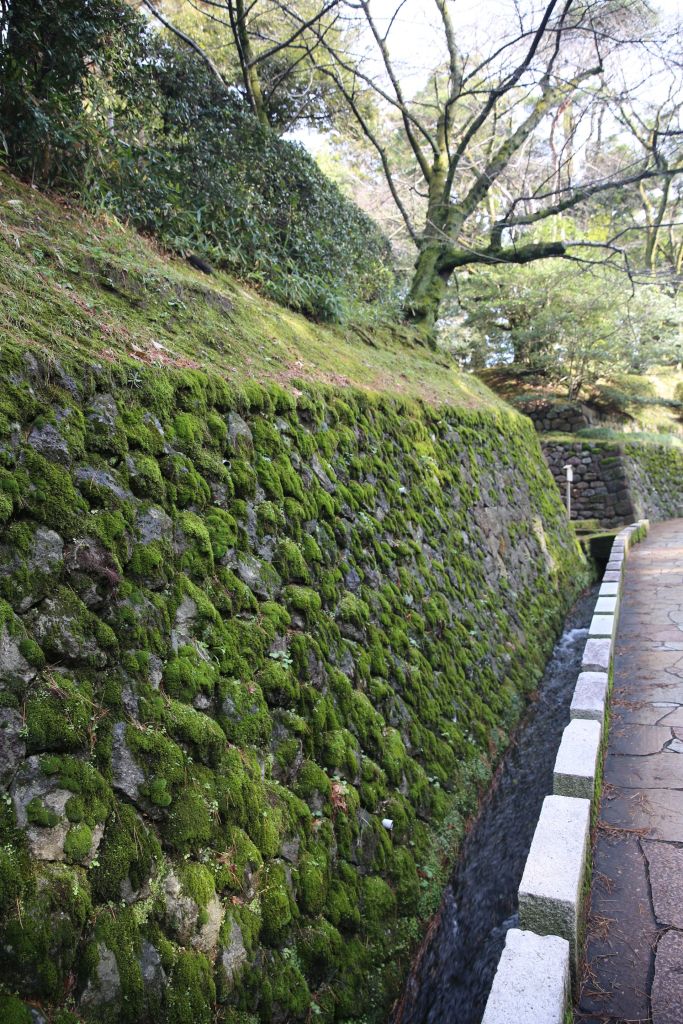
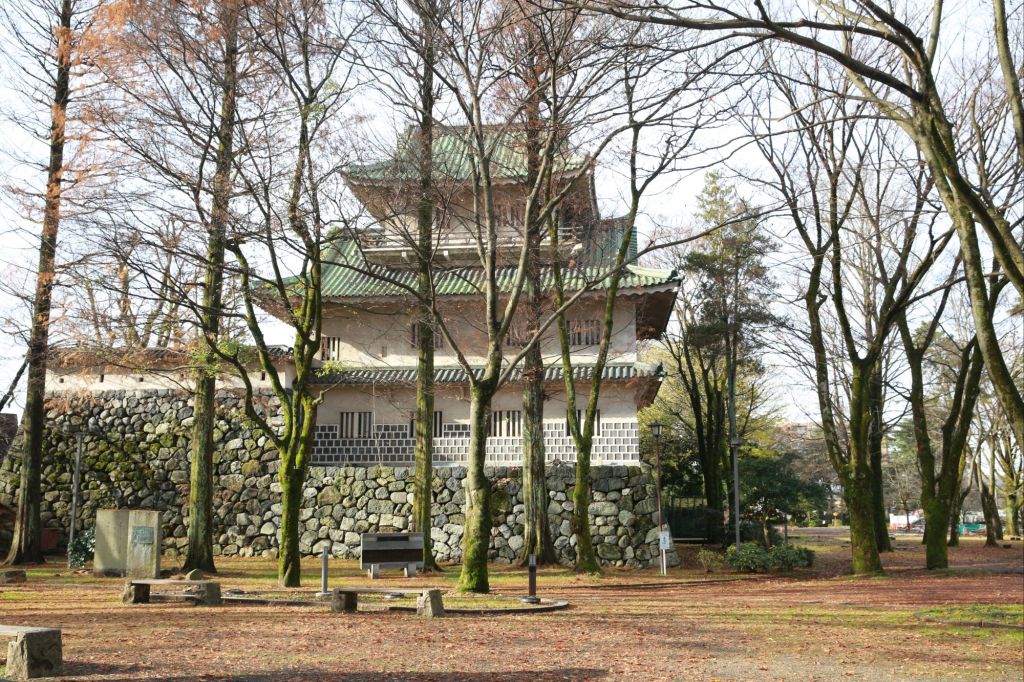
Tallegalla is very special at Christmas time. It is similar to Kanazawa in that there are also pine trees at Tallegalla, and the cars there also (usually) drive on the left side of the road. We spent the 25th in Kanazawa and, as a weather bonus, had our only fine day in this beautiful Japanese city. The Kenroku-en, a garden beside the castle, is considered to be one of the best 3 Japanese gardens in the world. Just like the pine forests of Tallegalla, it proved to be a wonderful place to explore on a crisp, clear Christmas morning.
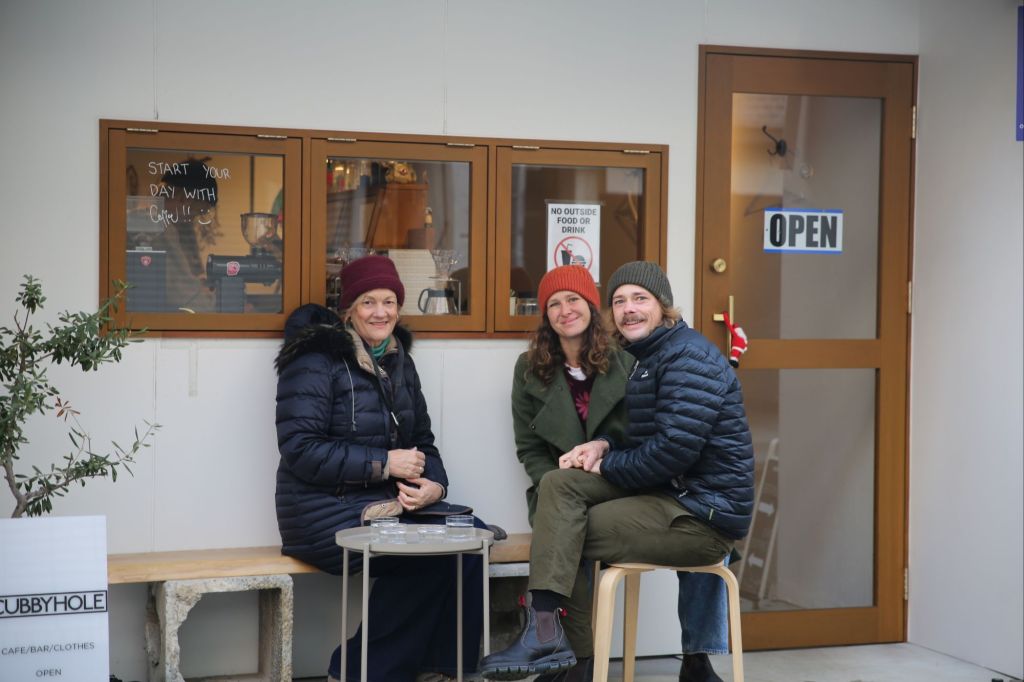
Of course, like other coffee tragics, we sought out our flat whites, Americanos and espressos before setting out. As with other Aussies, Americans and French tourists we landed upon the Cubby Hole. Tucked away in a side street not far from the gardens, was this hidden gem. We waited patiently outside before a table upstairs became available, there perched above a suburban street we enjoyed our brew of choice, yet again marvelling at the aesthetics of the upstairs loo and the fastidiousness of table clearing and service delivery – again it reminded me of the Esso servo in Rosewood.
A traditional Japanese garden is designed so that, from any vantage point, in all parts of the garden some features will be hidden. Whilst this was also true of our backyard in Rosewood (parts of the backyard of my childhood were concealed by the chook shed, the clump of banana trees and by the long grass down the back) the Kenroku-en was perhaps a little more subtle in this regard. In spring it is filled by couples getting married, or families celebrating their child’s first spring; a leftover from the days when the cold months had a high mortality rate, particularly amongst newborns. In winter this gaden has its own beauty with patches of green mossy soil and bare trees braced with bamboo stakes to protect them from the weight of the coming snowfalls. We spent all morning exploring this park before heading back to our hotel for a late Christmas lunch.
From the tiny kitchenettes of our hotel rooms we managed quite a feast. Mitch was the presiding chef and he took particular care with the main dish of chicken breasts simmered in a three mushroom sauce, with obligatory roast potatoes and a caprice salad. The Lady, on more than ten European Christmases has managed to rustle up a berry crumble – and she didn’t disappoint… though the sourcing of the accompanying vanilla ice cream is a story for another time. You’ll be relieved to know that there was a hard fought game of 500 interlaced in the proceedings.
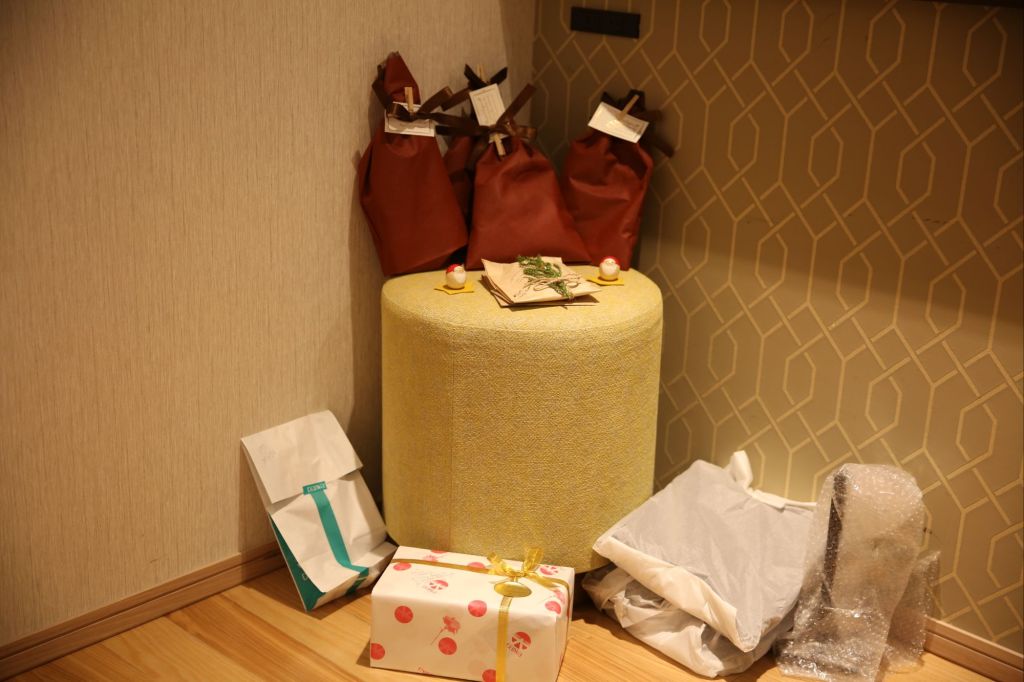
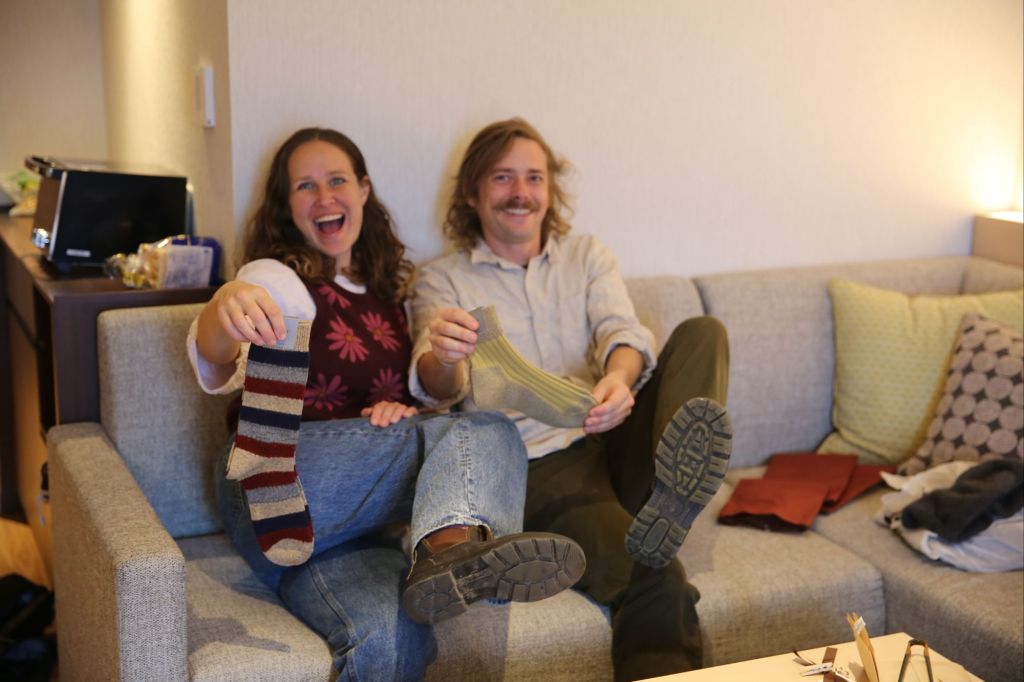
Another Christmas tradition when travelling is the Christmas chair rather than a tree, however, in Kanazawa, it was the Christmas ottoman rather than a chair. Easily transportable gifts predominated, and even though I was secretly wishing for a large Japanese induction cooktop or perhaps a new hybrid car from Santa- both were rendered unmanageable within the 30kg Qantas baggage allowance – apparently. Next time perhaps….
I am certain that there will be a next time in Kanazawa as there is still so much in this prefecture to explore. I would love to spend more time wandering around the teahouse suburb. I want to try more of the cuisine of this district, particularly in the older parts of town or further up the Noto Peninsula. Above all I want to spend more time strolling through the Kenroku-en. Especially because, on this visit, I couldn’t see large parts of the garden because of all the stupid stuff blocking my view.
Because Kanazawa was not bombed in WW2 and hasn’t suffered from major fires that have destroyed older districts in other Japanese cities, some areas here are relatively unchanged from the 18th century. It has been our meandering through the ‘old Kanazawa’ that has captured us the most.
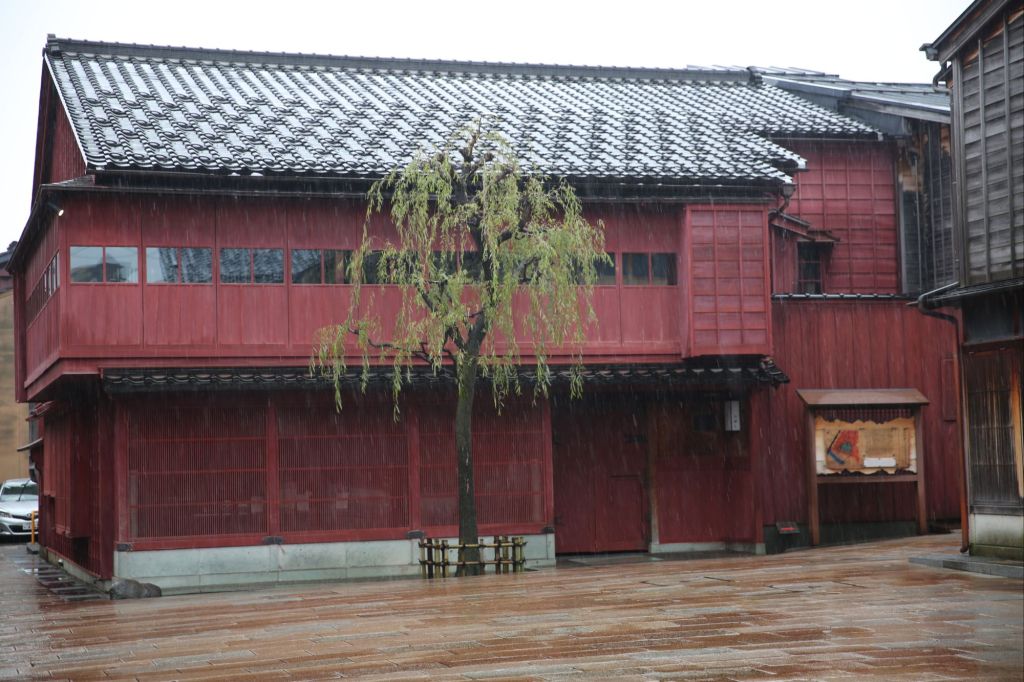
Yesterday, we wandered the samurai families’ part of town, today we ventured to the suburb that was essentially the red light district in the 18th, 19th, and early 20th centuries.
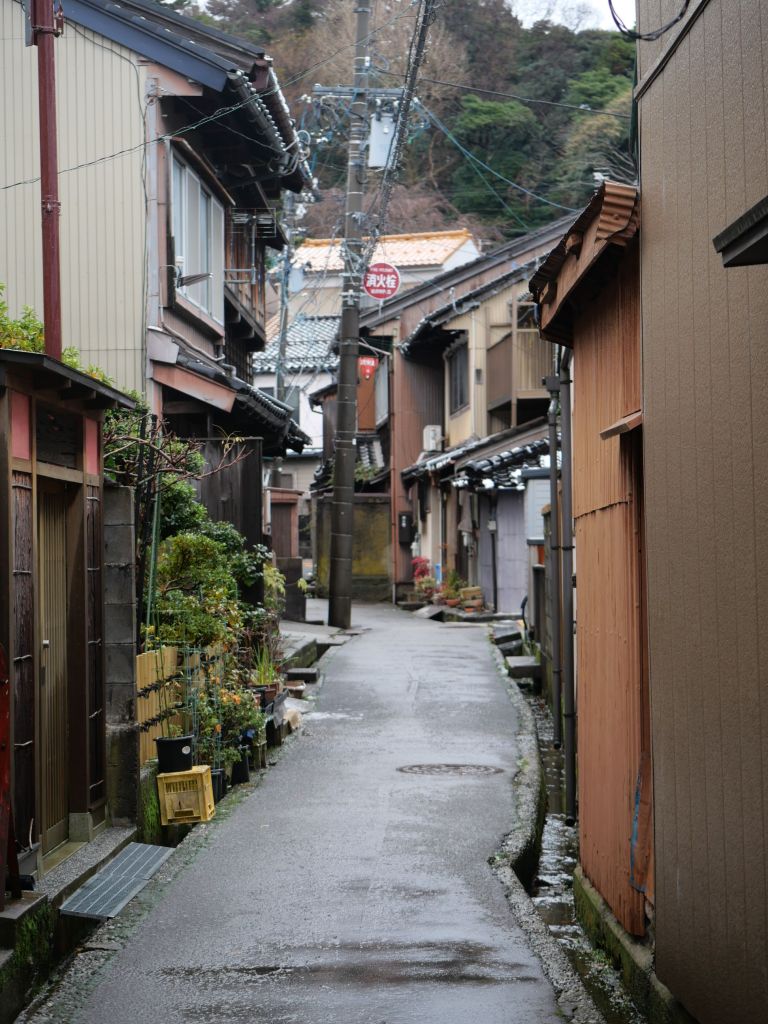
The Higashi Chaya District (‘Eastern Teahouse District’) was on the main road into and out of the city and city officials ensured it was kept to the edge of town. Various Shoguns attempted to shut the suburb down, but always unsuccessfully. It was a suburb of inns, tea houses and restaurants – now it is a suburb of inns, small shops and restaurants – the night clubs are in the centre of town near the railway station. Despite the snow and sleet it was a great part of town to wander, PLUS we managed to find a very good coffee.
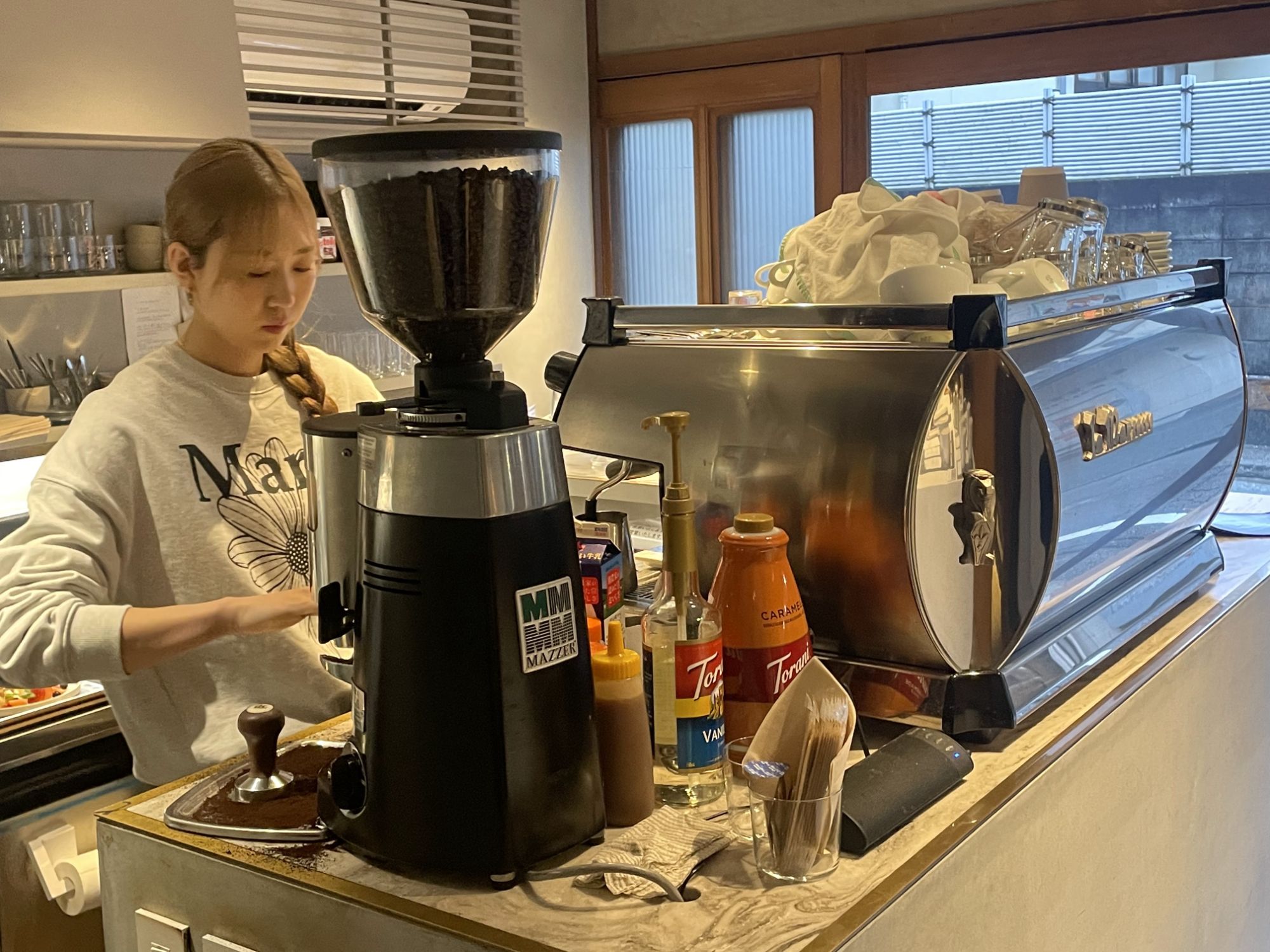
Nonstop Coffee Shop is perched on a corner in the thick of the district. It’s a one-man show by a barista who spent a recent two years honing his skills in Melbourne. We literally squeezed into his shop and the Lady and I showed great fortitude in drinking a smooth as silk flat white or two on oat milk. Wild! Mitchell and Jemima attest to the perfection of his espresso and Americano, too. Of course, nothing would beat an international roast served with fish and chips at the legendary Cassimatis’ cafe in downtown Rosewood in its halcyon years.
Surprisingly, there is not even a single Greek cafe in the main Kanazawa market. There is, however, a tiny kitchenette in our room. Chef Mitchell has the same sized kitchen in his. Between us there will be chicken in leek and mushroom sauce, roast potatoes, a tomato salad and berry crumble for dessert. And … if all else fails, there’s a Starbucks on every corner (joking, Scotty). Although rumour has it that KFC is the destination of choice for locals on Christmas Day.
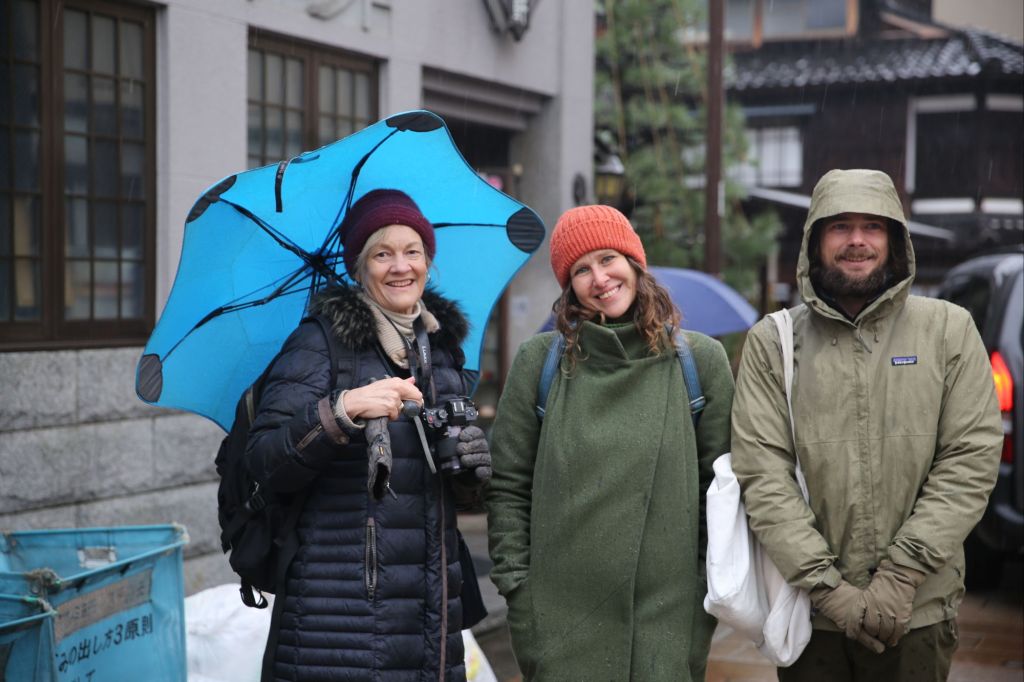
Today we had rain, we had sleet, and we had snow. But it didn’t matter because we also had Kanazawa. Kanazawa is a beautiful city of 400,000 people on the northwest coast of Japan. (It is similar to Rosewood in that the cars here also drive on the left side of the road.) Mitch and Jemima arrived last night to accompany us for the next week, and today was spent wandering this city with them.
We were in Kanazawa in April, so parts of the city are familiar. In WW2 Kanazawa and Kyoto were declared protected cities by the Americans and were quarantined from bombing. As a result some of the older parts of this town have been well preserved. The castle and its surrounds are intact, as is the district where the Samurai clans lived – a whole suburb of traditional wooden structures typical of the 18th and 19th centuries. Because we were here earlier in the year we also knew where to start our day.
Angolo Cafe is excellent, AND it opens at 8am – particularly early in a part of the world with cafes that generally don’t begin service until 10am. From here it was a 30 minute stroll to Crab Central – Kanazawa’ s Omicho Markets
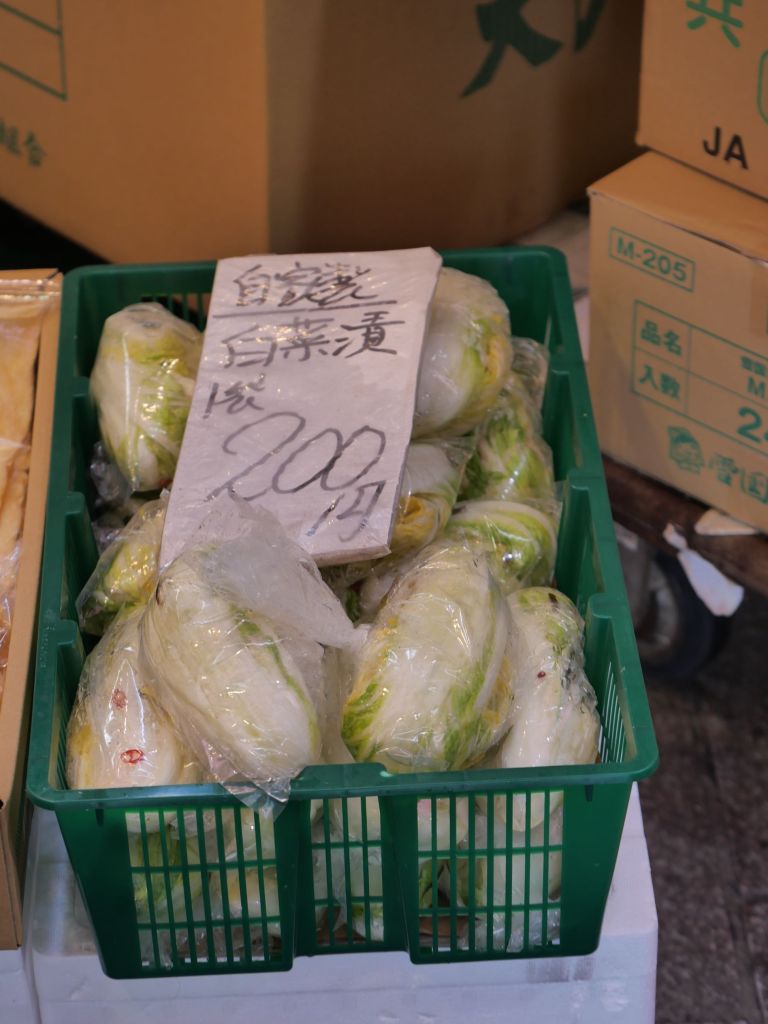
At this time of the year on this part of the coast the crab is the culinary king. More than half of the stalls sold seafood, every seafood stall sold crabs or crab meat. The price of a single crab ranged from $50 to around $500. Many restaurants, including the one at the back of our coffee shop have special menus for this time of year that concentrate entirely on this crustacean. (At Angolo restaurant for around $1000 the four of us could have had the only meal currently on the menu – a 6 course crab degustation experience). We will return to the market to purchase ingredients for the Christmas meal to be cooked in our apartment, but as Jem and I are the only seafood fans, I know that crab will not figure on our menu for the 25th.
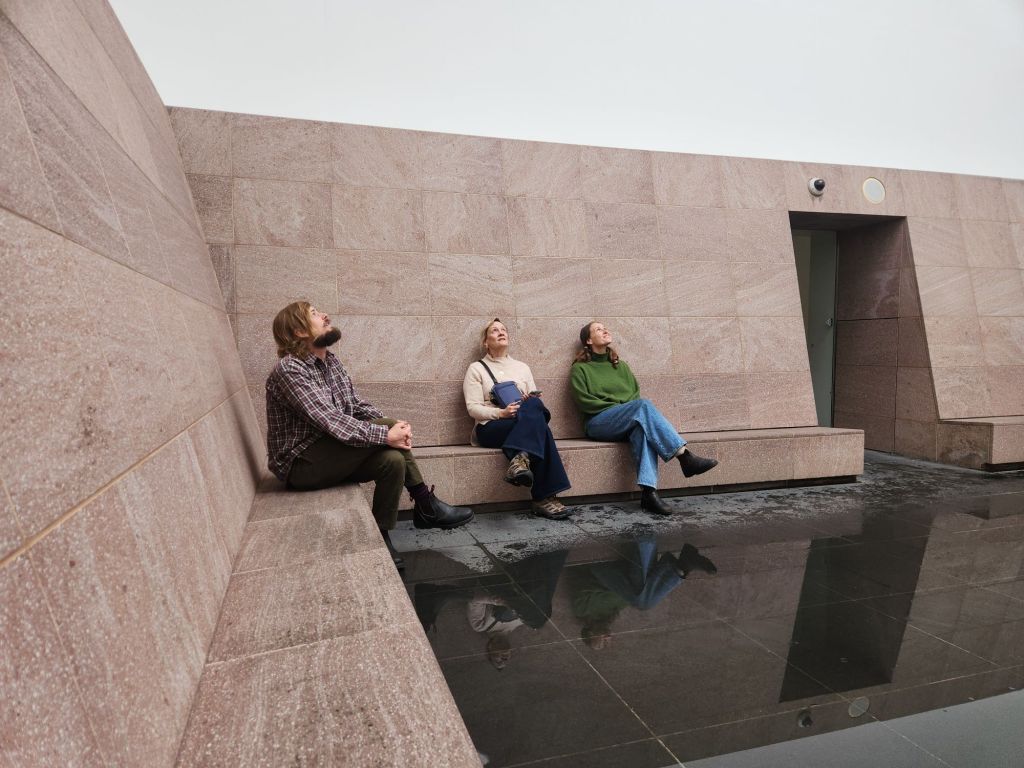
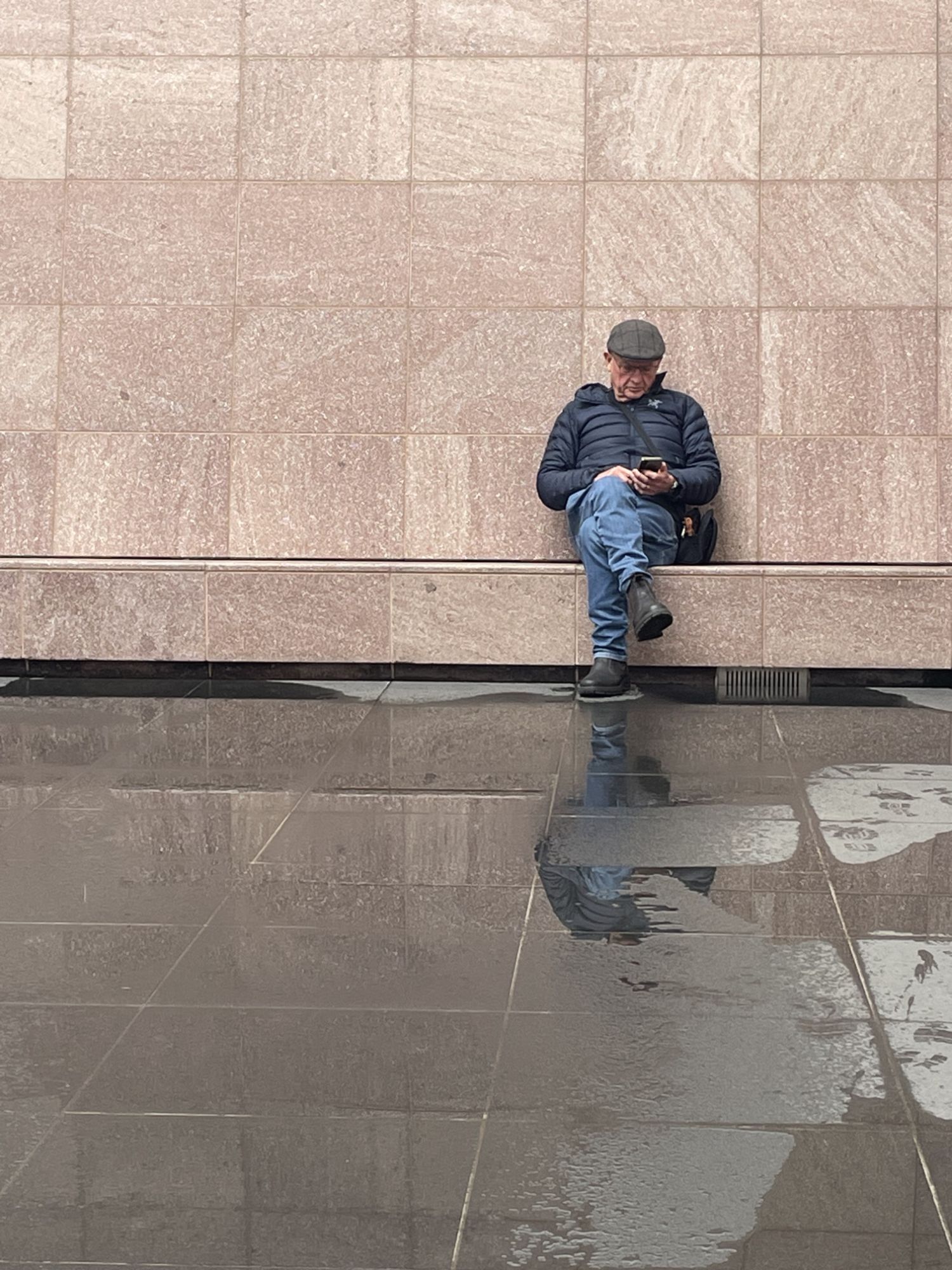
I have often wondered what would be the worst job in the world for me – being employed to supervise a stationary exhibit in an art gallery would make the top 5 on that list. The Museum of Contemporary Arts in Kanazawa is fabulous and was an excellent way to stay warm. Time spent in art galleries or museums when travelling is rarely wasted, and this collection is no exception. Experiencing the building itself is worth the price of admission, the art was a bonus. None the less, even in this place, if I was confined to one part of one room to protect one art installation – particularly one I didn’t appreciate, I would fear insanity. But insanity was in abeyance in one space in particular – the place: James Turrell’s contemplation room with its ceiling open to the skies. Here we sat peacefully … in contemplation of life against its backdrop of rain, snow and a fleeting view of blue. Turrell is an American artist famed for his work in the ‘light and space’ zone and his ability to manipulate a viewer’s perception through light – yes even the perception of a Rosewood boy!
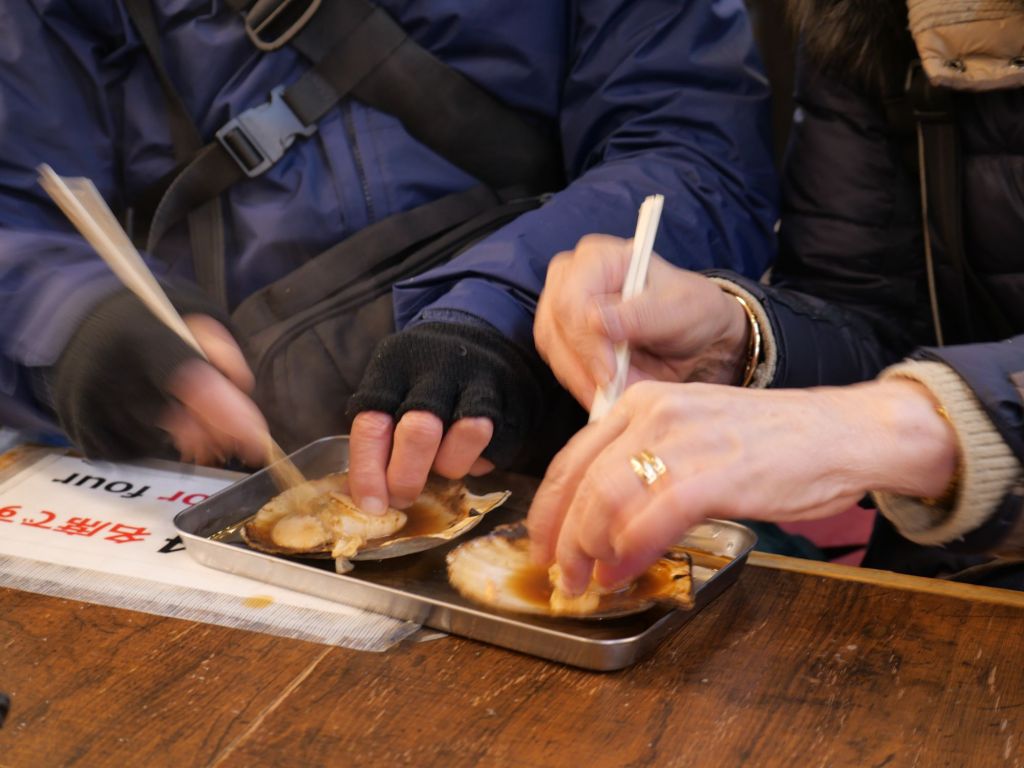
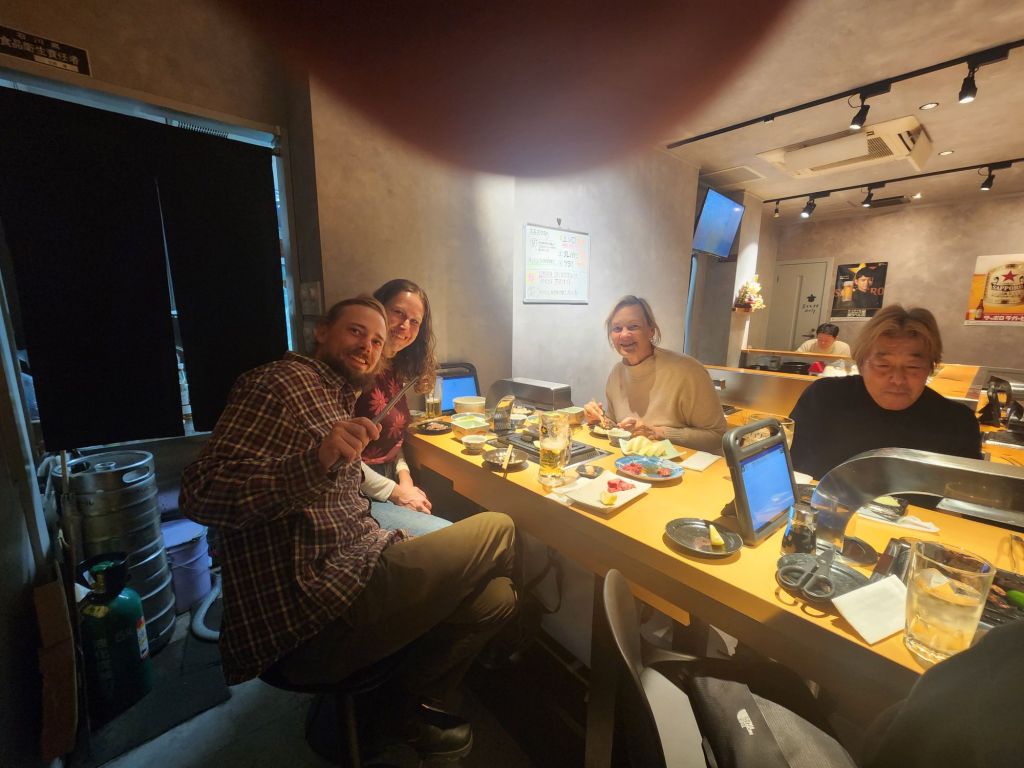
Later we meandered the streets of Kanazawa, contemplating dinner and how we might meet the culinary high bar set in Rosewood’s fine dining institutions such as the Royal George – ‘A Gem on the Bremer’. Our dinner at a neaby restaurant specialising in Noto beef was one such meal. Finely sliced Noto beef and a range of vegetables cooked on a tabletop grill, then served with a variety of condiments and dipping sauces is particularly hard to better on a winter’s night in Kanazawa. Mitch did note that the rising steam frenzy across the restaurant would sadly be vetoed by Aussie workplace health and safety standards. Our short walk back to the hotel with snow falling, discussing plans for the next day’s wandering – was another contemplation triumph. No, it doesn’t get much better than that – even for this Rosewood lad.
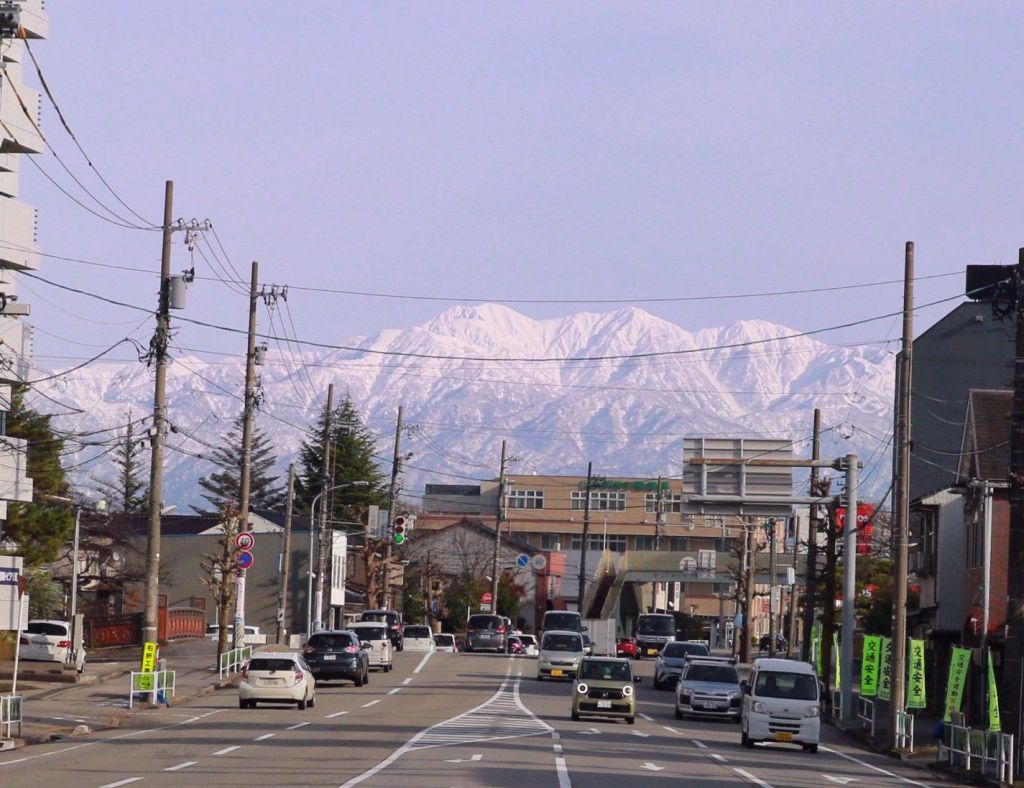
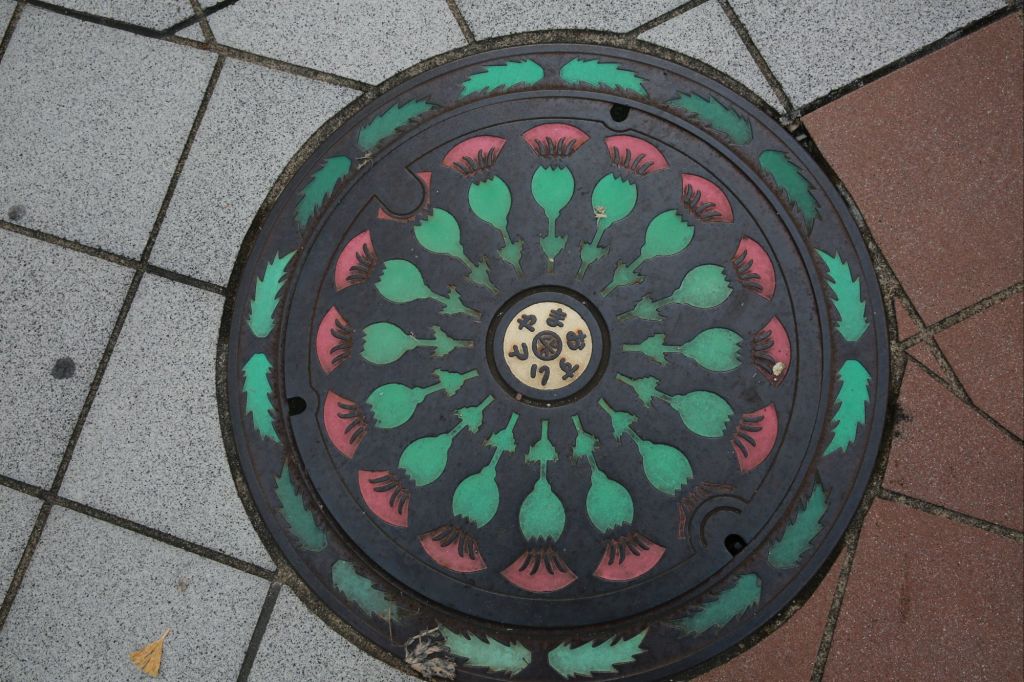
Toyama is a city on the North coast of Honshu, Japan that few from my home town seem to have visited. It has a population of about 450,000 which means it is around 225,000 times larger than Rosewood. Lady C-S and I decided to spend two days here on our way to share time in Kanazawa with our son and his partner Jemima. It has been a pleasant surprise indeed and today was one of those travel days that I love.
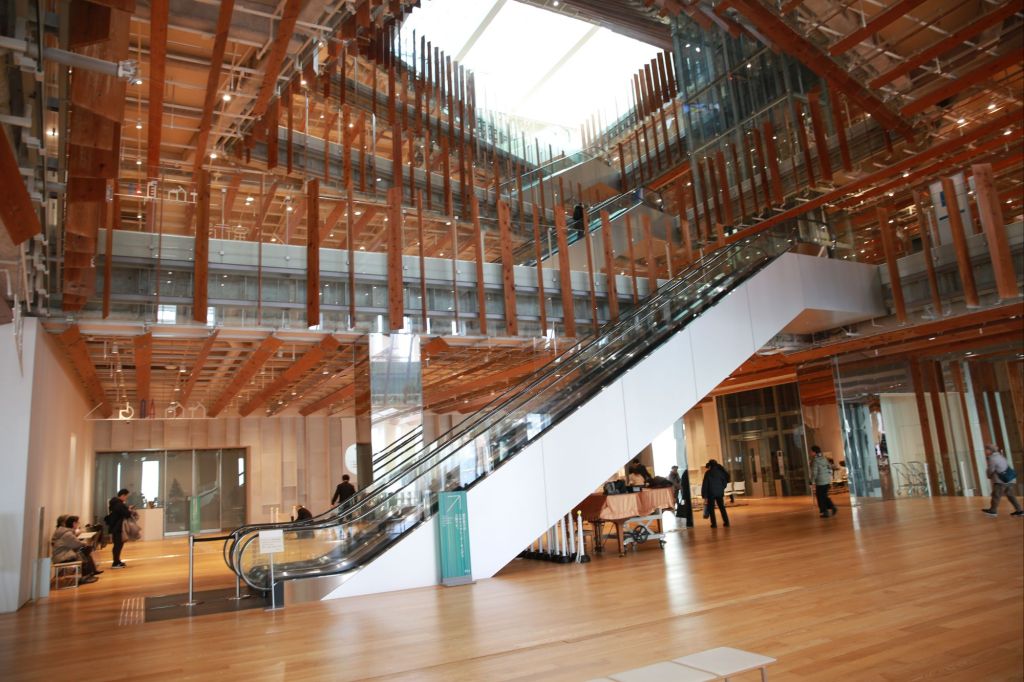
The morning was spent in a search for good coffee, however most shops, including cafes, don’t open here until 10 or later. Putting our caffeine addiction to the side for a time, we decided to view a collection on display at Toyama’s glass museum. The museum is currently hosting an exhibition of pieces by the French glazier Emile Galle who was quite prolific over three decades from the 1880s until his premature death from leukaemia in the early 20th century. It was a particularly uplifting display.
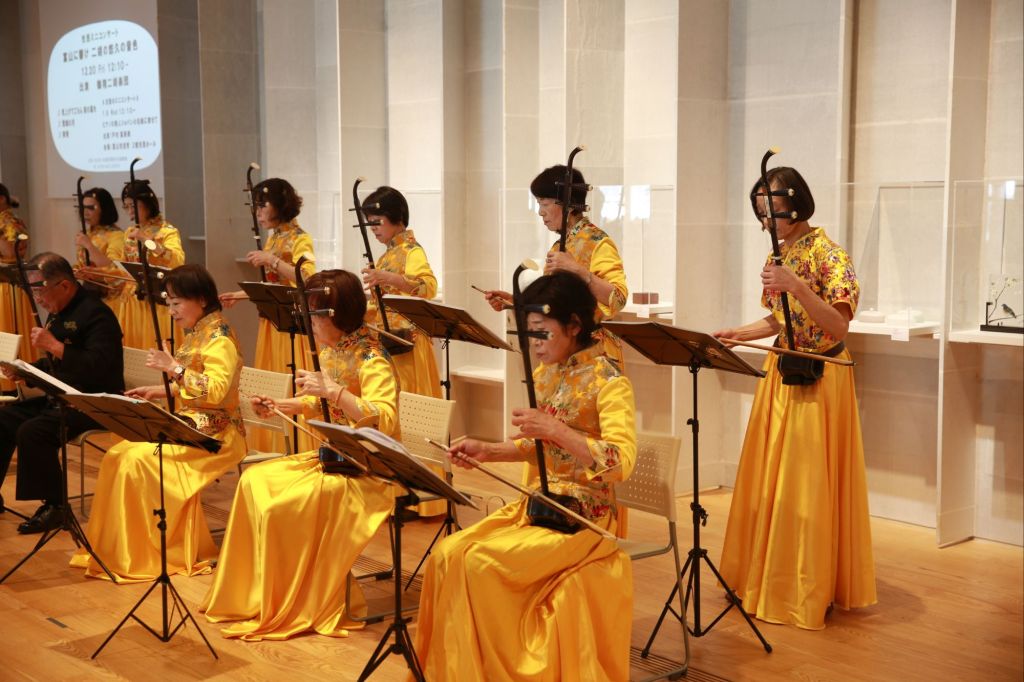
Galle won a number of major awards at the two World Expositions hosted by Paris, and became highly sought after as an artist. The Suntory company of Japan now has an extensive collection of his later works in particular, and their collection formed the major part of this show. The museum building itself was a pleasure to be in on a cold winter day, Galle’s work was a bonus . Then on our way out of the museum we noticed an orchestra of women, all with traditional Japanese instruments, warming up for a free concert in the concert hall on the ground floor. We stayed of course.
I know very little about traditional Japanese music – Miss Moneypenny, Rosewood State School’s music teacher, perhaps thought we as a student cohort were not quite ready for this particular musical genre. I certainly wasn’t quite ready for this orchestra’s performance today. They started with’ Jingle Bells’ followed immediately by ‘I’m Dreaming of a White Christmas’. I left before they had finished their third item, ‘Rudolph the Red-nosed Reindeer’. Can’t win them all Farquhar.
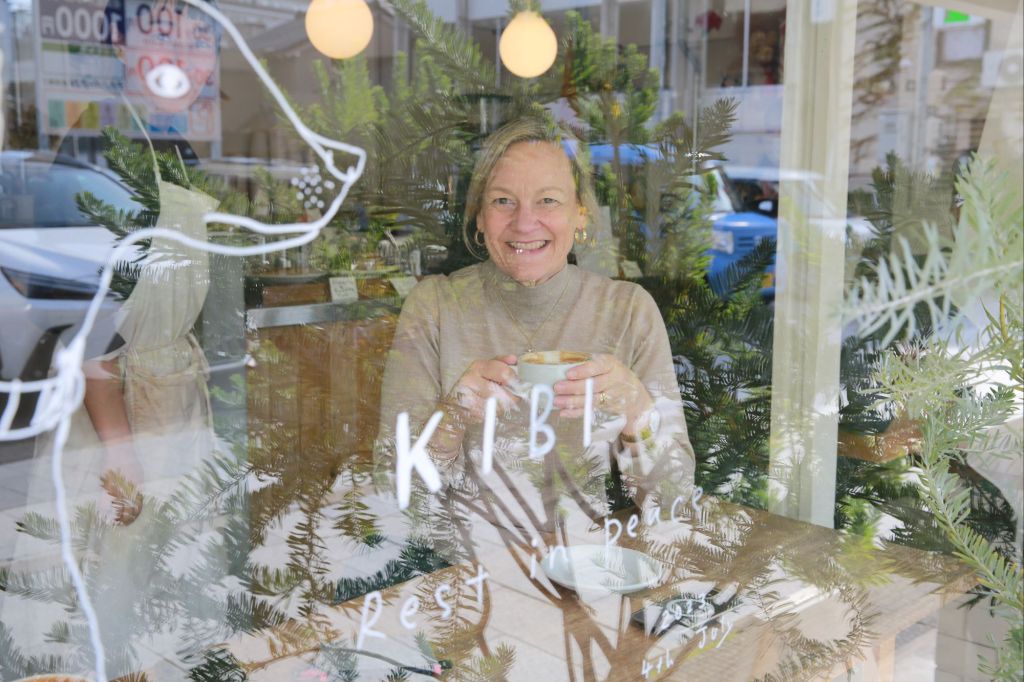
Perhaps as a reward for our earlier caffeine discipline, or perhaps for not chuckling too loudly during the opening numbers of the Toyama ladies’ concert, we headed to an excellent nearby coffee shop for a series of midday coffee shots. The owner was great to speak with about all things Toyama. As is the way when m’lady and I travel, I suspect that, if our days in Toyama were extended, the barista would have become our private Toyama tour guide.
The evening meal was at a tonkatsu restaurant – an excellent finish to a brief visit to this small Japanese city at the foot of the Japanese alpine region. Tomorrow it is a fast train to Kanazawa to investigate the possibility of leading Rosewood Senior Rugby League Club teams to rural Japan for their end of season break-up tours. I know the Rosewood Roosters are ready for Kanazawa, I’m not certain that Kanazawa is ready for them….
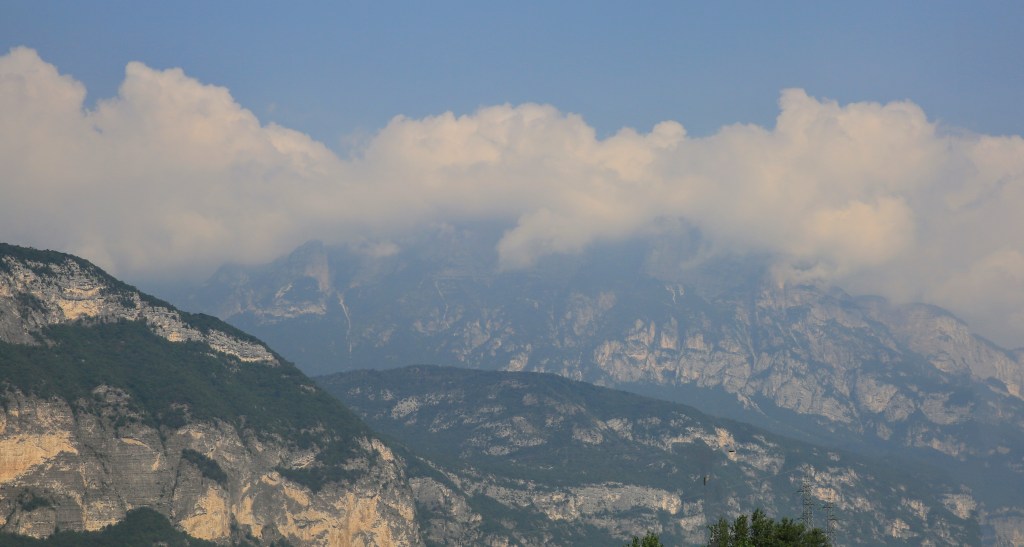
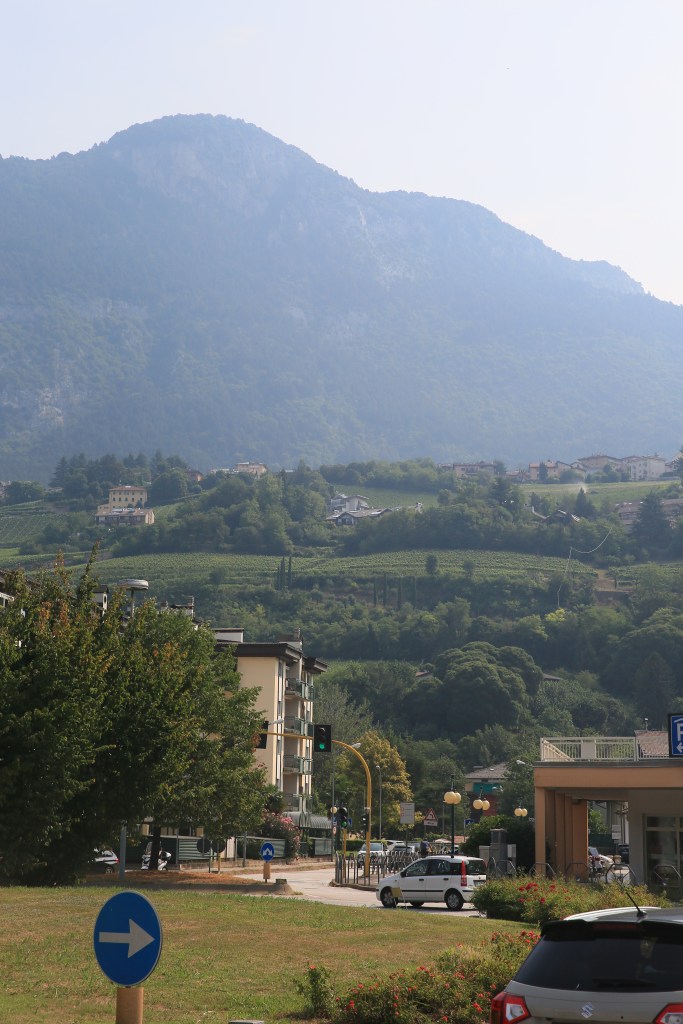
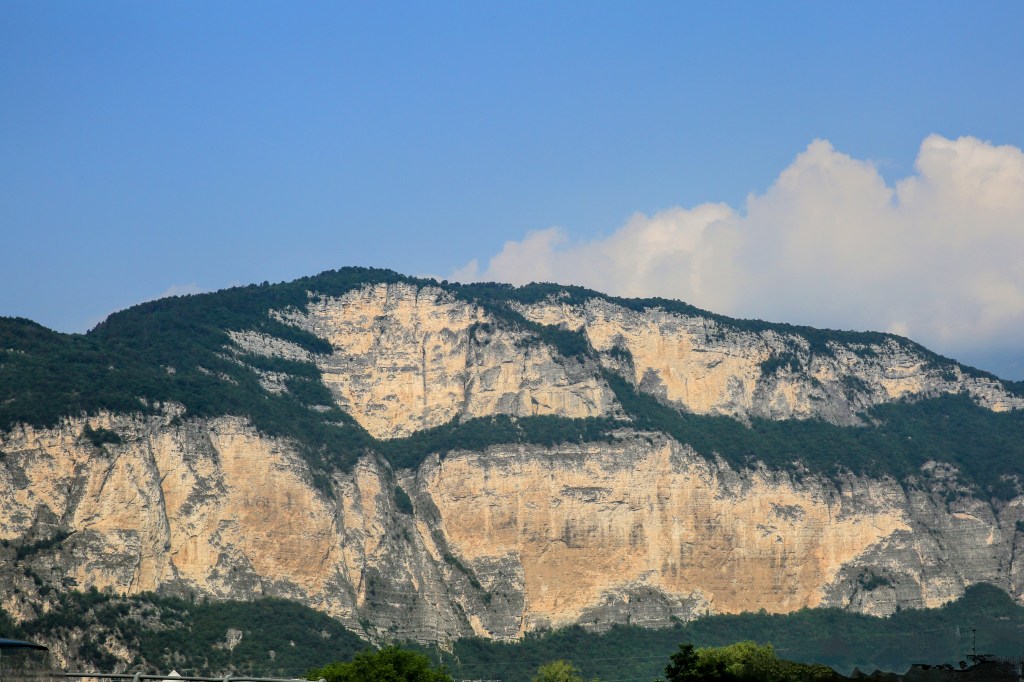
Trento is a small city in a valley that runs through the Dolomites – there is only one last Italian train stop, Bolzano, before crossing into Austria on our trip to Mannheim and the Webers tomorrow. We have spent three nights here attempting to escape the heat of the Lombardy plains. That plan didn’t work – the last few days have been in the high 30s, and it barely cools at night – for these locals, global warming is a particularly frightening threat.
Trento townsfolk depend heavily on tourism for their income: in winter, a range of snow sports bring in tourists, in summer, hiking and mountaineering figure highly. The changing climate and covid have caused some ski fields to close throughout the last few seasons, quite possibly for good, and hiking in the mountains is no fun when the temperature in summer is close to forty degrees. In addition, in recent years, many of the alpine Italian cities and towns have had quite devastating and deadly floods in spring because of the early melt. Perhaps the Austrians don’t feel so bad about having to give away a huge chunk of land on this side of the Alps to Italy after WWI.
There is still an obvious, very strong, Germainic influence in this province – for example, in the architecture, the language, and the food. Approximately half a million people speak German as their first language in the Bolzano province. The churches tend to be less ornate than those further south, and there are far more protestant churches than we’ve encountered elswhere on this trip. Polenta and pasta are mixed in with German noodles and a variety of Swiss dishes at many restaurants,
Tomorrow, we will be in Viernheim, Germany, to spend some time with our friends, the Webers, before heading back to OZ. Stephan is a wonderful cook, and the family are generous hosts – always. I am already worried that exhaustion will set in well before we catch our plane to Singapore from Frankfurt. I know that the days will be planned with Germanic precision and activity-filled – from eight in the morning until lights-out after midnight each night. I am concerned that I will eat too much, laugh too much, and have too many visits from their family and friends in the couple days we have with them – and I can hardly wait!!
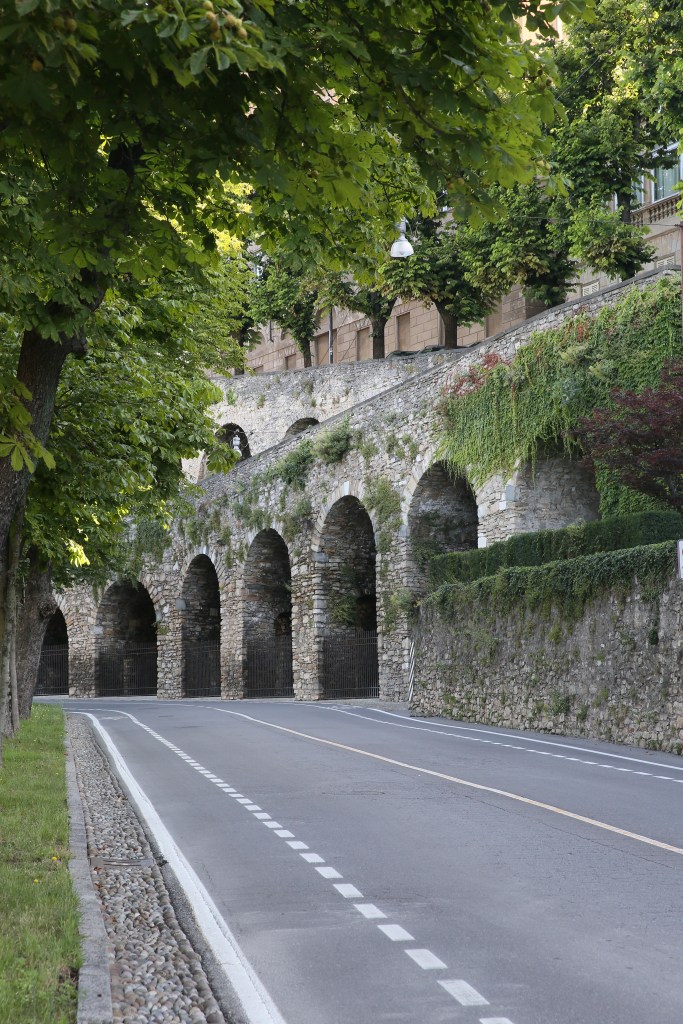
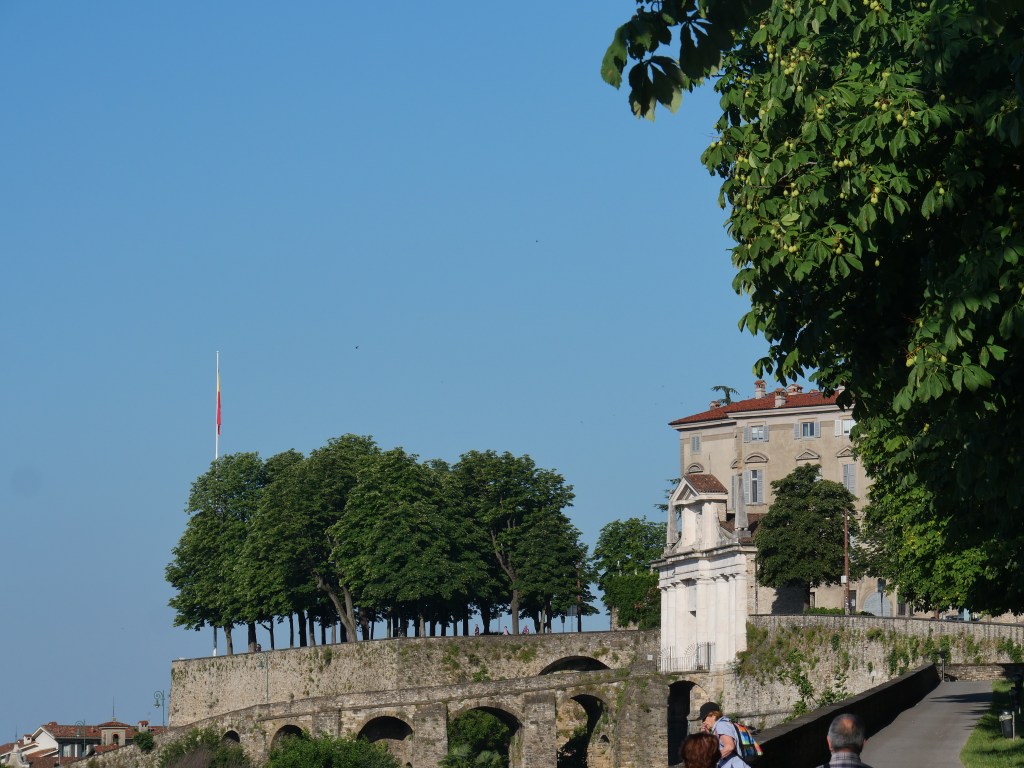
We travelled by train to Brescia on Friday, the sister city of Bergamo. Like most of the small cities in this part of Italy in the 17th century, it was essentially forced to be ruled by either Venice or Milan – most chose Venice, hence the abundace of lion statues around town. Both Brescia and Bergamo have a high town surrounded by Venetian-built walls with the Dolomite Alps behind and views over the Lombardy Plains below. Both are beautiful, and both were hit particularly hard by Covid. The title ‘Italian Cultural Capital, 2023’ is being shared by these twin towns. – I suspect as an attempt to aid their recovery. There are a number of music events planned for the summer season as part of this festival.
On my travels, I have been fortunate to listen to the London Symphony Orchestra with the Leniningrad Men’s Voices in Florence, watch the Bulgarian National Ballet in Sofia, to hear the Slovenian Philharmonic Orchestra in Ljubljana. I have heard a Puccini opera in Lucca and Vivaldi in Vienna. Until Friday, the least enjoyable piece of music I have heard played in public was Kenny Kendricks playing a couple of Elvis pieces on an electric guitar without an amplifier for our Yr 6 class in Rosewood. At least when Kenny started singing ‘All Shook Up’ we were allowed to laugh, as even our teacher got the giggles. The skill of the musicians we heard on Friday is beyond doubt – the genre I don’t understand. I wonder what the concert would have been like had the improvised jazz group ‘Take Off’ had music lessons in Rosewood? Miss Moneypenny would have given it her best shot, there is no doubt.
Both these Italian cities take dogs and siestas seriously. Most of the shops close between one and four pm – this seems to be the time to nip home, hang out the washing, and cook up some gnocchi for lunch. Well – it’s hard to know what really happens behind closed doors, but whatever it is – they are committed to it, and so few venture out onto the streets during that sacred time. Some intrepid dog owners perhaps – but most save the canine parade until at least 5pm. Therein, one sees a huge variety of hounds – from chihuahas to spinones to Italian greyhounds – but the winning breed is … the golden retriever: ubiquitous. Despite the Bergamo locals’ love of their pooches, these well-cared for dogs rarely make an appearance in shops or bars or cafes … save that indulgence for their German cousins.
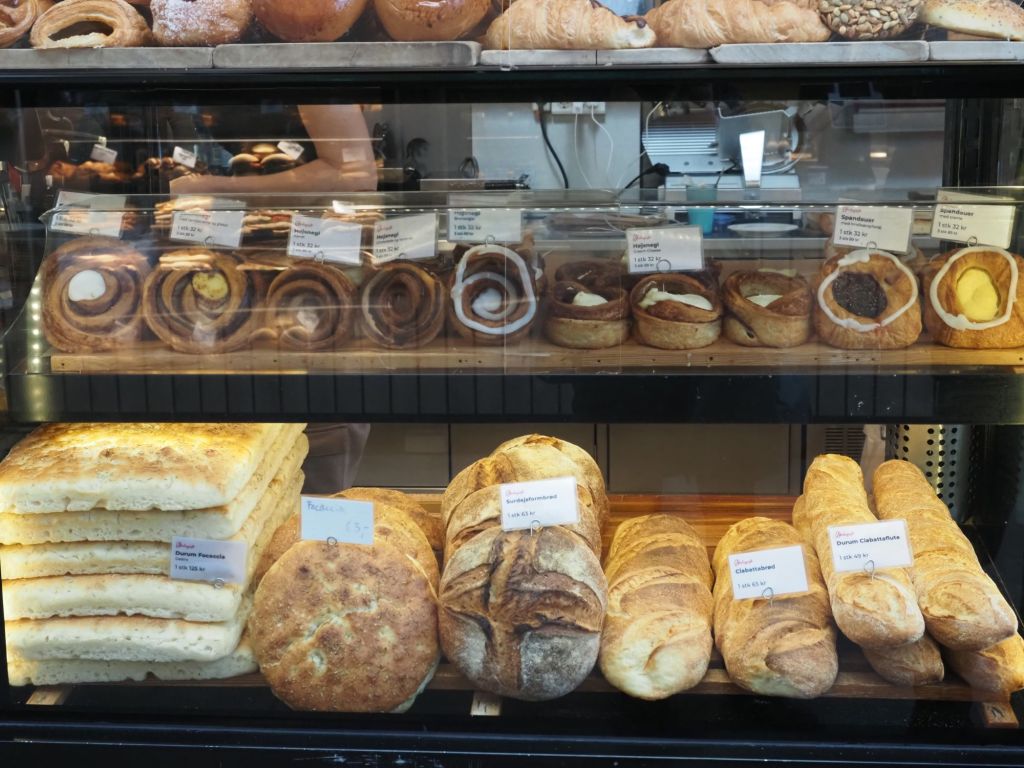
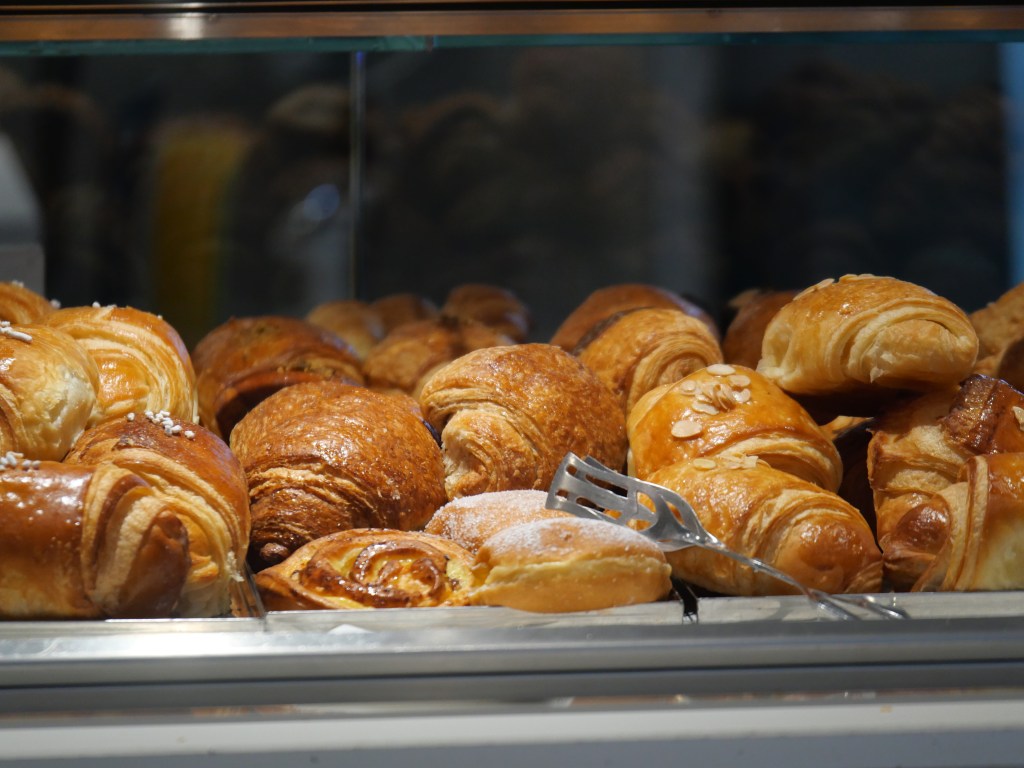
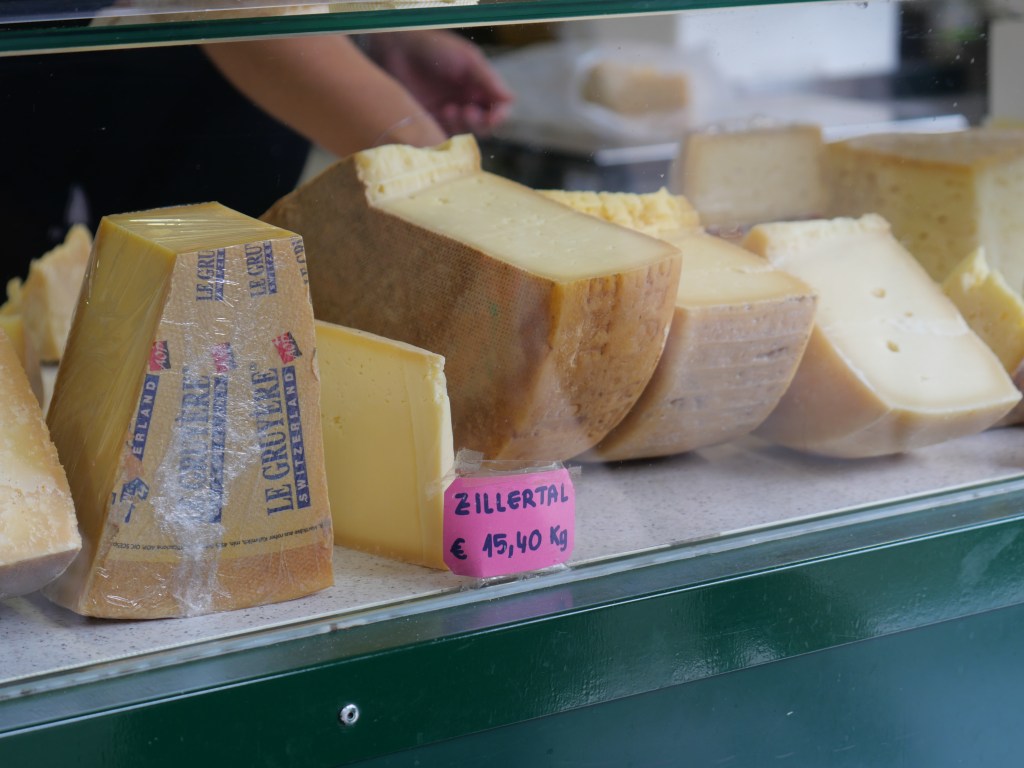
A flat white from our coffee shop run by Sonia has been a special way to start each day, along with fresh croissants, of course. And, a local wine with its compulsory platter of cheeses and salamis at a small bar run by David and his family has been a superb way to punctuate the close of each day – with exploring in between. This Bergamo routine will be hard to match in Trento, our next destination. We won’t have enough time there to ‘live the city’ – that wonderful phrase used by a Bugan regular with whom we engaged in conversations around travel.
Yes, there’s a grieving that goes with leaving a city you have ‘coalesced with’ over the period of a fortnight; a pattern of living has been cultivated and it takes time to replicate it elsewhere. But, we will do our best in Trento – with its view to the Dolomites and blend of Italian/Austrian/German/Switzerland influence … a little like Rosewood, really.
Ciao, all.
The wonderful Sonia – our barista and travel advisor for two weeks.
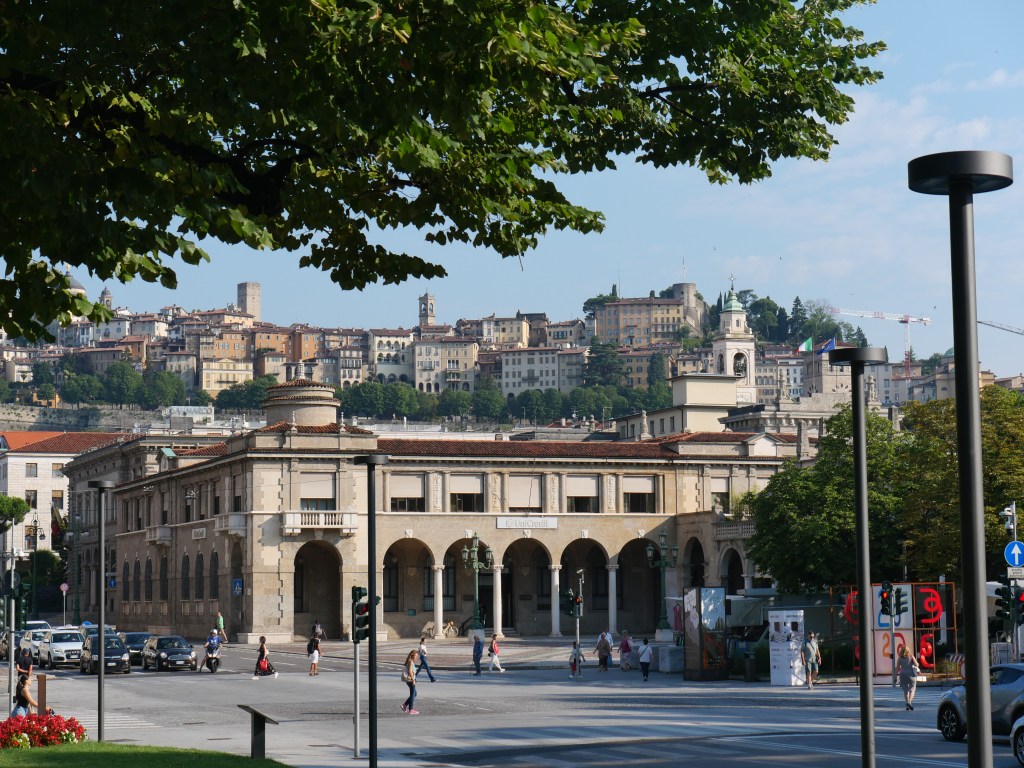
Beautiful Bergamo, with the old town on the hills to the north.
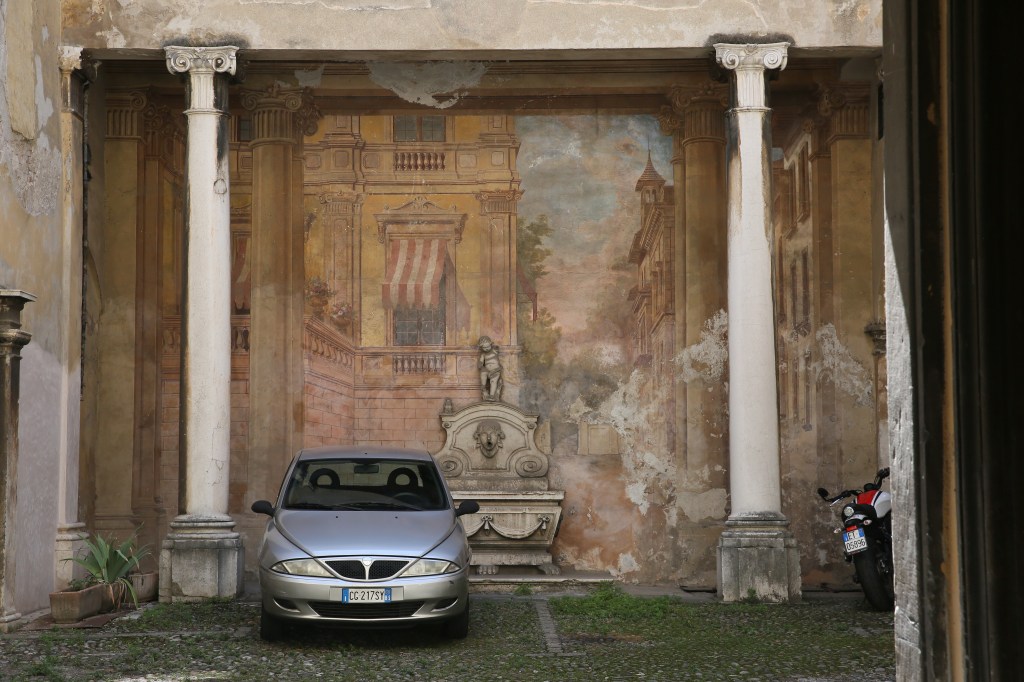
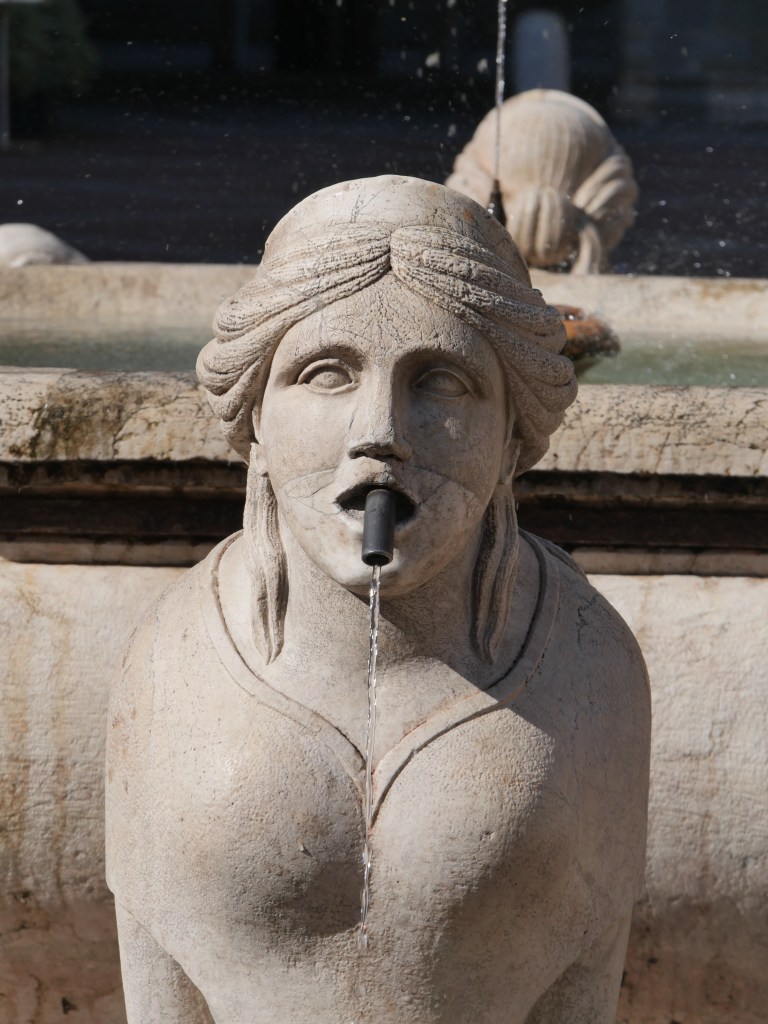
Even Venetian carports were pretty flash – we’re thinking about getting our builder to refurb ours on Tourist Road with an identical look…The Brescians invented the e-cigarette in 1645. The early models were powered by running water, and, as you can see by her eyes, the drugs used had a powerful narcotic effect. This statue commemorates their ingenuity.
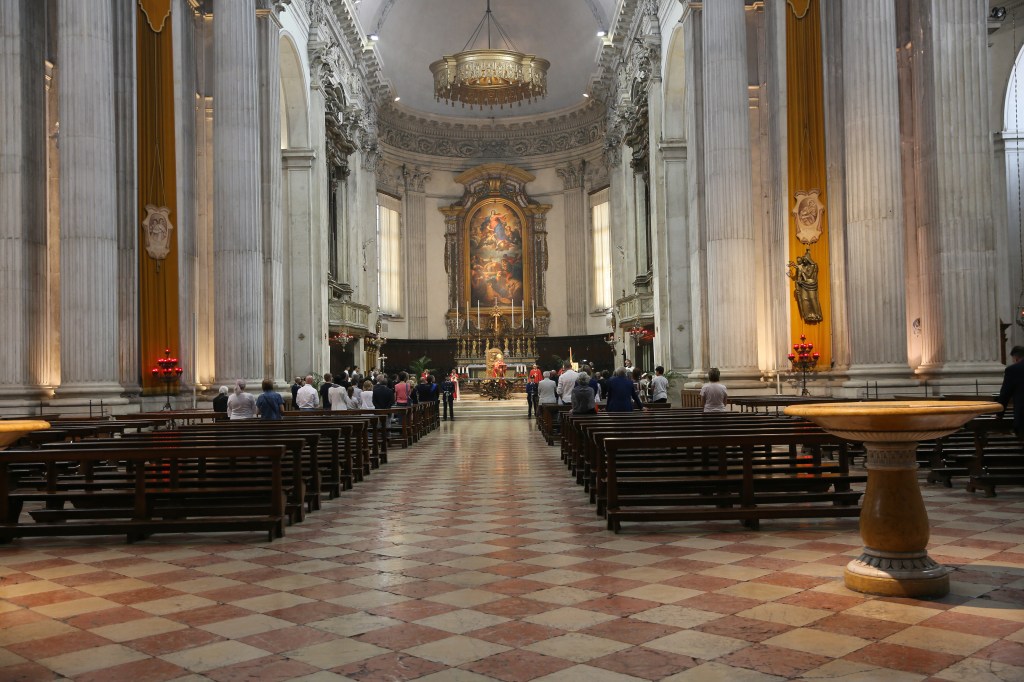
The cathedral in Bergamo is a bit like St Brigit’s, Rosewood, in that both churches are Roman Catholic…
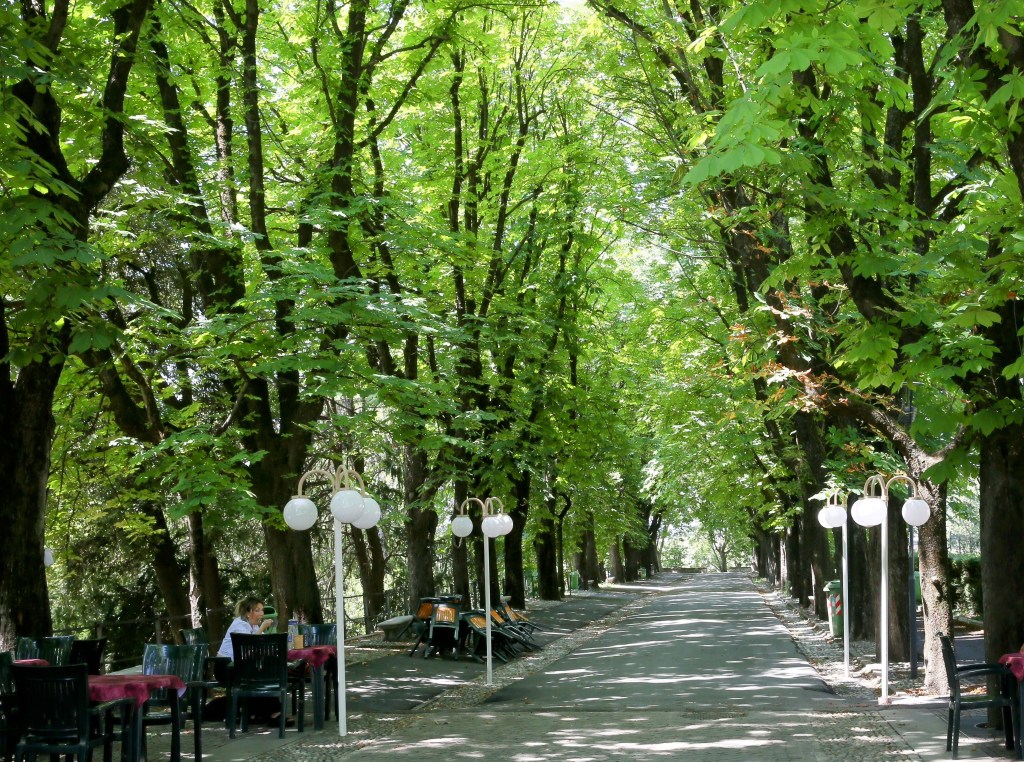
Only saw the man lurking behind the plants at the end of the tables after I uploaded the photo. I hope he hasn’t followed us to Trento…….The improvised jazz ensemble ‘Take Off’. Quite a proportion of the audience had taken off themselves at this stage in the performance…..
To spell Shakespeare or not … that is the question. To date, there have been six documents discovered that have been deemed by historians to have actually been signed by William Shakespeare: and therefore authentic. In each of these six documents, his name is spelt six different ways. AND none of them are signed using our spelling of his surname – ‘Shakespeare’. It is no wonder that some visitors become confused when they visit the beautiful city of Verona – our day trip yesterday.
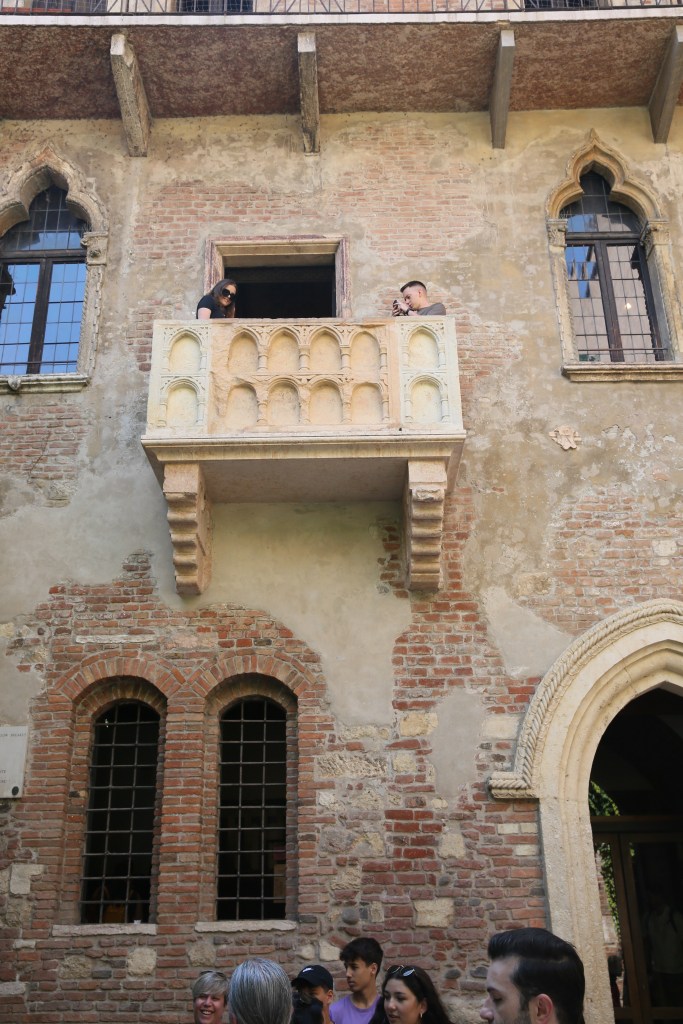
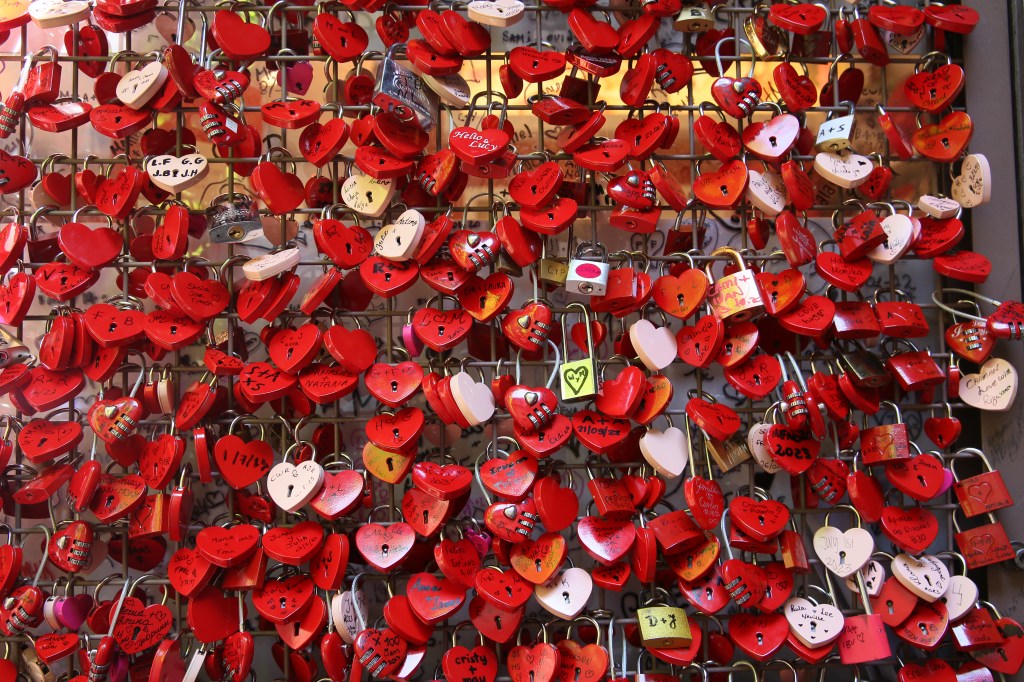
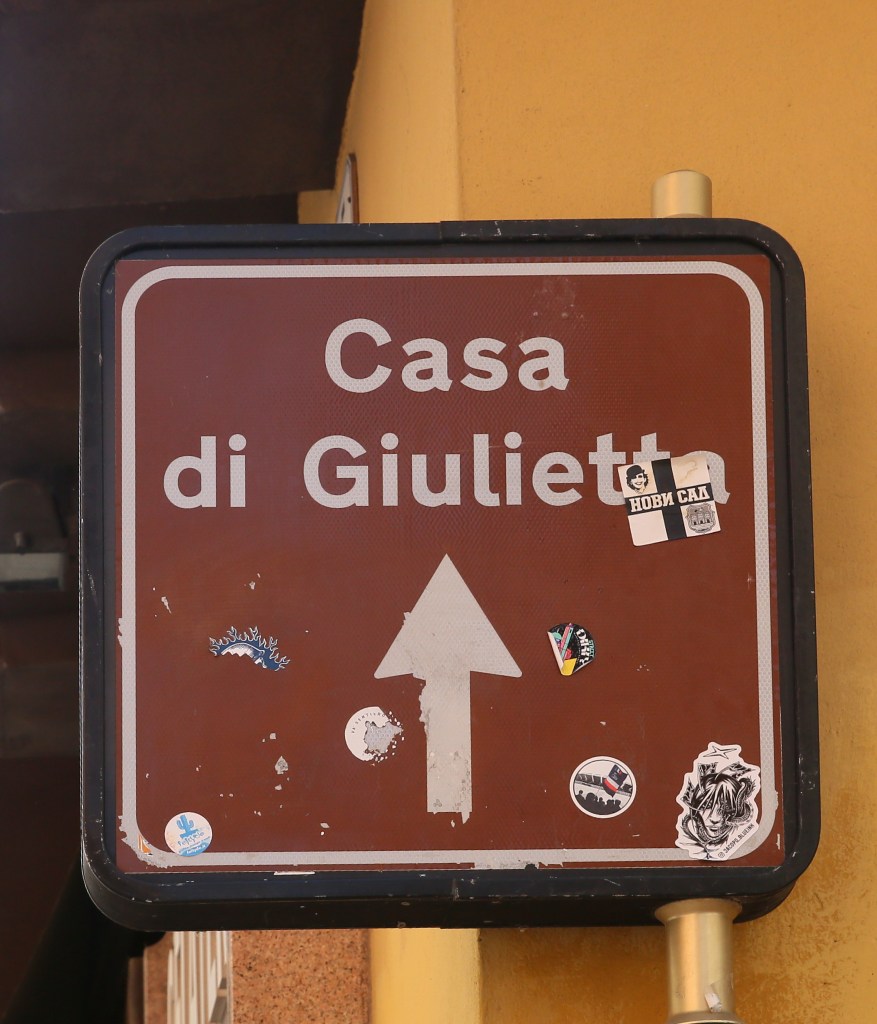
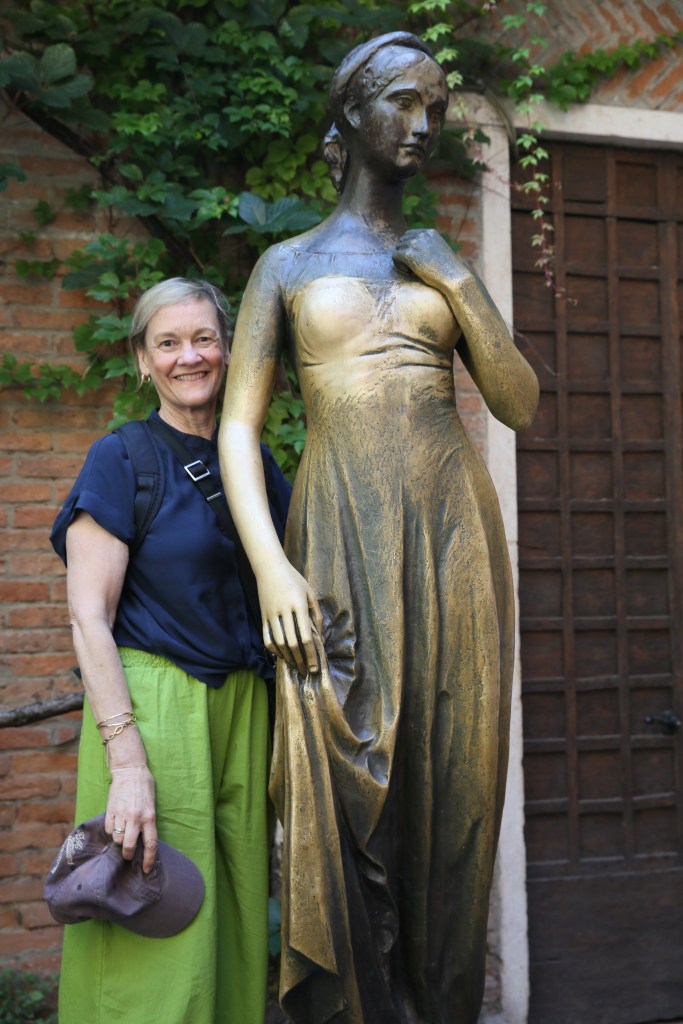
In the past, tourists were being ripped off regularly by taxi drivers. Many visitors would hop in a cab and ask to be taken to Juliet’s house to see the famous balcony – the drivers would gleefully rub their hands, and take their fare to any suitably-old balcony in the furtherest parts of Verona. Photos were taken, sometimes rings exchanged, and often, sadly, lots of money paid for the ride. However, at least as far as I am aware, none were driven by taxi to Stratford-on-Avon to see Juliet’s literary birthplace. To help prevent this scam, Verona City purchased a building with a suitable balcony and turned it into the Romeo e Giulietta museum. It is always crowded with visitors. Fortunately, there are many authentic sites in Verona that make a visit far more worthwhile.
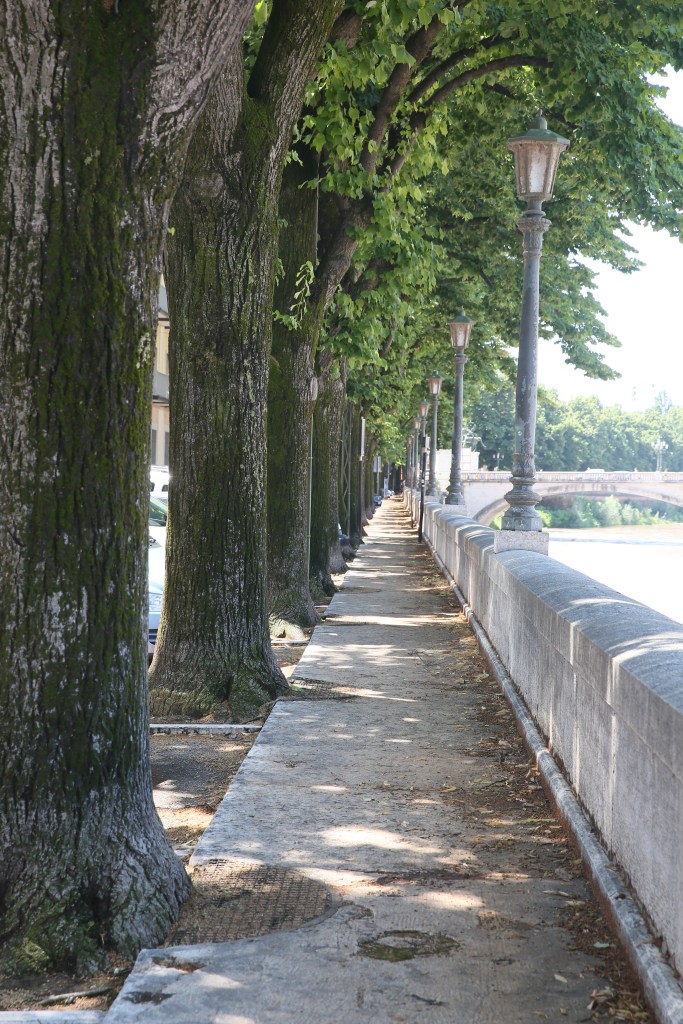
From Roman times, Verona was an important industrial city. The Adige River runs through the city and, as its souce is an alpine lake, it tends to flow quickly all year round. Water wheels were used to power industries, particularly the manufacture of carts, cartwheels, and metallurgy. VW, today, has a large plant in Verona, and there is still a large cutlery manufacturing industry – a continuation of manufacturing skills that started from Roman times. Also, like so many towns in this part of the world, it has a long tradition of being conquered and changing hands.
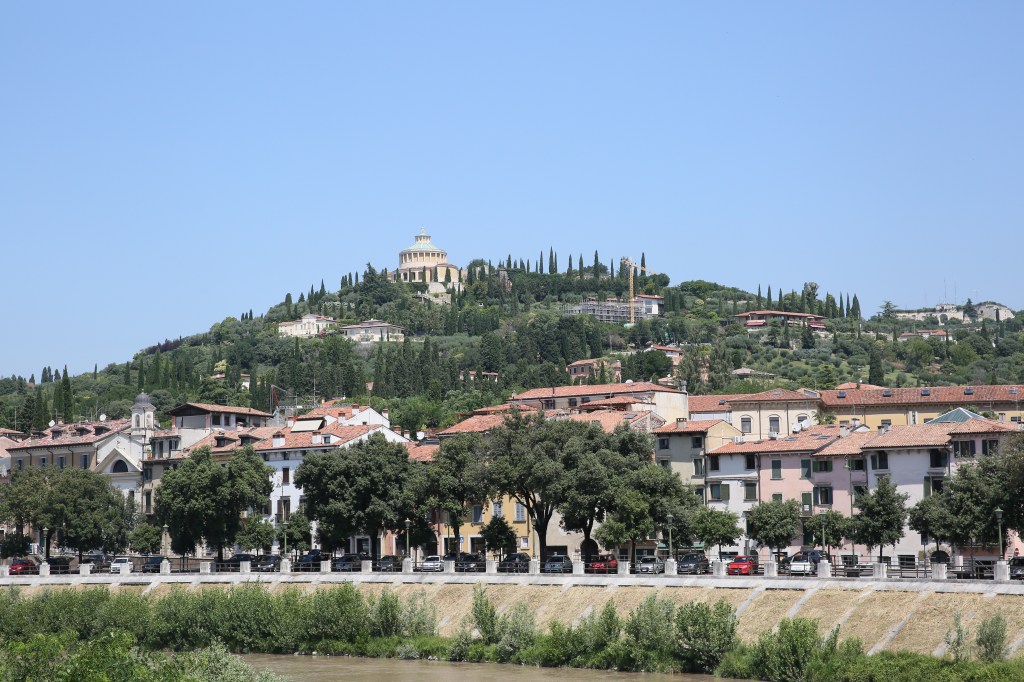
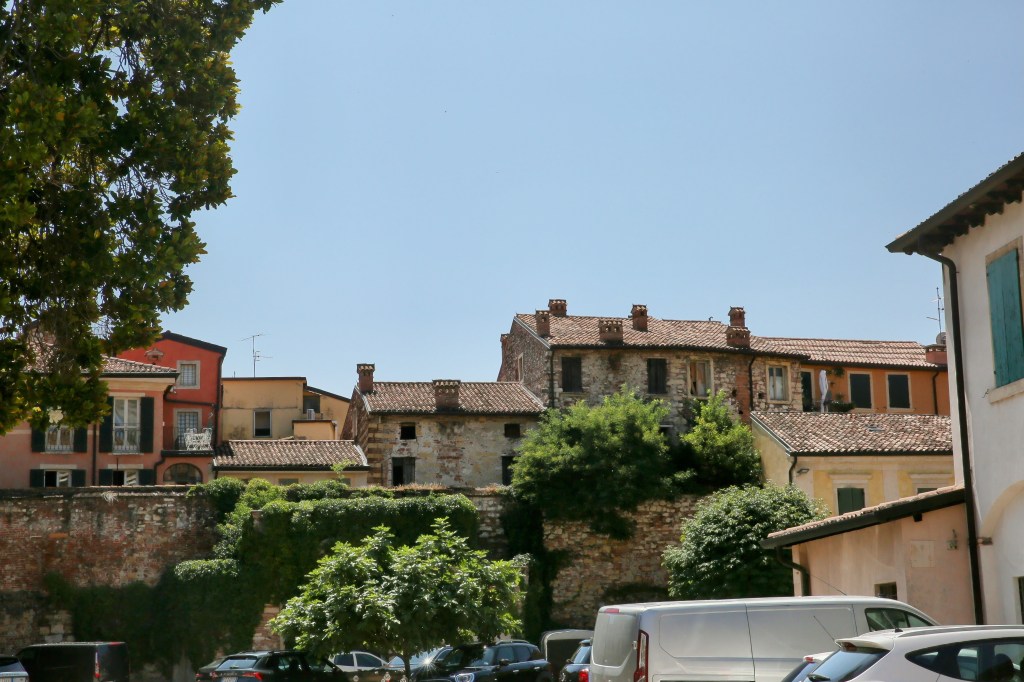
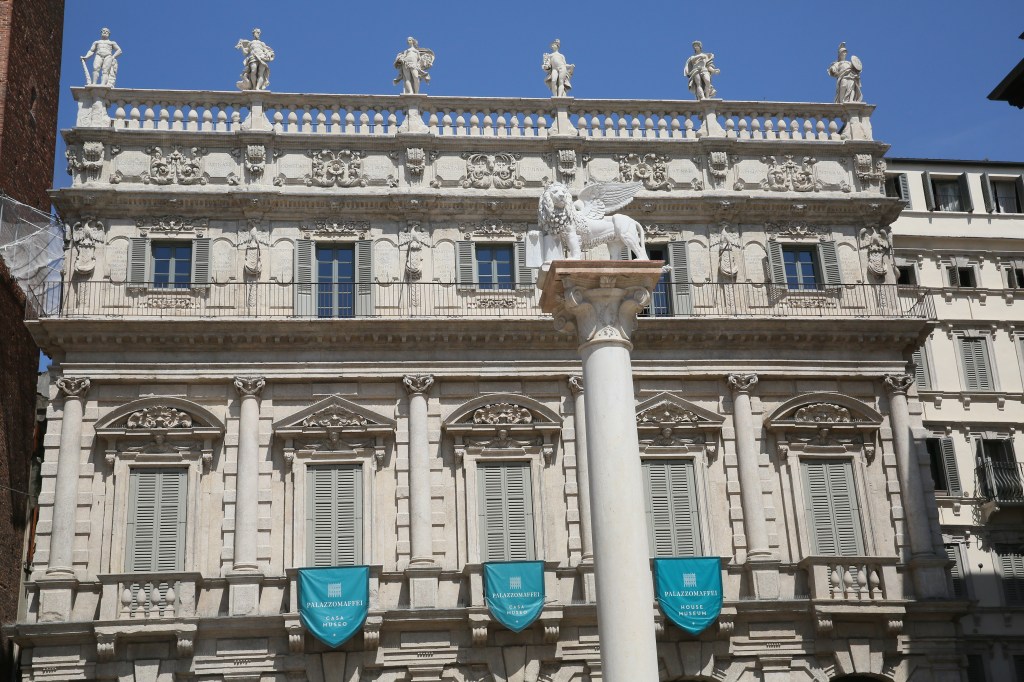
Verona has been ruled or sacked by the Romans, The Goths, the Huns, The Duchies of Lombardy, Milan, then Venice, followed by Napoleanic France, the Cisalpine Republic, the Kingdom of Italy, the Hapsburgs and the modern Italian republic; and most recently by tourists. Most have left a mark somewhere on the cityscape – a Roman aphitheatre, a Venetian palace, medieval churches, a Napoleonic road. Hapsburg era fountains etc etc etc. The river and the hills beyond are stunning: they alone are worth the cost of a return ticket from Bergamo – even if the fictional Romeo and Juliet now only have one balcony in the city! What’s in a name … that which we call, Verona!
Yours
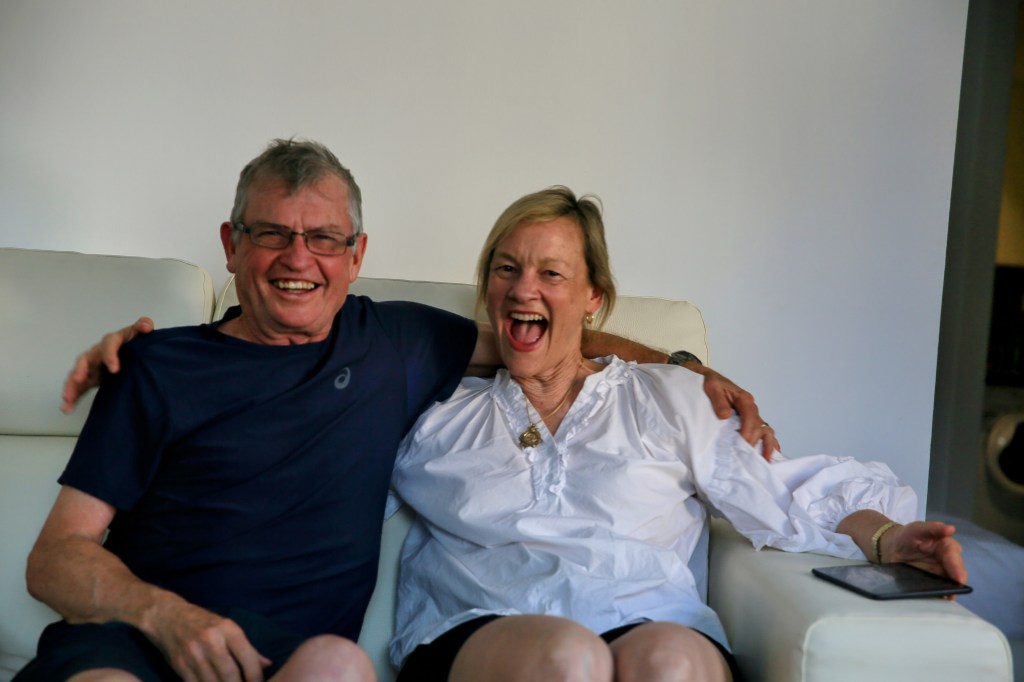
Romeo e Giulietta (aka Farley and Lady Cunnington-Smythe)
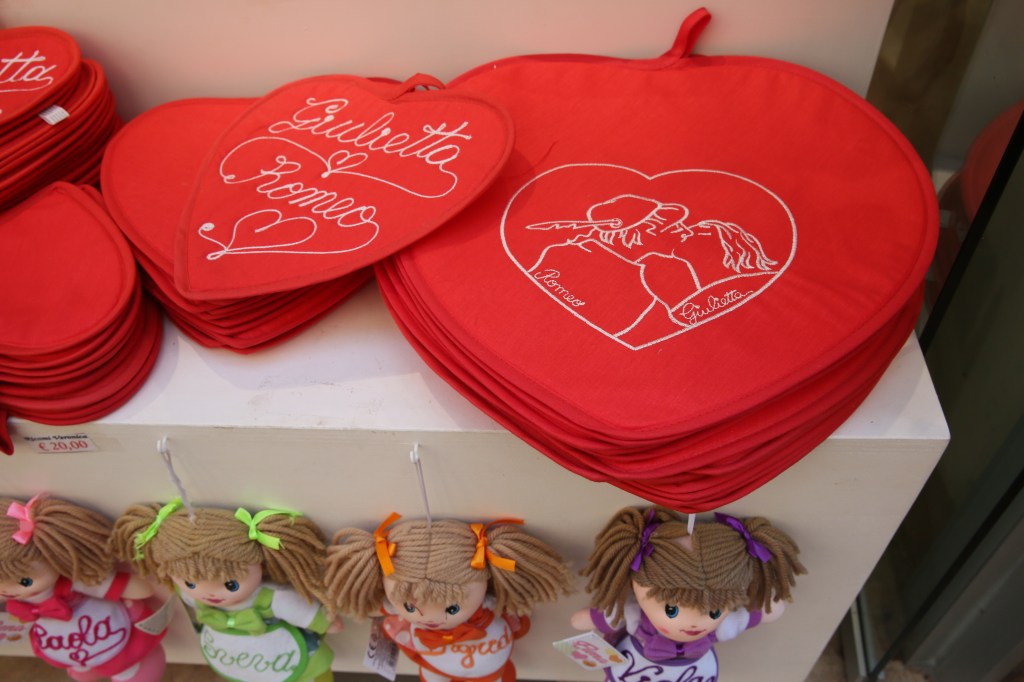
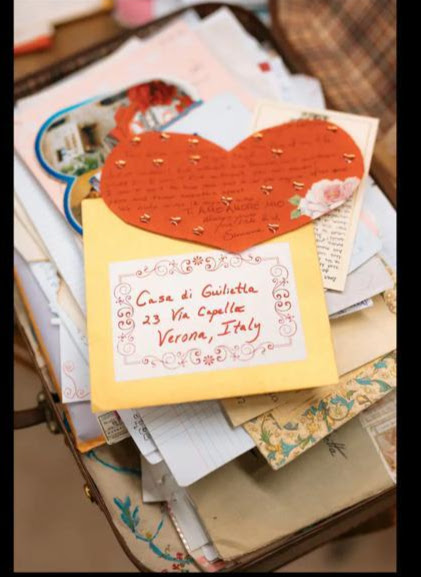
In the true spirit of cynical exploitation of The Bard, there is a Juliet Club. For just €49 you can join the Giulietta Club in Verona for one day, read letters addressed to her and reply to one. You also get a free coffee.People paid money for this as well!The Venetian Lion – always a giveawayJuliet was very tall for a 13yr old.












































 The Very Excellent Adventures of the Cunnington-Smythes