

Throughout my Rosewood childhood my father would often state that this township needed a museum. My mother, frustrated by Ted’s collection of old pieces of farm machinery, glass bottles, coins and so on, would say that Rosewood had a museum – it was located under our house. I loved playing under the house as a boy, perhaps that’s why I still appreciate spending time in museums 60 years later? The three exhibitions we have visited in Brno were all memorable in their own way.
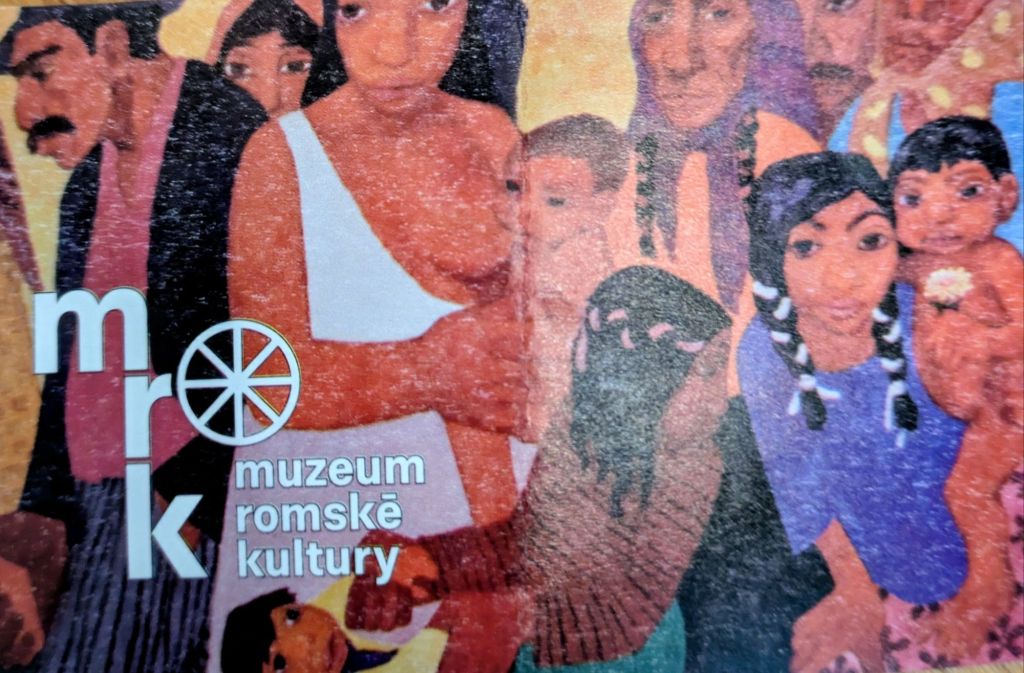
But sometimes it is the unexpected find – the serendipitous stumble that is so precious. A Google search yielded the Museum Romske Kultury as a ‘possible see’ and despite its obscurity in definition it was a treasure to traverse. Even the desk staff were welcoming, as if they were delighted to have our company. We chose the tour with headphones and hence a narrator with the voice of a stage actor: exquisite. And so we traced the Romani journey from India to the Ottoman Empire and then to all sections of Europe. We learned that the derogatory term ‘gypsy’ was coined when the Roma and Sinta advised European locals in the 15th century that they were persecuted Egyptians, seeking Christian refuge. It worked, for a while.
The rich traditions of the Romani were celebrated in this museum, so too, their social estrangement and persecution (around 500,00 were murdered in just 3 years by the Nazis)- even the Holocaust was gently probed through artefacts and story. It was impossible not to compare the Romani story with displaced groups throughout so many nations’ histories. It was impossible not to be challenged to consider our own Australian first nations people. And it was impossible not to be moved by such hospitality, by people sooo grateful to share a largely unknown history. It’s not often that one leaves a museum, thanked by staff with such warmth, as if we had paid a favour. Today, the favour was their’s.
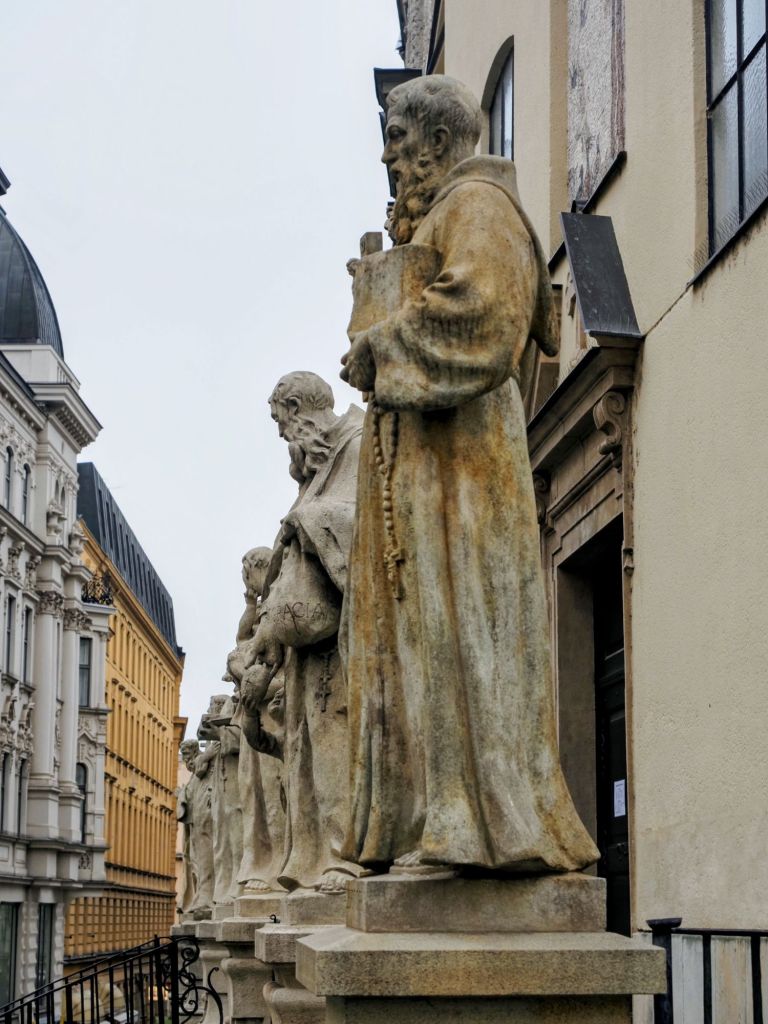
Less than 50m from our front door is the entry to a Capuchin monastery and church, the Church of the Discovery of the Holy Cross, beneath it is a crypt. The church was consecrated in 1656 and for the next 100 years or so the bodies of notable parishioners and Capuchin monks were laid to rest in these crypts. Because of some unforeseen and unintentional airflows, these bodies became mummified.
The Capuchins started using the cadavers to teach parishioners about the impermanence of mortal existence – this crypt is still open to the public. Though the original educational aim of those 17th century monks has been diminished, the place felt particularly peaceful. I found my early Anatomy 101 pracs with full body specimens in the UQ lab far more confronting!

My three regular readers know my deep respect for the contributions of various polymaths and scientists in Western thought. Leonardo Da Vinci, Galileo, Darwin and Newton have all been mentioned in earlier blogs. The museum of one of my science heroes, Gregor Mendel, will also be remembered for some time by this author and his good lady. It was really disappointing.
Mendel lived in Brno for much of his life. He was a physicist, a chemist and a botanist. He was fluent in a range of European languages, however it was his work with acquired characteristics for which he is famous. He used mathematics and reasoning to explain the likelihood of inherited traits being passed to offspring. It was only the work of Watson, Wilkins and Crick in 1962 that provided an explanation of the mechanism of genetics through DNA, work that Mendel sparked more than 100yrs earlier. But the museum assistants did a good job of dampening any enthusiasm we might have had for that slice of history.
The woman in the ticket office sent us away until she finished her bread roll, then let us in 30 minutes later. We were given 2 headphones – neither worked particularly well, and she told us to keep trying. The guide upstairs also had no English but had something interesting happening under a microscope, so she waved us in, then went back to her study. And yes, we were the only visitors to the museum – so we were left on our own to wander, wonder and chuckle.
My father also greatly enjoyed the learning that went with any museum visit. He would have been really moved by the history of the Romani, particularly in the years of WW2. He would have grilled me, seeking more information about Mendel and genetics 🧬 And he would been far more forgiving of the museum attendants!
But Myrl would not have liked the church visit one bit. She would have been REALLY, REALLY, concerned that Ted might start thinking the Rosewood Museum would desperately need a replica Capuchin crypt – under our Waight Street house perhaps?
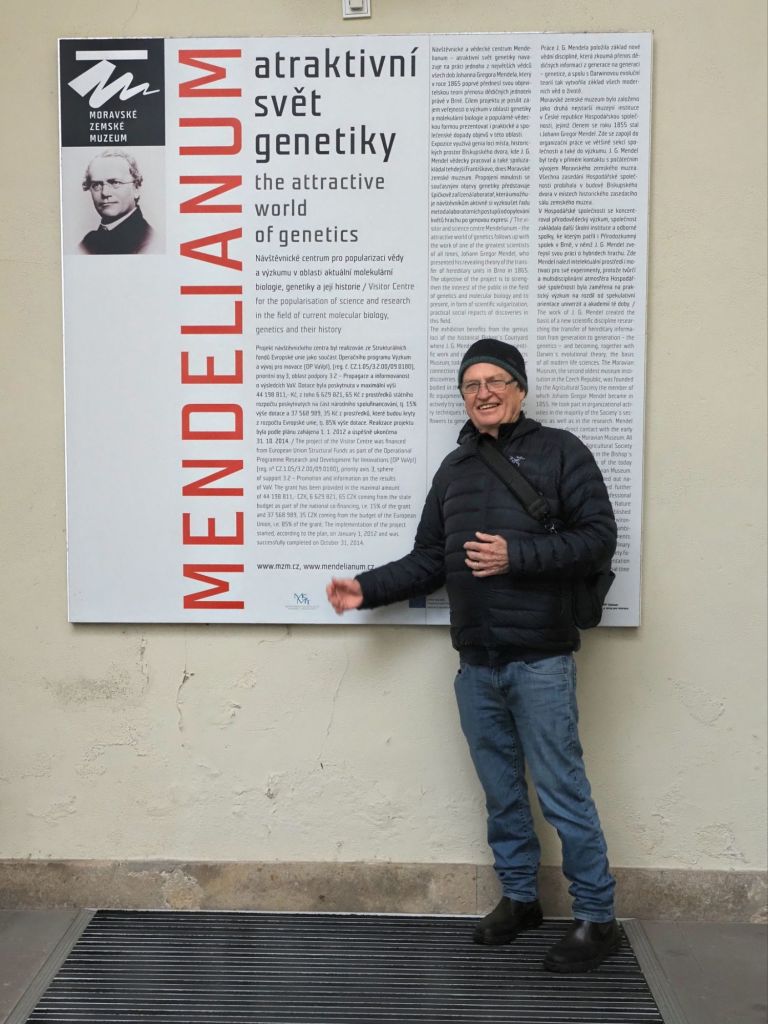

I hope these poor kids aren’t heading for Mr Mendel’s Museum?

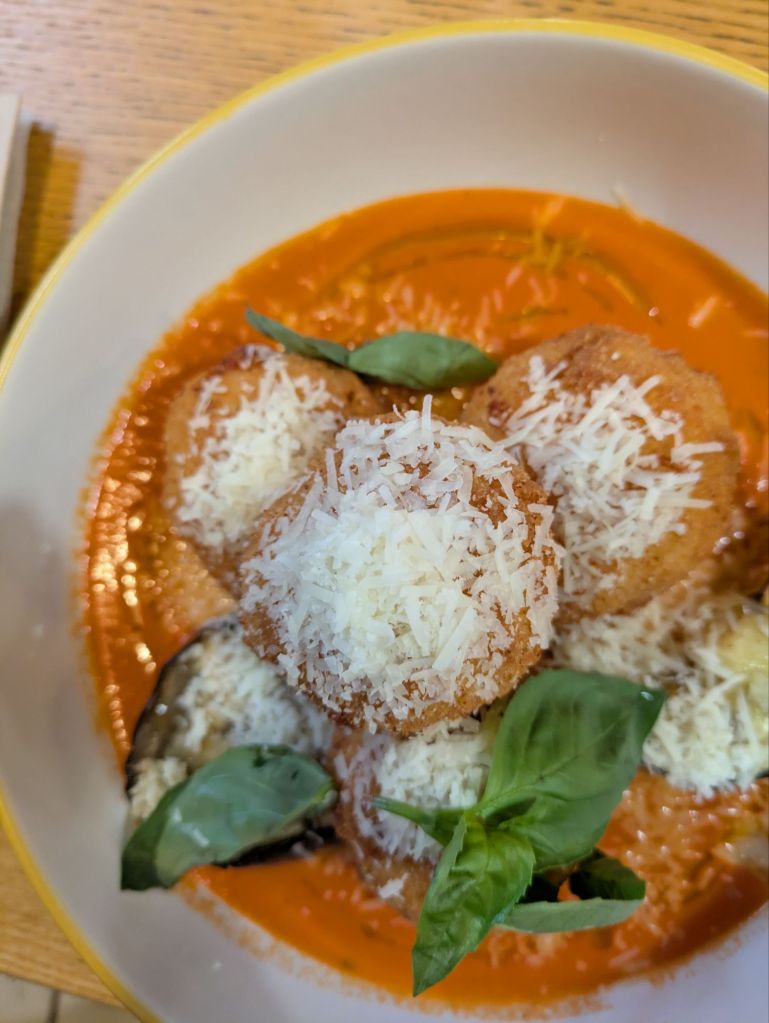
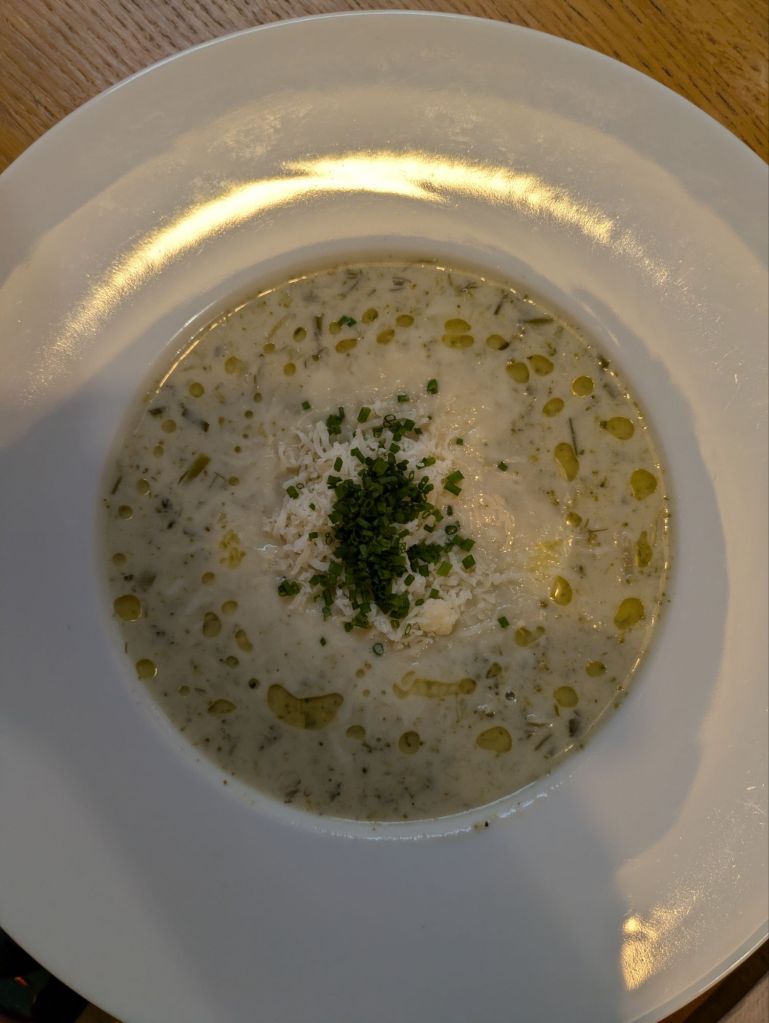
A beautiful lunch!

 The Very Excellent Adventures of the Cunnington-Smythes
Farley, you have really surpassed yourself this time, my friend. Your recounting of the day with Roma, Capuchin monks and Mendel in Brno was wonderful. For me, such a day would be just about perfect while on the road.
I loved the look of that train station at the border. If I were to be stranded, such a place appeals to my romantic imagination. This is totally unexplainable, but I can visualise Tolstoy and his wife strolling down the platform and sitting beside me. After the initial pleasantries, we would slip into some serious discussion about issues such as war and peace.
Better let you go. Hope none of your followers is put off their cappucinnos by that shot of the monks.
Another weekend of storms is upon us but such disturbances are nothing compared to the historical upheavals experienced by the peoples of the region your are visiting.
By the way, any excitement over there about the first Ashes Test next week?
Now I’ll let you go!
Farquhar