

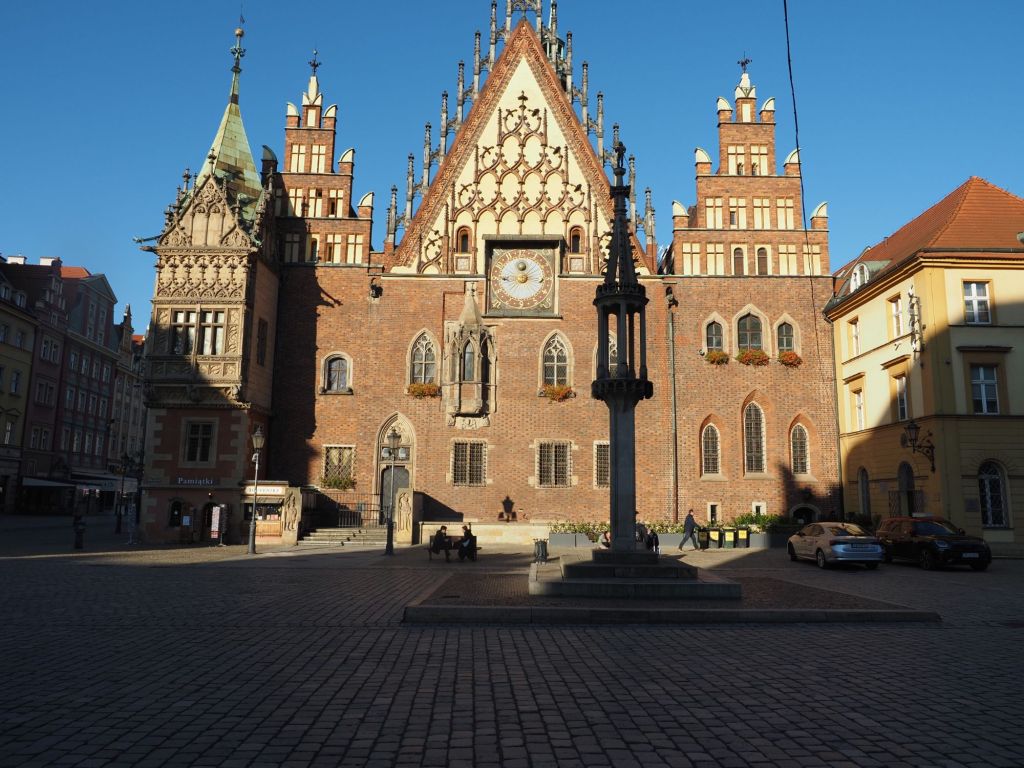
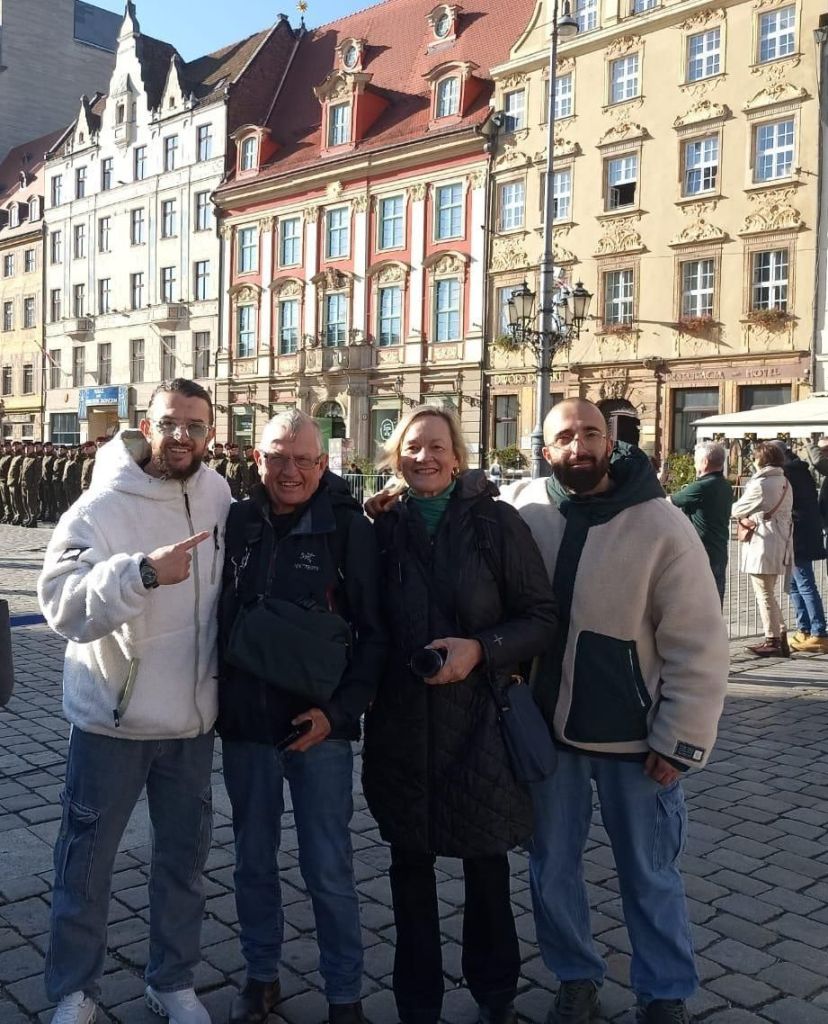
It’s as if we chose to visit Poland in November, not merely to catch up with our numerous relatives, but also to celebrate national holidays. We will remember our Polish All Saints’ Day – always. Next Tuesday is National Independence Day – a celebration of Poland’s separations from Austria-Hungary, Germany and the Soviet Union. It will be a day of ceremonial gatherings and parades – we may have stumbled upon one today in our wanderings – we witnessed a military parade, listened to a rousing rendition of the national anthem and paused with other onlookers for the bugler’s Last Post. I didn’t think much of the speeches however…
The shadow of war, occupation and resistance looms large in Poland. We could see and feel it this morning as we headed with purpose for our morning coffee – (and it was a cracker!) It is the city of statues and monuments – war heroes, statesmen, musicians, politicians – the list goes on.
One man, Witold Pilecki, deserves a park full of statues and memorials just of him. He was an intelligence officer in the Polish Army when Germany invaded Poland, and he immediately joined the underground resistance. In 1940, rumours of extermination camps in Poland were heard, so Pilecki volunteered to go into Auschwitz. He got himself arrested in a roundup of labourers – was able to infiltrate the camp, but even more amazingly, managed to escape. His report was passed on to the British secret service and his was the earliest first-person account to reach the West. He spent the rest of the war as a leader of the Polish underground resistance and survived the war. In 1949, after a show trial, he was executed by the new communist government in Poland.
We haven’t seen any statues celebrating the life of Wojciech Jaruzelski as we’ve wandered around Poland. And, we are unlikely to do so. General Jaruzelski was head of the Polish military and de facto head of state for all of the 70’s and 80’s. He was well liked by the Ceaușescu’s – and much hated by most Poles. His response to demands for more political freedoms was particularly brutal.
On August 8, 1980 a woman called Anna Walentynowicz was sacked from her job at a Gdansk shipyard where she had worked as a welder, crane driver and union rep. The timing is the pivotal thing in this story – Anna was just a few months away from retirement and being sacked made her ineligible for a state pension. The union was incensed, it organized a strike to support her, this industrial action – led by a man called Lech Wałęsa – and through Anna and the subsequent reaction across Gdańsk, the Solidarity movement was born. Widespread strikes and protests erupted across Poland, and police tension – high.
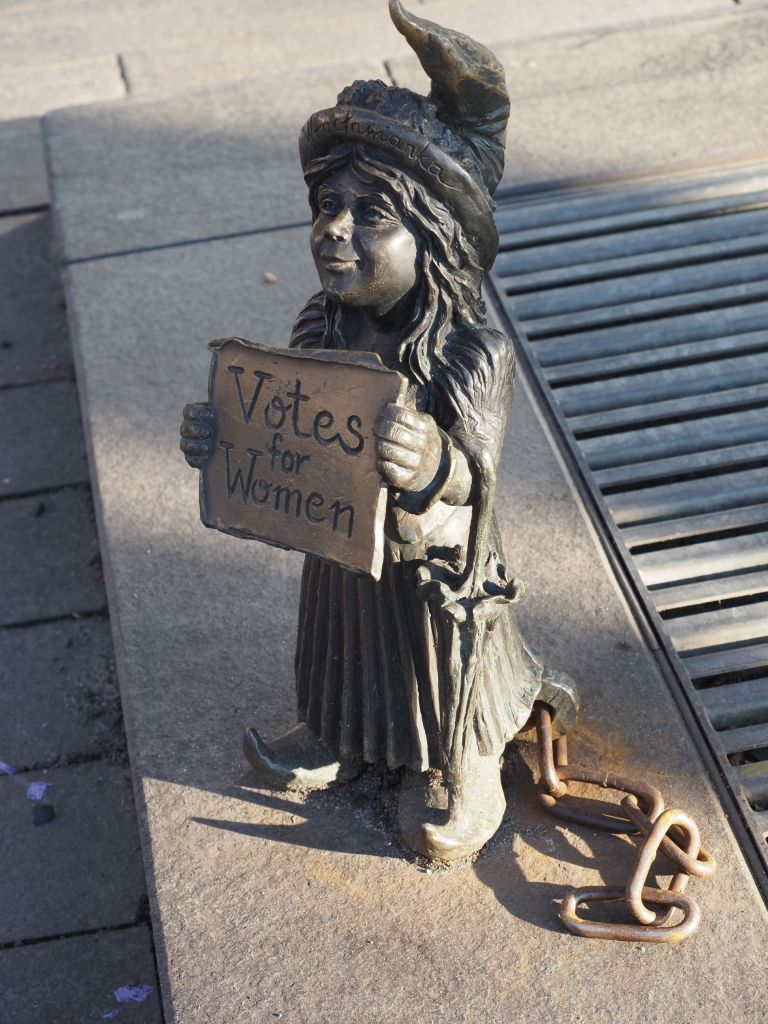
In Wroclaw, these protests were led by student organisations from Wroclaw’s universities. Their strategy was impressive in its simplicity and its impact. They realised that even the Polish secret police would be hesitant to attack children’s storybook characters, especially if young children were present as witnesses. Thus, student protestors all marched dressed in costume: as gnomes, and thousands of families came to watch them do so. Their brilliance has been immortalised in bronze, in the form of gnome statues (more than 800) that lurk in every corner of the old town. It’s Wroclaw way of saying thanks to the students.
Remembrance takes many forms – and, it would seem that in Wroclaw, bronzed monuments and statues – even the tiny, are a reminder that protest does not have to be an act of violence. No doubt, as we note our second Polish national holiday, we will see true celebration of independence – hard won battles – some of which won by the most unique and peaceable methodology. Here’s to the hidden power of gnomes …
But, for now, the Lady and I are off to visit our many relatives – a pleasant distraction as we wait patiently for Mary’s imminent arrival.






 The Very Excellent Adventures of the Cunnington-Smythes
Farley
I am so very impressed with your planning for this trip. Your reports reveal that early November in Poland is rich in experieces for travellers. I am envious!
Your commentary on the absence of vowels in many Polish words gave me pause to think about our continent’s highest mountain – imagine how its name would be mangled if the vowels were missing. Strzelecki did us a great service by choosing a famous Pole whose name we antipodeans could pronounce. Well, almost.
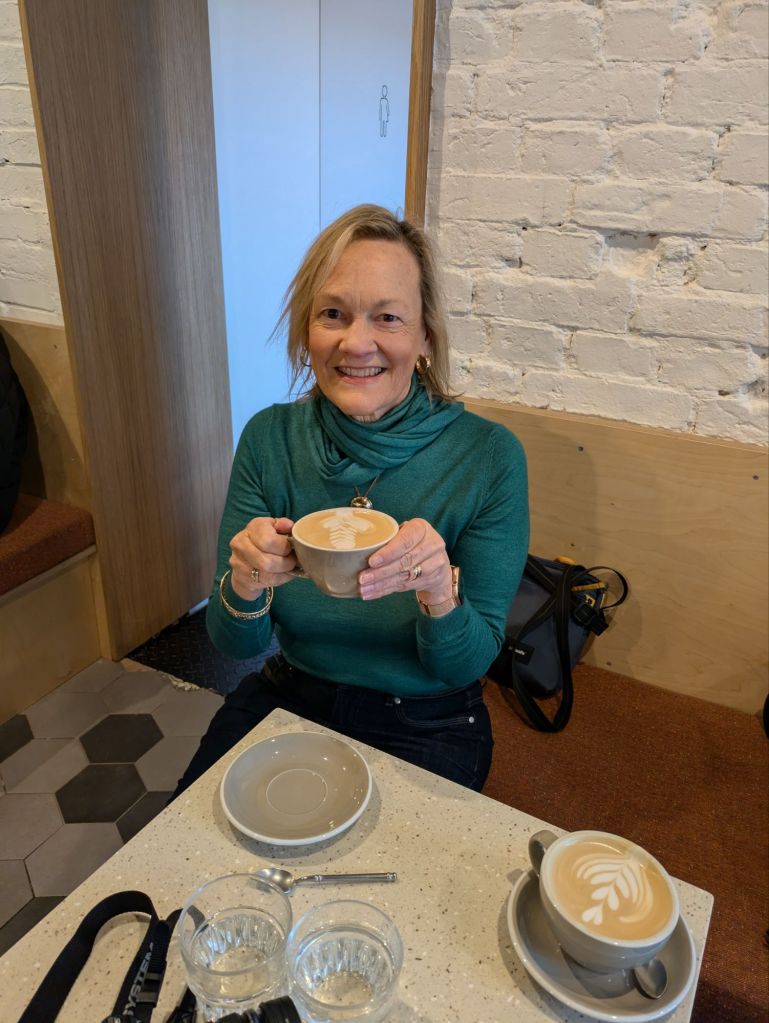
Oh, and I am curious about the pattern on the coffee your dear, smiling lady is holding – is it in Polish?
Cheerio from Jinibara country
Farquhar