
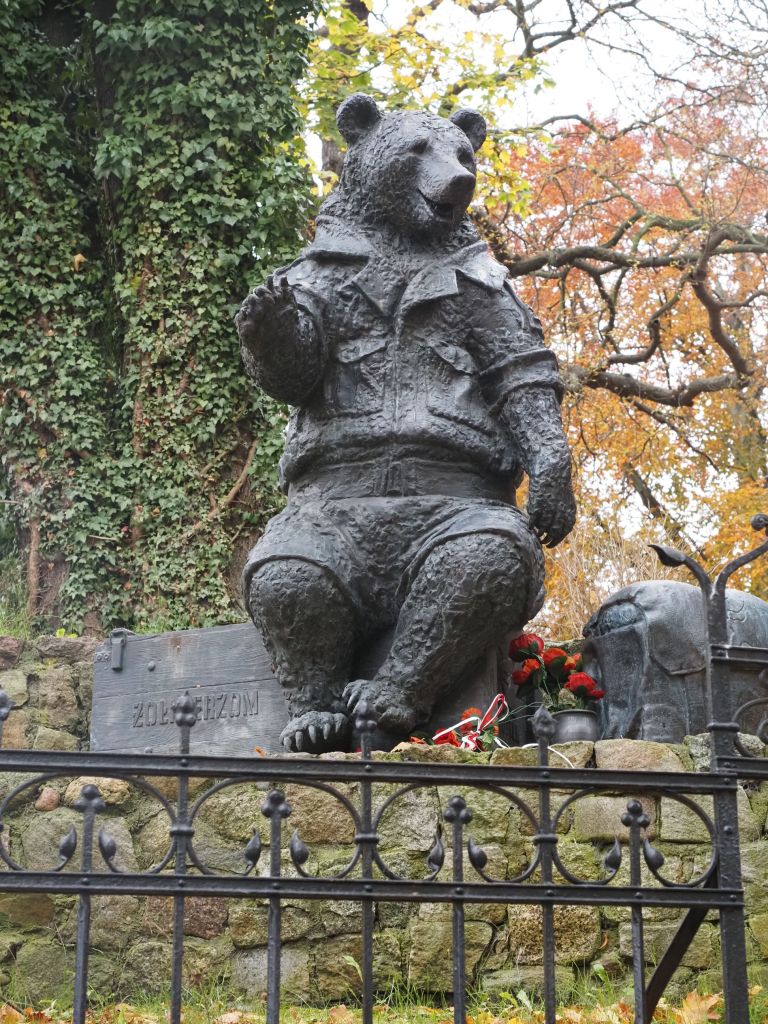
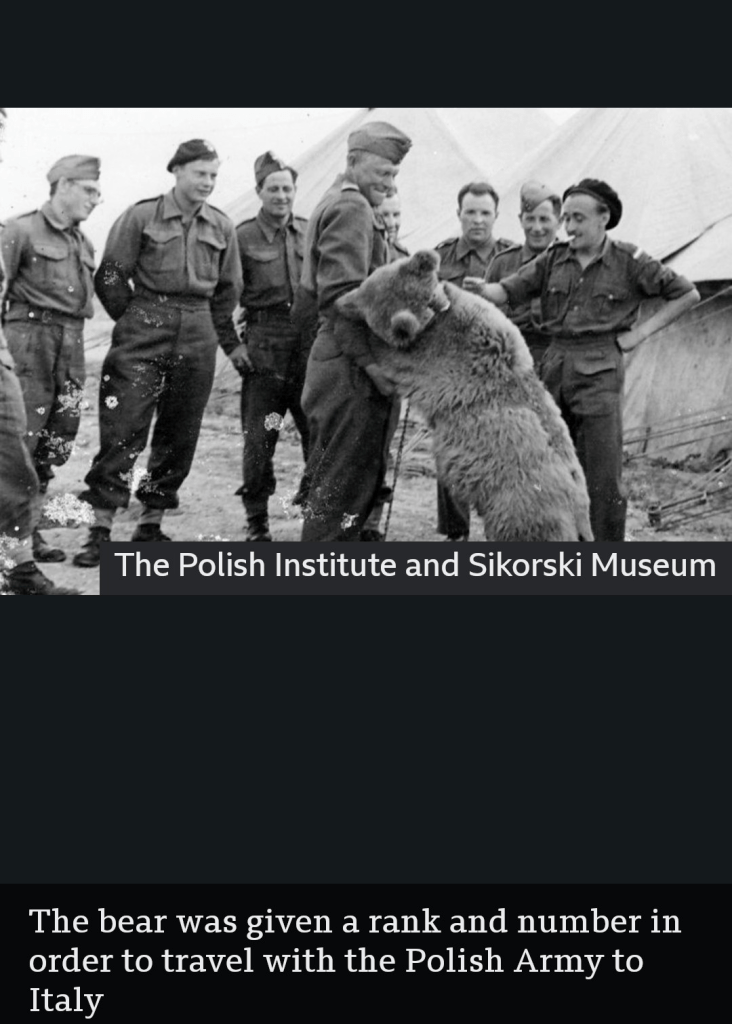
When the Soviet Union invaded Eastern Poland in 1939 all Polish POWs were either killed or sent to gulags throughout Russia. Then, in 1941 when the Nazis invaded the Soviet Union, and as part of an agreement with the UK, Stalin agreed to release 120,000 Polish POWs to fight with the British. These men were transported to the Middle East via Iran. It was in Iran that the famous Private Wojtek joined the Polish Army Corps.
Wojtek was not your typical foot soldier. He was, in fact, a three-month-old brown bear cub. And, as only the vagaries of war can allow, he became a much-loved member of this unit. He would ride in the front seat of transports next to the driver, salute officers, stand guard, and carry heavy loads. He travelled with the Polish Second Corps as they fought with the British and Commonwealth troops in the Middle East and was part of their invasion of Italy. Heroic and stoic, he stayed close to the front line in the battles such as those for Monte Cassino and Bologna, and was appropriately promoted to corporal.
After the war, when the Polish Corps was demobilised many men stayed in the UK and Wojtek retired to the Edinburgh Zoo. Those Poles who chose instead to return to Poland at war’s end had a plaque commemorating Corporal Wojtek erected outside a church on their return to Gdansk in 1946. Fittingly, a statue of him was commissioned in 2019 – incongruously juxtaposed against souvenir shops and restaurants on the main promenade that leads to the Baltic sea – Sopot’s famous jetty and beach. It would seem that Wojtek still maintains the ability to command attention, especially in the most unlikely contexts
F C-S
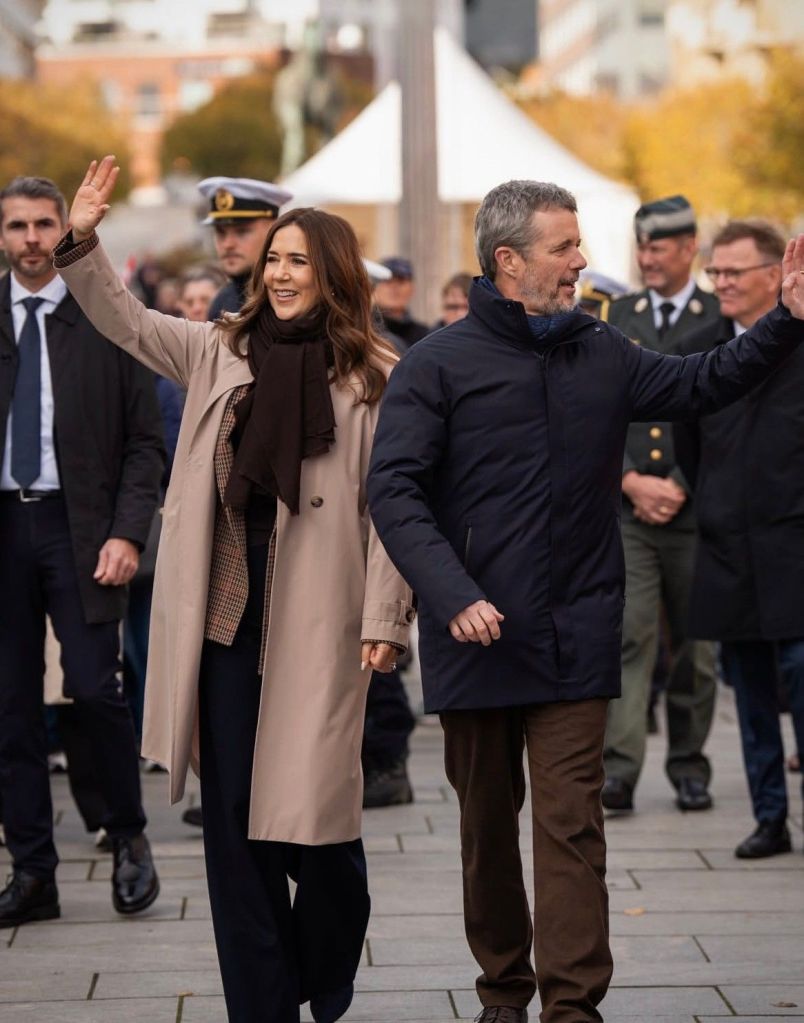
And he’s not alone at that either. Rumour has it that Queen Mary, having missed our scheduled catch up in Copenhagen on Monday. has taken the fifty minute flight to Gdansk to surprise us. Sadly, we were not in Gdansk, rather in Sopot, photographing Poland’s famous war veteran. Incongruous indeed.
Farquhar, you know how I feel about Royals, but you can’t win them all …

 The Very Excellent Adventures of the Cunnington-Smythes